Indonesia transforming free health screenings into precision health policy
By Yuniar A.
Having reached over 70 millions of citizens, Indonesia’s Cek Kesehatan Gratis (CKG) is using the SATUSEHAT data platform to enable more preventive and precise interventions.
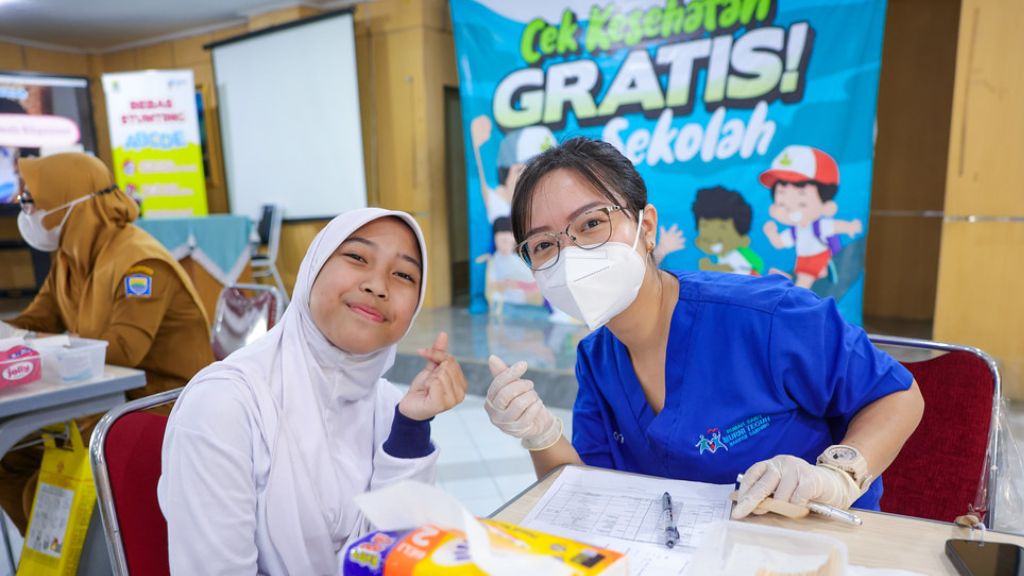
Indonesia’s Free Health Check Programme aims to improve early detection and management of non-communicable diseases. Image: Ministry of Health
The Cek Kesehatan Gratis (CKG), also known as the Free Health Check, programme is one of the most ambitious public health initiatives undertaken in Indonesia.
In its first year of implementation, the programme reached more than 72 million people – equivalent to a quarter of the population – with over 70 million completing the full health screenings.
Speaking to GovInsider, the Indonesian Ministry of Health’s Head of the Bureau of Communication and Public Service, Aji Muhawarman, shares that the “Ministry of Health views the achievements of the CKG programme in 2025 as the fastest mobilisation of mass health screenings in Indonesia’s history”.
The CKG programme, which aims to provide free health screening services to all Indonesians, is one of President Prabowo Subianto’s flagship initiatives, part of efforts to enable early disease detection and reduce long-term healthcare burden of the state.
The government plans to extend the programme to cover the entire population by 2029.
Beyond its scale, the programme has also transformed how the government manages health data, moving from fragmented and siloed systems into an integrated digital ecosystem.
“Ninety-nine per cent of more than 10,000 primary healthcare centres have now adopted digital recordings through the SATUSEHAT platform. This removes data silos and creates more consistent service standards across the country,” Muhawarman adds.
SATUSEHAT is a health data interoperability platform that connects various information systems across healthcare facilities into a single national ecosystem.
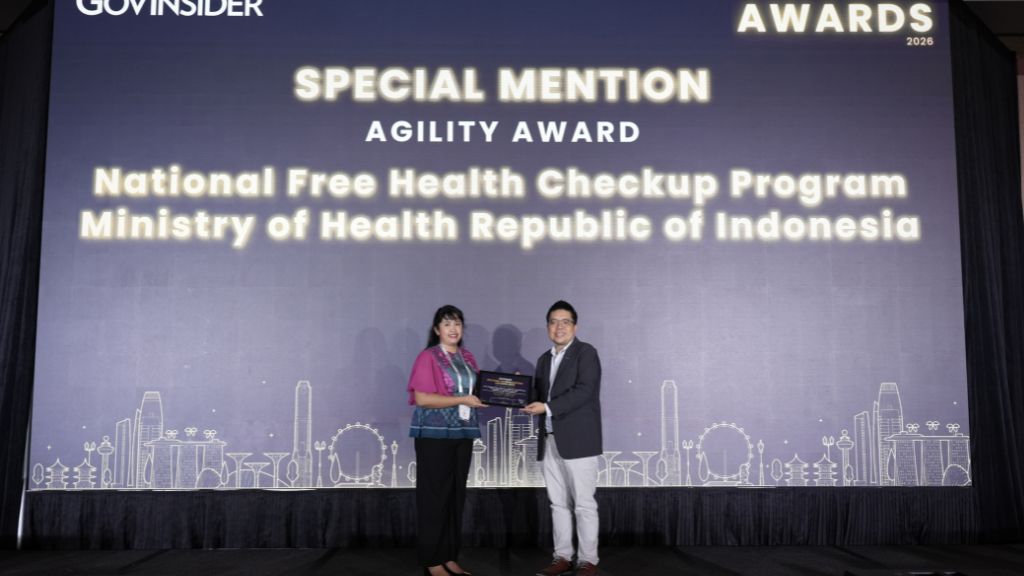
For its success in delivering a large-scale health programme, the Ministry received the Special Mention Agility Award at GovInsider’s Festival of Innovation (FOI) Awards 2026 held on March 3-4 in Singapore.
SATUSEHAT platform as a backbone
Muhawarman highlights the critical role of SATUSEHAT as the backbone of national health data integration within the CKG programme.
The platform underpins the government’s electronic medical record (EMR) system, enabling longitudinal health records that can be accessed across different facilities.
Citizens can also easily access the entire service journey, from registration, scheduling appointments to access test results, on the SATUSEHAT mobile app or WhatsApp.
For healthcare workers, SATUSEHAT IndonesiaKu, also known as Healthy Indonesia app (ASIK), serves as a standardised recording system to document every service delivered during the screening process.
“With SATUSEHAT IndonesiaKu, screening data is no longer stored separately within individual facility systems but is digitally integrated and easily accessible to the public via smartphones,” says Muhawarman.
Beyond data capture, SATUSEHAT ensures that screening does not stop at detection.
Once data is entered, results are automatically sent to the patient’s SATUSEHAT Mobile account in the form of a “health report card” that can be accessed at any time. The data is also linked to facility management information systems across primary care centres, hospitals, and clinics.
“When the system identifies certain risks, it generates green, yellow, or red notifications. This allows follow-up actions to be carried out more quickly and in a coordinated manner,” Muhawarman explains.
With millions of screening records flowing into the system, its ability to manage, integrate, and distribute data in near real-time has become a critical foundation for improving service quality.
Reading health risks in near real-time
According to Muhawarman, one of the most significant outcomes of the programme is the government’s enhanced ability to detect non-communicable diseases (NCDs) early.
Field implementation shows that a life-course approach is effective in mapping age-specific health risks.
“With digital recording through SATUSEHAT, risks such as heart disease, diabetes, and hypertension in adults, as well as growth monitoring and NCD risks in infants and children, can now be identified in near real-time,” he says.
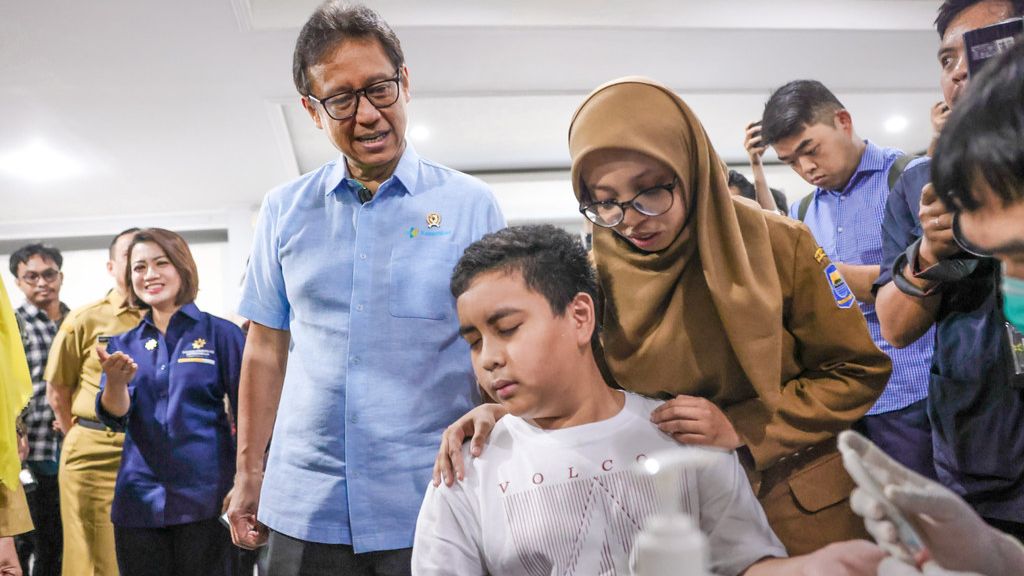
This provides a more accurate picture of population health, enabling the government to design more targeted interventions.
Initial findings with regards to the health of the population are concerning but also create opportunities for early action.
Among adults, nearly all participants were found to have low levels of physical activity. Other prevalent issues include dental caries (a form of tooth bacteria), obesity, and hypertension.
Across other age groups, risks range from congenital conditions in newborns to anemia and low physical activity among adolescents, as well as high rates of hypertension among the elderly.
“This gives us a more accurate population health profile to support more precise health interventions,” Muhawarman says.
More importantly, direct access to health results through the SATUSEHAT Mobile app is beginning to shift public behaviour. Citizens can now monitor their health independently, encouraging more proactive health management.
Focus in the second year
Muhawarman highlights that the government’s focus this year is to ensure that screening is followed by concrete follow-up actions.
“The government wants to ensure that early detection leads to actual treatment and necessary interventions.”
In its second year, the programme also aims to cover 130 million people through a more inclusive approach.
Services will no longer be limited to formal healthcare facilities, but will be extended to schools, places of worship, and outreach services in remote areas, in collaboration with other ministries and local governments.
The programme will also set specific coverage targets for different age groups, alongside close coordination between central and regional governments.
“The target for 2026 is to reach 130 million beneficiaries across all age groups,” he says.
According to him, key challenges in the first year included varying levels of digital capacity among healthcare workers and differences in infrastructure across facilities.
The scale and speed of implementation also require all stakeholders to quickly adapt.