Lessons from Fukuoka’s water crisis on reinventing the government
By Si Ying Thian
As change becomes the new constant, governments need to proactively detect new challenges, communicate them clearly to and work with citizens to co-develop solutions, says the Japanese city’s mayor Sōichirō Takashima.
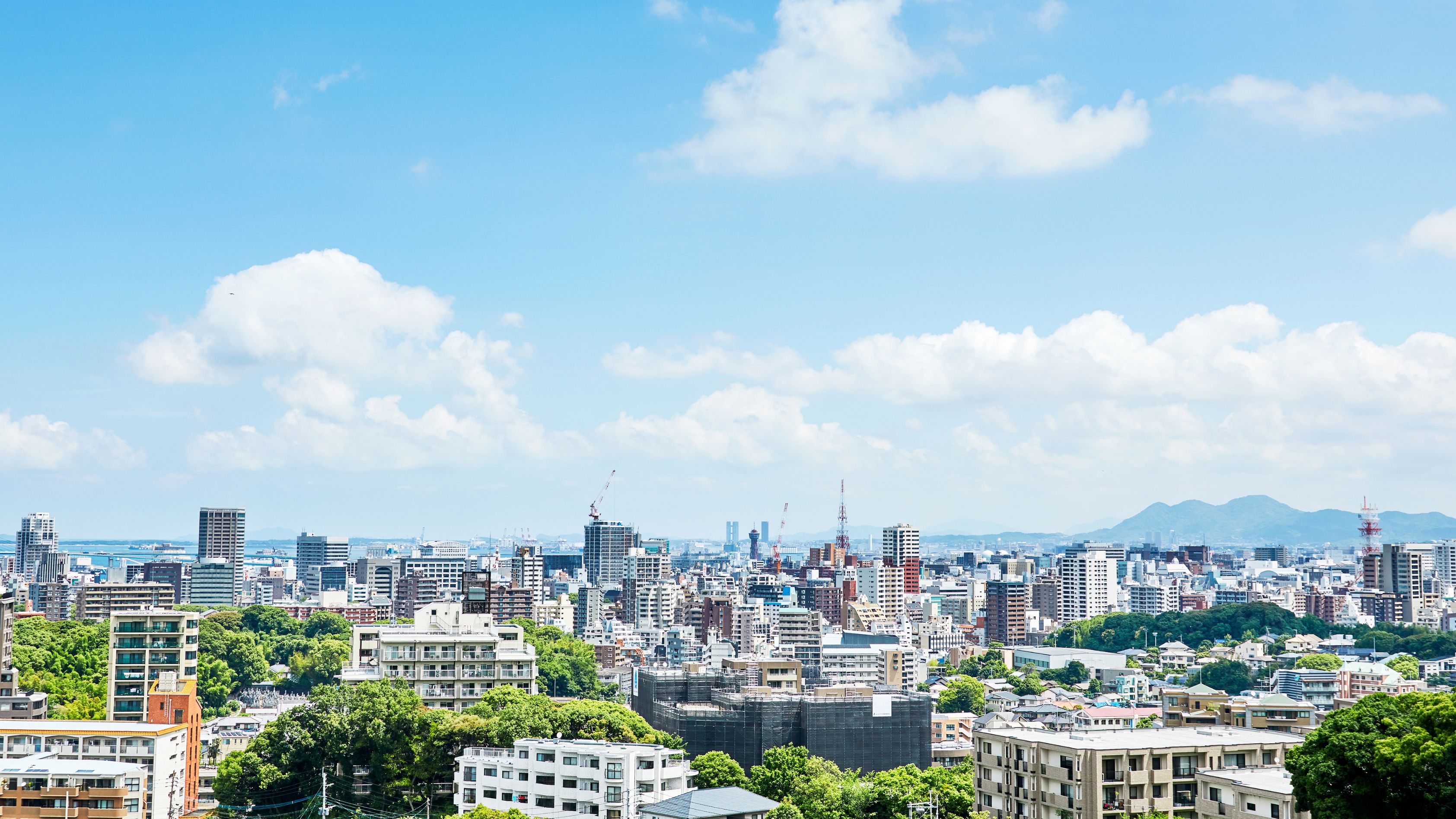
Fukuoka, Japan, emerged as one of the world's most water-efficient cities despite facing compounded water crises. Image: Canva
In 2016, when a massive 30-metre-wide sinkhole opened in the bustling city centre of Fukuoka, Japan, the city managed to repair it completely within one week.
Speaking to GovInsider, Fukuoka’s mayor, Sōichirō Takashima, explains that the speedy recovery work, which was expected to take six months, was the result of a coordinated effort between the government and private companies.
Fukuoka’s public sector efficiency isn't just highlighted in the flexibility it displayed in this one incident. It’s more evident in how the city has emerged as one of the world’s most water-efficient cities, despite facing compounded water crises.
Takashima highlights that the Fukuoka learnt its valuable lessons in water management from the severe droughts it faced in 1978 and 1994, both of which mandated water rationing.
The 1978 crisis lasted 287 days, restricting the average daily water supply to 14 hours. Although the 1994 drought presented harsher weather conditions, the city only needed to restrict its daily water supply to eight hours.
He attributes this improvement to the adoption of a continuous and multifaceted approach to water management.
The city implemented several key measures, which included developing new water resources, renewing ageing infrastructure, preventing leaks, deploying a computerised water distribution control system, promoting public awareness and commitment to water conservation, and implementing crisis management measures.
While the global average for urban water leakage sits at around 30 per cent, Fukuoka stands out. The city successfully reduced its leakage rate from 10 per cent in 1978 to just two per cent today, achieving one of the lowest rates globally.
According to Takashima, a 2024 survey shows that 89.4 per cent of Fukuoka residents are mindful of water conservation. This rate is higher than the national average of 80.5 per cent.
We draw out universal lessons for public servants on how to use a crisis as a catalyst for long-term strategic planning and institutional change.
1. Turn adversities into strengths
Now serving his fourth term as mayor, Takashima highlights the importance of "honing" the city as the core principle of his legacy.
He explains that while Fukuoka is the fifth-largest city in Japan by population, it needs to strategically identify and amplify its unique strengths to move beyond that status and become a "city of distinction."
Since Fukuoka lacks a major river, which hinders its potential to grow its heavy industry, the city has focused on the services sector, which now employs 90 per cent of its workforce.
Takashima’s government has adopted a phased growth strategy: Initially boosting the tourism and the events sector, then developing knowledge-based industries and supporting engineers, and finally support startups and attract corporate headquarters.
“I strongly believe in finding a chance for success in a pinch situation.
“Any crisis, when viewed from a different perspective, can become a chance to create new systems or generate new value,” he explains, highlighting the need for leaders to set an example for staff by actively demonstrating how to turn adversity into strength through their actions.
Takashima shares about the analogy of planting trees to urban initiatives, which was first referenced by Singapore’s Minister for National Development Chee Hong Tat when Takashima previously attended the World Cities Summit.
“As leaders and governments, we must act now so that future generations can enjoy the fruits of our efforts. I wholeheartedly agree with this sentiment,” Takashima reflects.
2. Encourage a problem-solving culture across whole-of-society
"A society where those who take on challenges are respected should begin in Fukuoka," encapsulates a key part of Takashima’s philosophy and vision for his city.
He hopes Fukuoka city can lead by example as a society who respects citizens, businesses and civil servants which takes on challenges.
Having faced both severe droughts and urban flooding, two contrasting water crises, Fukuoka city had to engage in flexible urban planning, which means moving beyond conventional strategies.
Fukuoka put this philosophy into practice following the severe urban flooding caused by record rains in 1999 and 2003.
Learning from these disasters, the city not only raised its design standard for drainage systems, but it also introduced new infrastructure like storage and infiltration facilities, including a large facility completed by 2006 capable of holding 30,000 tons of water.
This multi-faceted approach to water management was validated in 2009 when the targeted area experienced no major flooding.
Takashima views this success as a lesson in leadership.
Since innovation is inherently challenging, urban leaders must demonstrate courage and foster a culture that empowers civil servants to “seek solutions beyond conventional methods,” he says.
This is achieved partly by compiling and actively sharing successful case studies with citizens and the businesses.
In 2018, the city also launched a one-stop shop for public-private partnerships known as mirai@, which aims to support private sector efforts to tackle social issues.
Currently, the city adopts a combination of artificial intelligence (AI), Internet of Things (IoT), as well as satellite imagery for water leak detection.
Besides identifying previously undetected leaks, this allows for rapid repairs and prevented secondary damages like road collapses.
3. Celebrate champions and empower experimentation
Another key principle for Takashima is to support those who take on challenges.
“I value the saying: The opposite of success is not failure – it's not trying,” he says, highlighting failure as “still a step forward.”
To create a society that takes on challenges, leaders need to encourage, support and respect those who take the risk to do so, he explains.
Urban water management, like other public sector challenges, are not problems that can be solved once and for all.
“New issues constantly emerge over time. It is crucial for the government to quickly detect these challenges, communicate them clearly to the public, and work together with citizens to find solutions,” he notes.
Takashima continues to be a keen learner, having participated in the World Cities Summit almost every year since 2013.
As he presents about Fukuoka’s effort in building a water-conscious city, he is similarly inspired and takes lessons from other cities.
Referencing Vienna’s flood control project involving the Danube River, he says “not only did it strengthen the city’s disaster resilience, it also created a new recreational space for citizens – an excellent example of turning a crisis into an opportunity.”
Despite differing urban environments, the core mission of governments is universal.
“By sharing knowledge and experiences among global cities, we can improve service efficiency and strengthen collaboration to address common challenges,” he says.