-1783304403050.jpg)
Libraries as equaliser: Singapore’s NLB on why the work on accessibility never ends
The National Library Board's Equaliser Office’s Head Yvonne Ng shares how her team is looking to engage with persons with disabilities as co-creators, and shares her two cents as a career coach on how to survive the long game of public service.
-1774972548186.jpg)
At the National Library Board (NLB)'s Equaliser Office, Yvonne Ng leads efforts to bridge societal gaps through inclusive library initiatives. Image: Ng
For most people, the library is a quiet temple of knowledge – and a safe and trusted space open to all.
The National Library Board (NLB)’s Equaliser Office’s Deputy Director, Yvonne Ng, recounts a conversation she had with a parent of a child with special needs at an outreach event, which gave her a reality check that her work in accessibility never ends.
She shares how the parent has never stepped foot in a library due to fear that her child might have a meltdown in this quiet space.
The parent also did not know if the library had the necessary infrastructure to support a child with special needs.
While NLB spent years engineering inclusive spaces, from calm rooms, wheelchair-friendly routes and accessible membership schemes, the work on accessibility is far from over if the citizens who need these services the most do not know they exist, she says.
“Even when we create the most thoughtfully designed policies, the real hurdle is ensuring that the message reaches the public.
“It is not enough for good services to exist, we must also ensure people understand them and feel encouraged to use them,” she explains.
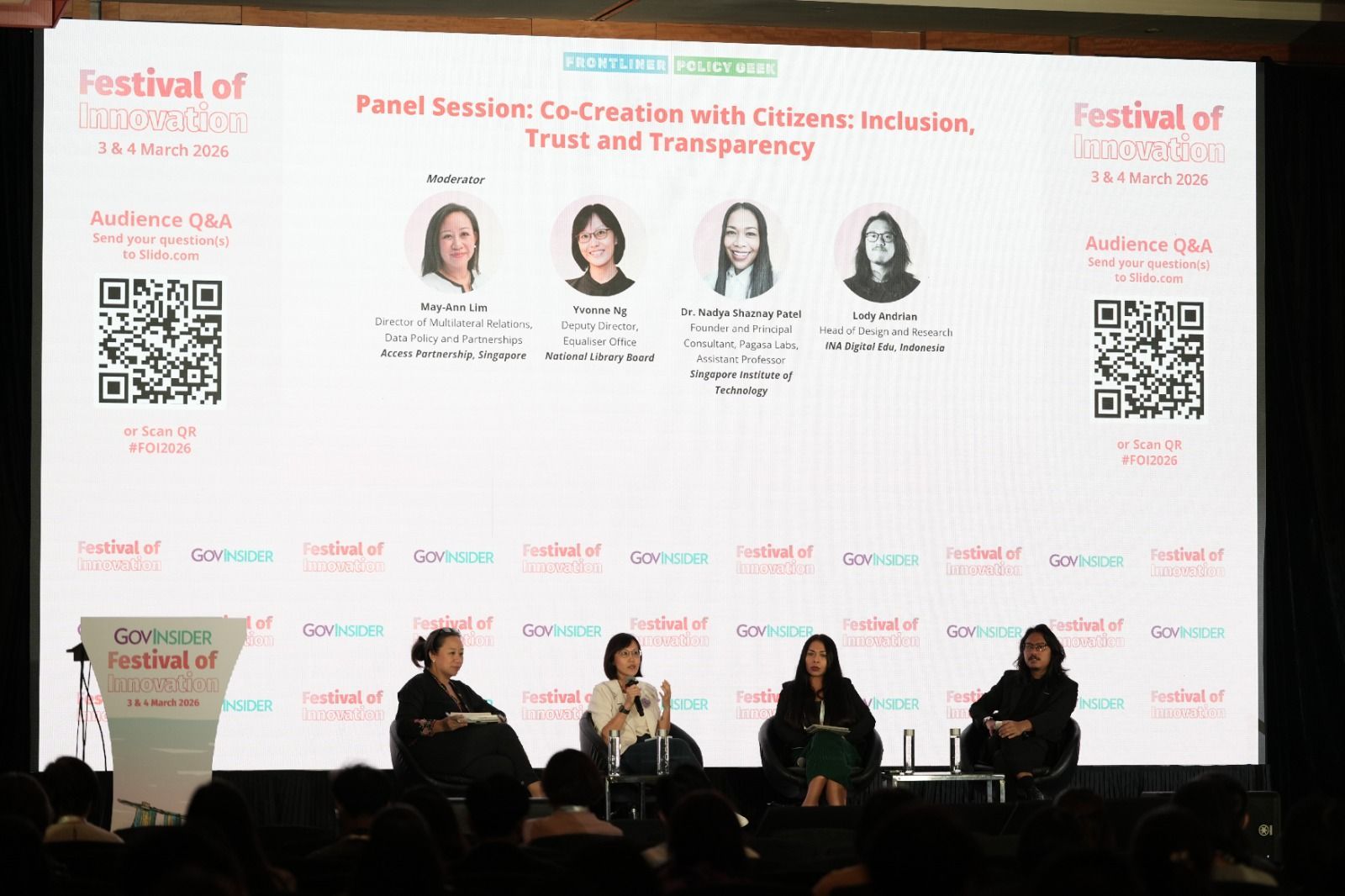
Talking to GovInsider on the sidelines of her speaking participation at the recent Festival of Innovation (FOI) 2026, Ng explains more about the role of the Equaliser Office at NLB, as well as her career journey from being journalist, regulator, to now an equaliser enabler.
Designing accessibility for different needs
As there is no one-size-fits-all definition of accessibility, Ng advocates a culture of experimentation to explore opportunities for more inclusive solutions.
“We may not get it right the first time, and we may not be able to serve all needs at one go, but that is part of the process,” she explains.
She defines innovation as “simple, continuous improvements in our day-to-day work... to do better in the next round”, instead of “shiny or high-tech projects”.
At NLB’s Equaliser Office, Ng leads efforts to bridge societal gaps through inclusive library initiatives.
She adopts an iterative approach in designing services, which is what she calls “learn-experiment-refine”.
This approach starts with a commitment to curiosity by learning from others’ experiences and acknowledging where current solutions fall short. From there, teams pilot small-scale experiments, learn by doing and improving solutions over time.
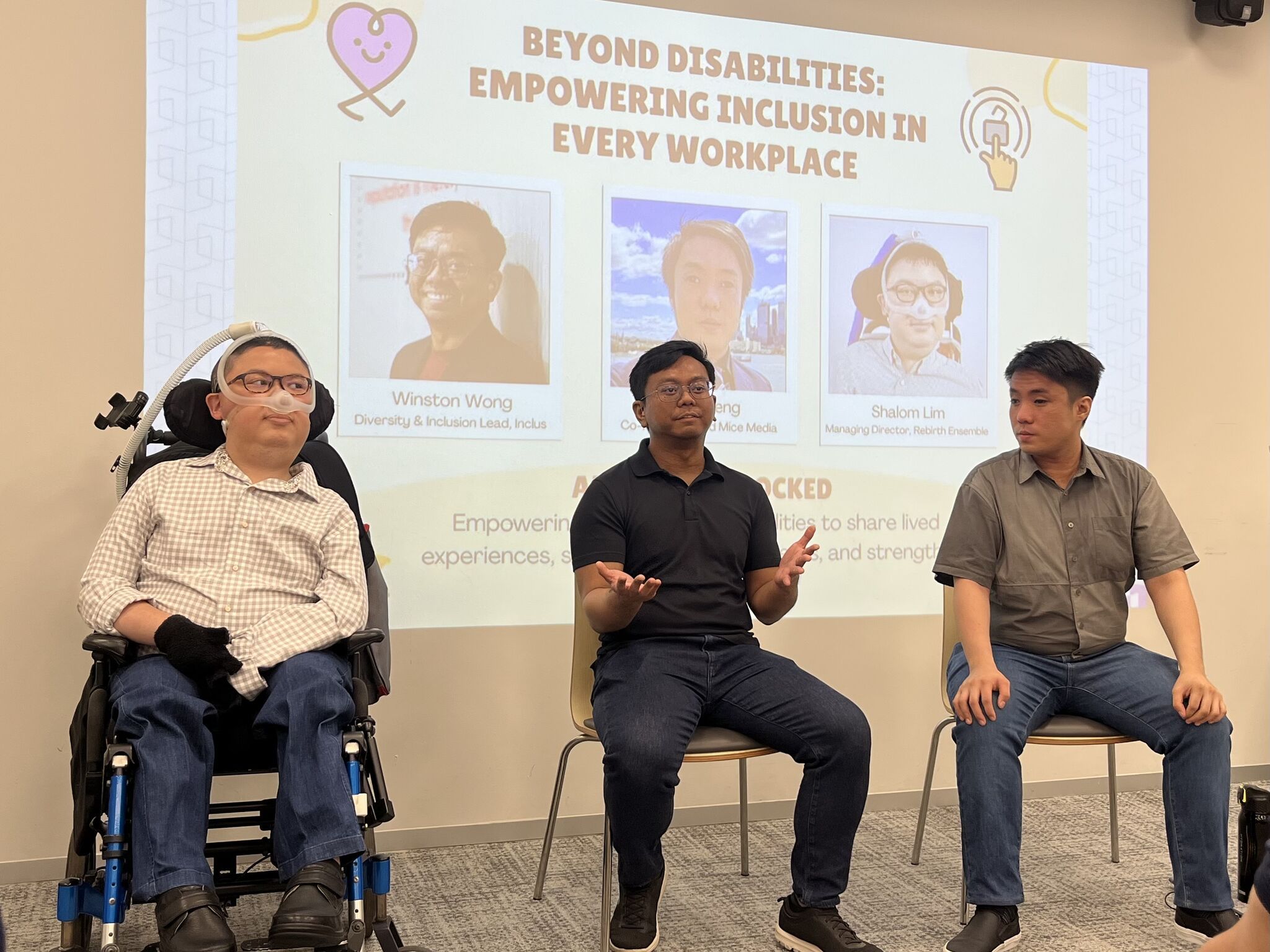
One of her team’s initiatives is working with libraries to adapt programmes to suit persons with disabilities (PWDs), including incorporating sensory elements, offering sign language interpretation and providing live captioning.
“While these initiatives are still very much ongoing, we also wanted to shift beyond this perspective – to engage persons with disabilities not just as participants, but as co-creators,” she shares.
To involve PWDs as co-creators, her team launched the “Abilities Unlocked” programmes this year, which provides opportunities for PWDs to take on more meaningful roles as panel speakers, workshop facilitators, as well as performers.
She hopes that more PWDs and caregivers can take the “first step” to visit the libraries or use the library resources.
Through feedback, her team can then “support [the PWDs] and continue to enhance NLB’s services to cater to their needs”.
An unconventional career
Ng’s unconventional career path into public service became one of the reasons for this writer to push for the interview.
Her journey started in the newsroom of a prominent Chinese-language newspaper before she transitioned into a decade-long tenure in public service focused on content regulation.
Today, she makes libraries accessible to all, while concurrently serving as a Public Service Career Coach to mentor the next generation of officers.
Ng admits that she “did not have a noble purpose” when she first joined public service, and was seeking more stability and work-life balance in her next career path after journalism.
But her passion for public service grew over time. “My passion for informing and educating the public through the stories I wrote in the newsroom became even more meaningful when I joined the public service.
“It gave me the opportunity to directly contribute to shaping policies that impact society,” she explains.
Ng emphasises that skills like critical thinking, clear communication and thinking out-of-the-box remain key across both journalism and public service.
Additionally, Ng notes how she benefited from career coaching, highlighting it as “pivotal” in helping her gain clarity and charting a new path for herself.
Wanting to do the same for others, she took the opportunity to get trained by the Public Service Division (PSD).
“I underwent weekly training for three months, and received a Professional Certificate in Career Coaching.
“I then began volunteering as a career coach with the Public Service Career Coach Network, a network of public service coaches who offer free coaching sessions to officers across different agencies,” she says.
Having served as career coach since 2022, she shares how it has also made her a better leader.
“It has given me deeper insight into the career challenges of others and enriched the way I lead my own teams,” she explains.
Two cents from coach
It’s easy to get caught up in the daily demands of work as a public officer, Ng says, so she encourages her colleagues to take part in coaching sessions to zoom out to the “bigger picture.”
In her own team, she has designed mini career development workshops to help them reflect on their own career paths, which tends to be overlooked.
“One concept I frequently use in career coaching is the ‘S-curve’ theory. It emphasises the importance of thinking about career growth before reaching the peak of the current ‘S-curve,’ and preparing for the next curve of growth,” she adds.
On surviving the long game of public service, Ng finds it most helpful to reflect on the lessons learnt over the years, think about what the good leaders she knows would have done, as well as the values that guide her work.
“Sometimes, we just need to pick our battles and accept that it may not be the right time and space for a particular initiative.
“That does not mean we give up, it just means we make use of the opportunity to rethink, refine and rework,” she adds.
In closing, Ng recommends readers to pick up the book, ‘The Leader, the Teacher & You’, written by former Head of Civil Service Lim Siong Guan and Joanne H. Lim to understand leadership and coaching within the government context.
The book unsurprisingly, she adds, is also accessible to all via NLB’s catalogue.
NLB sends out an email newsletter around their accessibility initiatives on a bi-monthly basis, which you can subscribe to here.