
The Philippines looks to tap into quantum computing
By Yen Ocampo
The government has introduced a slew of initiatives to develop local talent and infrastructure under its Quantum Technology Roadmap, aiming to become world-class in the field by 2035.
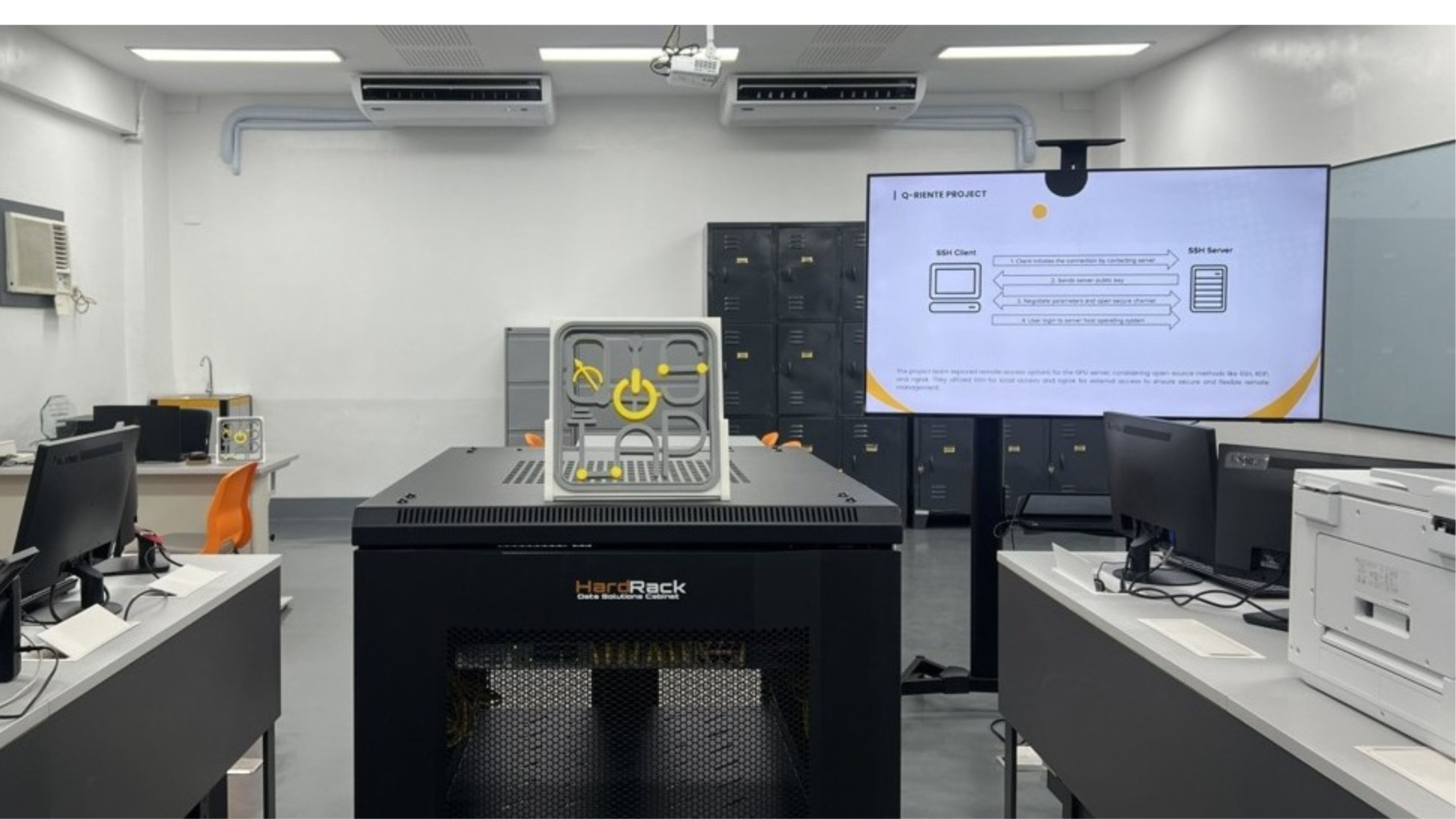
The Philippines’ first quantum computing lab, the Quantum and Intelligent Systems Laboratory for Power Engineering (QISLaP), which develops hybrid models to solve energy-sector challenges. Image: PCIEERD
Under the Quantum Technology Roadmap, the Philippine Council for Industry, Energy, and Emerging Technology Research and Development (PCIEERD) initiated its first round of research funding in 2021 to support projects that strengthen quantum research infrastructure.
PCIEERD is part of the Philippines’ Department of Science and Technology (DOST).
With the funding, the DOST Advanced Science and Technology Institute (DOST-ASTI) has established the Quantum Innovation Laboratory (QIL) in 2022 to focus research on developing quantum circuit simulation tools using high-performance computing systems.
The roadmap has aimed to position the Philippines as a key player in quantum computing in Southeast Asia with its own functioning network and research capabilities.
Realising more needs to be done to achieve the target, the roadmap has been updated as of October 2025, with the timeline pushed from 2030 to 2035.
Quantum R&D
Quantum computing is one of the eight high-impact programmes launched in February 2025 to solve pressing problems such as cybersecurity, climate change, and more, says DOST PCIEERD’s Deputy Executive Director and Officer-in-charge, Office of the Executive Director, Engr Niñaliza H Escorial, to GovInsider.
“Since 2024, under the Emerging Technologies sector, we have identified Quantum technology as one of our priorities in our call for proposals, as well as under our Human Resource Development Programme (HRDP),” Escorial explains.
Under the HRDP component, Researchers on Industry, Energy, Emerging Technologies - Opening Opportunities for Learning (RIEETOOL) have been supporting universities in a training workshop on Quantum Computing for Instruction, Assessment and Research, which yielded a range of positive outcomes.
In March 2025, in partnership with the Technological Institute of the Philippines (TIP), DOST-PCIEERD launched the Quantum and Intelligent Systems Laboratory for Power Engineering (QISLaP), the country’s first facility dedicated to applying quantum computing in energy systems.
“The initiative aims to strengthen the Philippine energy sector by using advanced analytics, artificial intelligence (AI), and quantum-inspired tools to improve grid reliability, renewable energy integration, and power system planning, while promoting the development of localised, homegrown solutions,” Escorial says.
Developing expertise
Escorial notes that the country is looking to strengthen its position by developing expertise in quantum mechanics, optics, condensed-matter physics, and quantum algorithms.
She acknowledges that the biggest challenge has been having a limited pool of trained quantum experts, as well as laboratory and computing facilities, highlighting the need for steady funding.
Since quantum technologies require strong physics and math foundations, investing in human capital through undergraduate research, graduate scholarships, and postdoctoral fellowships is crucial, Escorial adds.
“This will prepare scientists and engineers to advance into areas like quantum communication, computation, and sensing.”
“We need stronger links with industry and international partners to turn research into real-world applications,” Escorial says.
She points out that the Philippines is addressing to these challenges by training more people in quantum science through scholarships, graduate studies, and research and development (R&D) programmes.
In terms of local support, DOST-PCIEERD is funding university research, developing laboratory facilities, and supporting capacity-building programmes, while promoting collaboration with local and international partners through events such as the Quantum Information, Science, and Technology Conference, Escorial says.
Integrating into other digital initiatives
She adds that quantum computing can be integrated with other digital initiatives such as AI, the Internet of Things (IoT), and smart agriculture systems.
“PCIEERD sees quantum computing as a powerful tool to enhance other digital technologies,” Escorial says.
When combined with AI, it accelerates complex tasks such as predictions and optimisation, and with IoT, it enhances the intelligence and security of real-time systems.
Hence, PCIEERD’s programmes facilitate collaborative research, pilot projects, and training to leverage these technologies collectively for national innovation and industrial competitiveness, she adds.
Escorial believes that quantum computing could reshape the Philippines’ global competitiveness and strengthen its position in technological leadership.
“The Philippines views quantum computing as an important opportunity to enhance its global competitiveness,” she says.
However, the immediate focus is not on developing quantum hardware, but on building strong local capacity for knowledge creation in quantum science through research, education, and workforce development.
She adds that by 2035, the country aims to be internationally recognised for its scientific contributions and a well-trained quantum workforce.
“Through strong international collaborations and coordinated national programmes, the Philippines can contribute meaningfully to the global quantum ecosystem and support the long-term development of quantum technologies,” she says.