-1783304403050.jpg)
FOI2026 Awards celebrate people-centric innovation
Oleh Amit Roy Choudhury
GovInsider’s event saw 13 winners emerge from 270 award submissions from around the world.
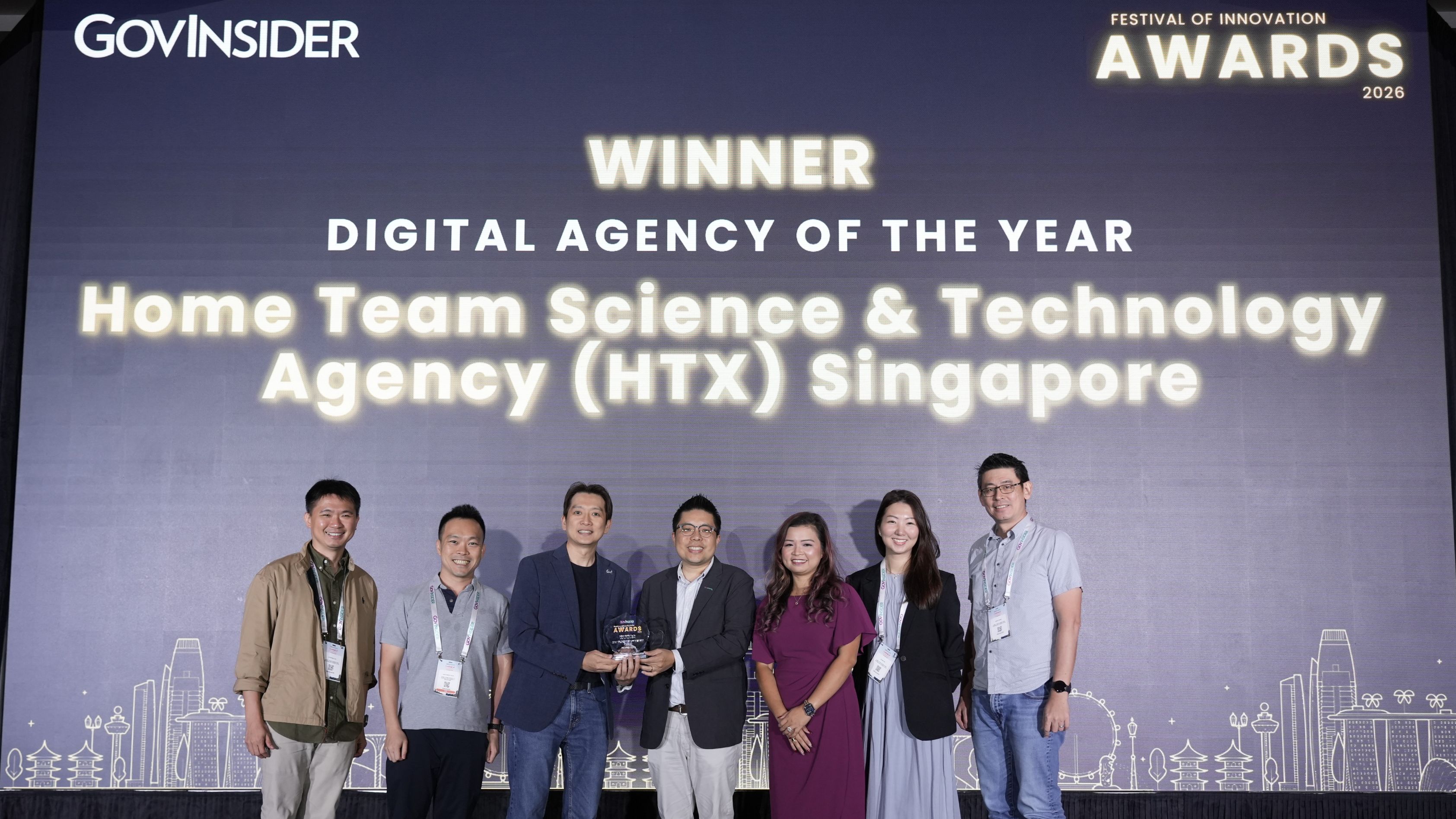
The Home Team Science & Technology Agency (HTX) receiving the Digital Agency of The Year Award from GovInsider Director Tyler Lim during the Festival of Innovation 2026 Awards presentation. Image: GovInsider.
People, not technology, were the key to successful digital transformation.
This important point was shared by Ng Teng Fong General Hospital (NTFGH)'s Assistant Chief Operating Officer and Co-Chair of the Digital Think Tank (DTT), Jan Lim, who won the Digital Leader of the Year Award at GovInsider’s Festival of Innovation 2026 (FOI) awards, which were given out on March 4.
Lim won for her leadership in driving an organisation-wide digital transformation based on the "Because of You" movement, which emphasised that true digital success stemmed from cultural inclusivity and the psychological safety of staff rather than just technical implementation.
Sharing her thoughts with GovInsider, Lim said: “I’ve learned that you can roll out the best systems in the world, but if people don’t feel safe using them or speaking up when something doesn’t work, then real transformation never happens.”
When staff feel psychologically safe, they ask questions, admit when they don’t know, and are more willing to experiment without fear of being judged, she observed.
The Digital Leader of the Year Award was one of 13 given out at this year’s FOI. This year, FOI received 270 award submissions, a significant 60 per cent increase from last year, with almost half coming from overseas.
Incredibly humbling
Lim noted that winning the award was “incredibly humbling, because this recognition really belongs to the people who believed in the movement and had the courage to step forward”.
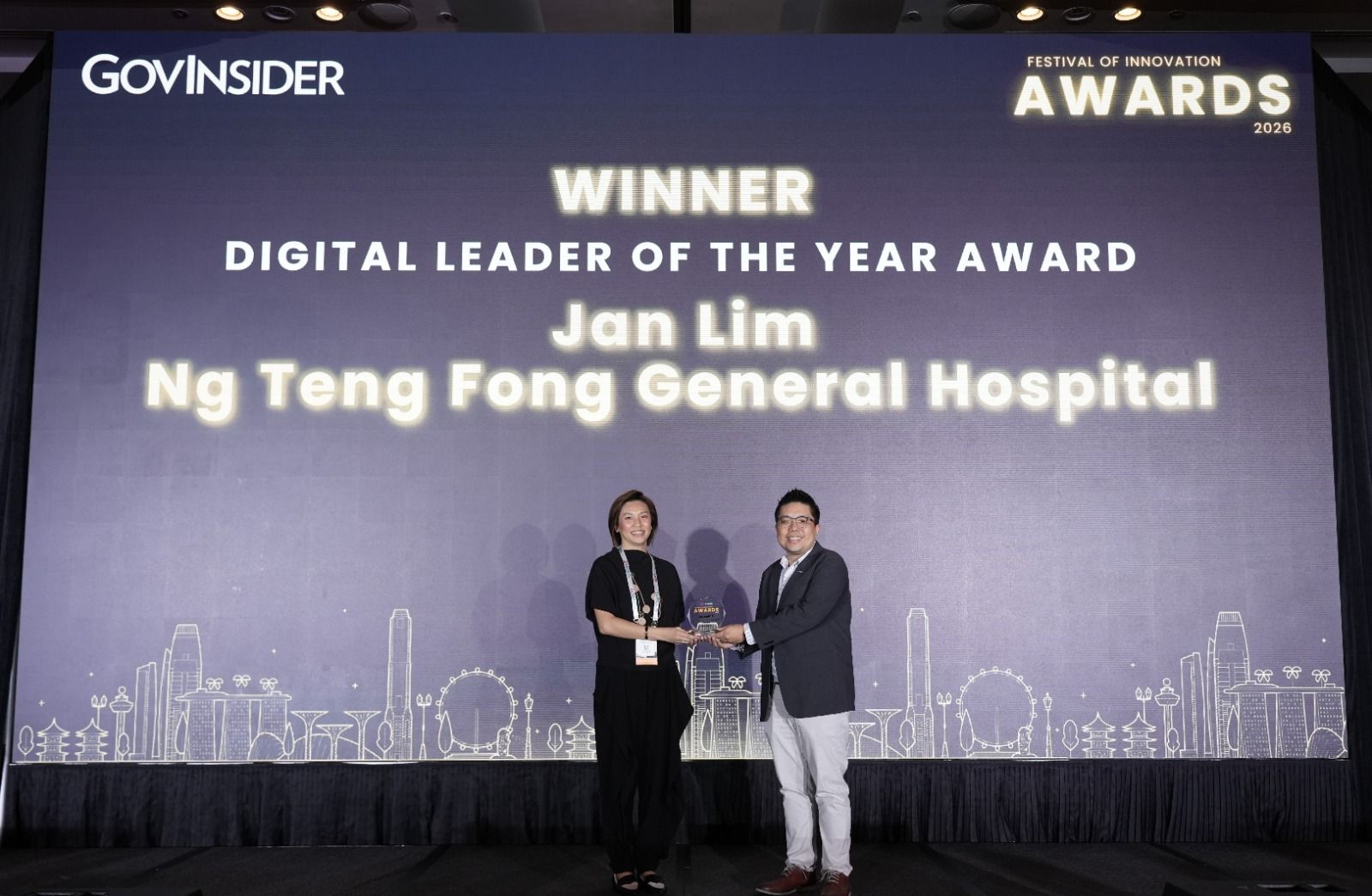
The award helped to shine a light on an important message that leadership in digital transformation is less about directing change or deploying the latest or shiniest digital tools, but about creating space for others to grow, contribute and feel safe doing so, Lim added.
“I hope it encourages more leaders to invest in culture, and more staff to believe that their everyday actions can shape meaningful change,” she said.
While Lim talked about how the leadership should guide meaningful digitalisation in the public sector, Singapore Prison Services' citizen developer, Sito Li Kang, shared how he has been motivated by the belief that digitalisation could make “daily work more efficient”.
The Rising Digital Star Award winner implemented a system for secure digital file transfers between SPS units and officers on external escort duties, as well as the successful digitalisation of feedback records for the Board of Visiting Justices and Visitors.
Using low-code and no-code
By mastering emerging low-code and no-code tools such as Microsoft Power Platform and UiPath Robotic Process Automation (RPA), he significantly reduced administrative burdens and streamlined the management of critical operational data within the agency.
Speaking to GovInsider, Sito said: “By automating repetitive processes, we free up officers to focus on more meaningful operational tasks.
“As a citizen developer, I see this as a practical way to contribute and support the organisation’s operational effectiveness.”
He added that the award would encourage him to “keep improving and taking on new challenges”.
“I also hope it can motivate other citizen developers within the organisation to build practical solutions that make our work more productive and efficient”, he said.
Using AI to monitor wildlife
The National Parks Board (NParks) won the Dare to Do Award for their project, which leveraged artificial intelligence (AI) for wildlife monitoring.
Previous attempts by NParks had failed due to the lack of extensive pre-labelled training data for rare species like the Sunda pangolin, which has been listed as critically endangered since 2008 in the Singapore Red Data Book.
The NParks team pursued an experimental and unproven path, developing a prompt-based "zero-shot detection" pipeline that proved successful in analysing low-resolution CCTV footage without the need for thousands of manually tagged images.
The impact of this innovation has been significant, delivering at least a 50 per cent reduction in the man-hours required to process vast amounts of wildlife footage.
Validation for made in the Philippines
For the winner of the Innovator of the Year Award, Mindoro State University's project leader of Project MOSES (Monitoring and Observation of Site-Specific E-weather Station), Christian B. Hernandez, the recognition represented a powerful validation that locally made (in the Philippines), community-driven innovation could stand alongside imported, big-budget technologies.
Project Moses was a locally developed weather monitoring system designed to provide real-time, site-specific data to support disaster risk reduction, particularly for flooding and typhoons.
It combined custom-built hardware and software in weather stations installed in vulnerable areas, such as upstream sections of major watersheds, that transmitted rainfall and other data to a cloud server.
This information was then made accessible via mobile phones and websites to disaster personnel downstream, enabling early warning before floods arrive.
Talking to GovInsider, Hernandez, said the award signalled to their team, their university and other young inventors in the Philippines that it was possible to be a “game changer” by tackling real problems like flooding and typhoons with homegrown solutions.
Tackling diabetes
NHG Health’s Diabetes Reversal Team won the Moon-Shot Award for pioneering a transformative "adiposity-focused" approach to Type 2 diabetes (T2D) care.
With their multi-site remission clinical trial, the team shifted the focus from traditional glucose management to achieving full diabetes reversal.
Their evidence-based model proved highly successful, with 41.9 per cent of participants in the trial achieving T2D remission within one year, a rate over five times higher than those receiving standard care.
Each of the other award winners showcased innovative approaches to solving problems faced by the public sector.
Moving from process compliance to public outcomes
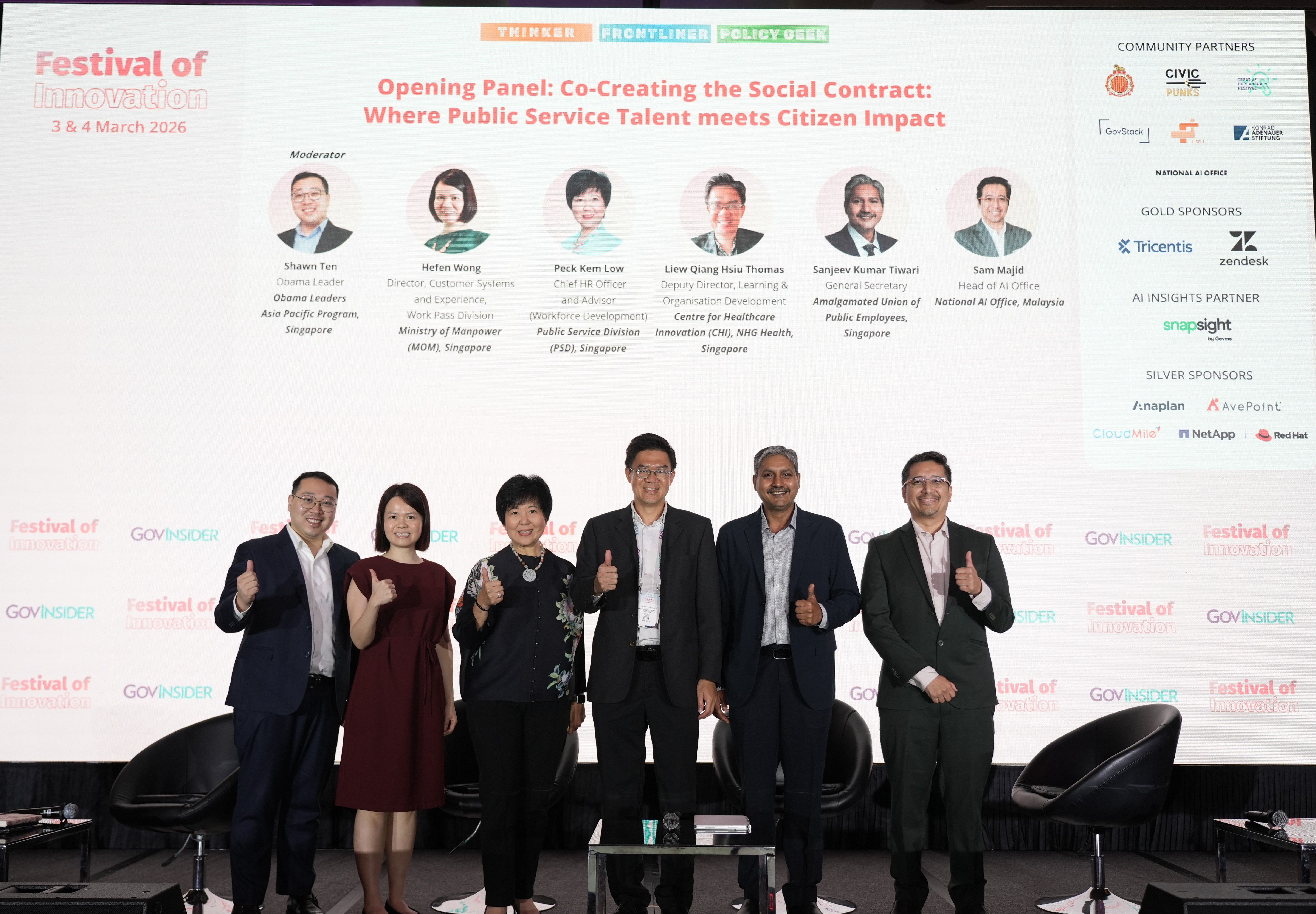
The opening panel on the second day of FOI, Co-creating the social Contract: Where Public Service Talent meets Citizen Impact, examined how public services must transform in an era of AI, by focusing on a shift from process compliance to delivering tangible public outcomes and citizen-centric services.
The panel was moderated by Obama Leaders Asia Pacific Programme Singapore’s Obama Leader, Shawn Tan, and comprised Ministry of Manpower (MOM) Singapore’s Work Pass Division Director, Customer Systems and Experience, Hefen Wong, Public Service Division (PSD) Singapore’s Chief HR Officer and Advisor, Peck Kem Low, NHG Health Singapore Centre for Healthcare Innovation (CHI) Deputy Director, Learning & Organisation Development, Liew Qiang Hsiu Thomas, Amalgamated Union of Public Employees, Singapore’s General Secretary, Sanjeev Kumar Tiwari and Malaysia National AI Office's Head, Sam Majid.
The panellists highlighted the ongoing large-scale job and task redesign happening due to AI, which has been automating routine work.
AI's impact on the workforce was not simply about job replacement but about transformation, they stressed.
While hundreds of thousands of jobs may be affected, AI simultaneously created new positions and opportunities, requiring a strategic mapping of workforce transition pathways.
The speakers stressed the need to reskill public sector employees for higher-value functions such as policy judgment, systems thinking, and citizen engagement.
Examples shared during the discussion included modernising work pass systems to improve both citizen and officer experience, as well as efforts in healthcare to redesign roles across professional groups, use sandboxes for experimentation, and move from classroom-based training to applied, project-based learning.
The panellists underscored that trust and human relationships between government and citizens remained paramount: AI and digital tools should enhance service delivery and efficiency, but must be deployed in ways that reinforce transparency, empathy, and public confidence.
We hope that you enjoyed the past two days of discussion on public sector innovation from around the world, and we look forward to welcoming you next year for an even bigger and more innovative FOI 2027. You can register here.
You can access AI-driven insights of all FOI2026 sessions, including this panel, here.
The winners for each category of the Festival of Innovation Awards 2026 can be found here:
- Dare to Do Award: National Parks Board, Singapore.
- Innovator of The Year Award: Christian B. Hernandez, Mindoro State University project leader of Project MOSES.
- Digital Leader of The Year Award: Jan Lim, Ng Teng Fong General Hospital (NTFGH), Assistant Chief Operating Officer and Co-Chair of the Digital Think Tank (DTT).
- Rising Digital Star Award: Singapore Prison Services citizen developer, Sito Li Kiang
- Inter-Agency Award: MyGovCloud@PDSA, Jabatan Digital Negara, Malaysia
- Agility Award: Public Service Division, Singapore
- Digital Society Award: EmPOWER Ministry of Manpower, Singapore
- Digital Government Award: Automated Identity & Access Management (AIAM) System, Synapxe, Singapore
- Digital Economy Award: Malaysia Digital Economy Corporation
- Moon Shot Award: Diabetes Reversal Team, NHG Health, Singapore
- AI-Ready Award: HeyTalia, Ministry of Education, Singapore [
- Transformative Agency of The Year: Republic of Singapore Navy
- Digital Agency of The Year Award: Home Team Science & Technology Agency, (HTX) Singapore