Hong Kong’s Digital Policy Office on its mission to connect China’s Greater Bay
Oleh Si Ying Thian
The office wants to leverage HK’s strengths to facilitate the safe and secure flow of data between the Mainland and global markets to drive the development of AI, says Commissioner for Digital Policy, Tony Wong Chi-kwong.
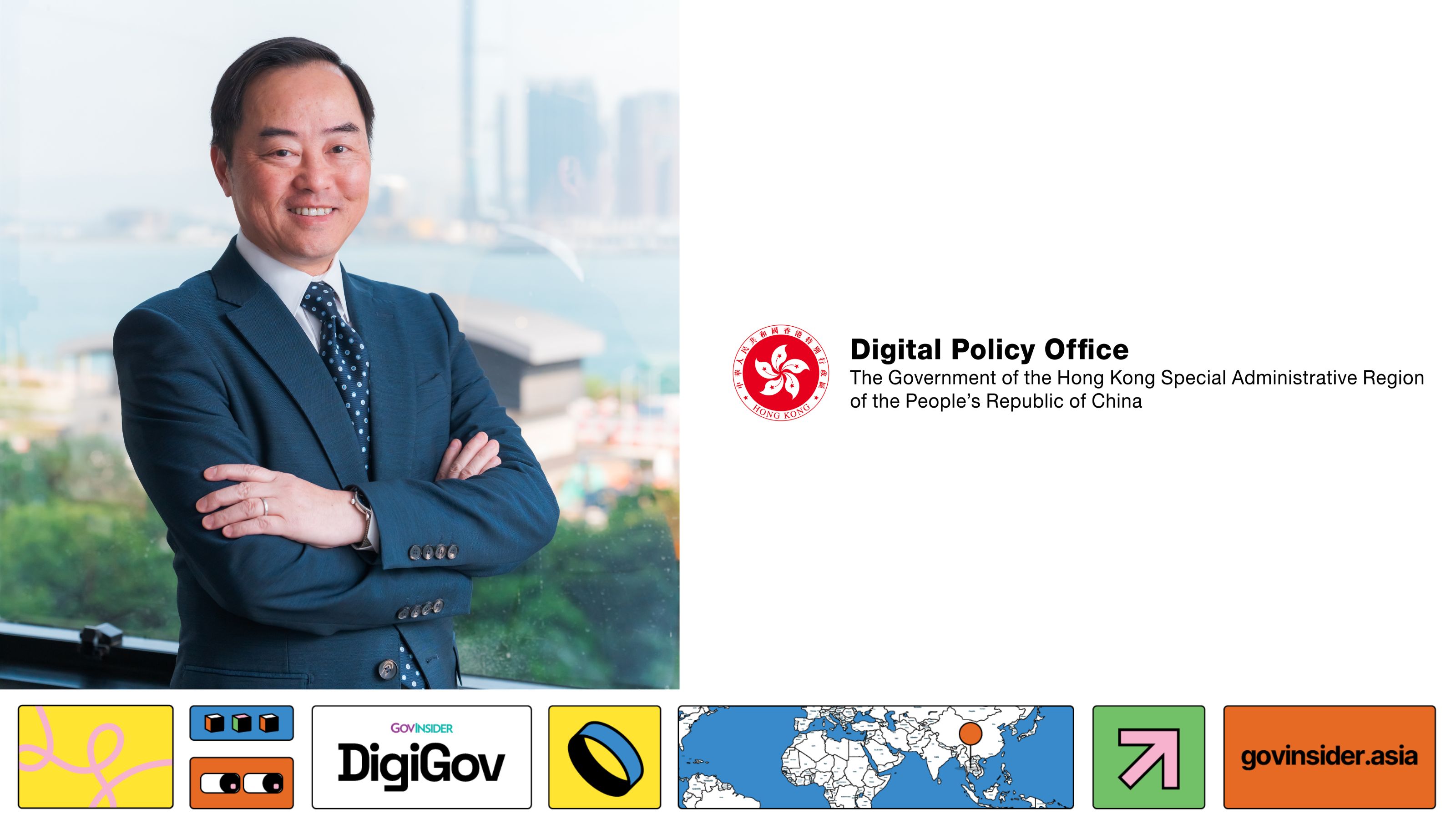
Hong Kong's Commissioner for Digital Policy, Tony Wong Chi-kwong. Image: Digital Policy Office (DPO)
This story is part of GovInsider's Digital Government initiative, which aims to feature stories from digital government agencies around the world. Click here to view our interactive map.
Hong Kong (HK) sees itself as a “super connector” bridging Mainland China and the world.
While recognising Beijing’s leading advantage in core technologies and practical use cases, HK believes that the city is uniquely positioned to support Mainland’s cross-border digital collaboration.
Under the “One Country, Two Systems” principle, HK retains a high degree of autonomy in preserving its own economic and social systems, as well as a common law system.
Speaking to GovInsider, Commissioner for Digital Policy, Tony Wong Chi-kwong, highlights that this principle positions HK as “an important window to the world for [Mainland] and for Mainland’s enterprises to develop their global business.”
HK’s goal to eventually become an “international data hub” is viewed as essential for driving the artificial intelligence (AI) push across the government and the broader economy.
“As a convergence point for both Mainland and international data, this certainly gives the city a distinct advantage to developing data-driven industries such as AI and health tech, as well as establish a cooperation and trading market here,” says Wong.
In October, the HK government held its first meeting of the AI Efficacy Enhancement Team, comprising representatives from different agencies to harness AI for greater governmental efficiency.
The team plans to focus on deploying AI within departments that offer services that directly impact citizens' livelihoods, gradually rolling out these projects in six months, and leveraging the AI toolboxes provided by the Digital Policy Office (DPO) for common administrative procedures like data collection, customer service, and paperwork.
Shared services enabling emerging tech adoption
Formed in July 2024, the DPO is tasked with supporting other agencies to implement digital government initiatives by establishing digital infrastructure and shared services.
This shared infrastructure includes the Government Cloud Infrastructure Services and Big Data Analytics Platform implemented in September 2020, a Shared Blockchain Platform rolled out in June 2022, as well as the Consented Data Exchange Gateway (CDEG) in June 2024.
Such secured and centrally managed platforms have helped the other agencies to adopt emerging technologies like AI and blockchain tech.
As of June this year, the government's cloud and big data platforms have supported over 530 digital government services and over 20 projects in using big data analytics.
To further simplify the process for agencies seeking suitable AI solutions, the DPO’s Smart Government Innovation Lab (Smart Lab) also launched the AI+ Tool and Solution Catalogue in August this year.
The catalogue provides a wide range of easily deployable AI solutions sourced from the industry that are tailored to meet specific government needs.
Another example of shared services powering tech adoption is e-Proof which was launched in 2023 to use blockchain tech to verify government documents.
As of this September, e-Proof has enabled some 30 types of digital government licences and certificates to be launched with over 1.6 million of these issued to citizens and businesses.
The DPO also launched Chatbot-as-a-Service to help agencies deploy chatbots for their respective services.
For front-facing platforms like iAM Smart (one-stop portal for government services) and the CorpID Platform (digital ID for businesses), the DPO plans to introduce an AI assistant to provide more personalised services for citizens and businesses.
Strategic tech adoption and DPI as focused areas
Wong shares that DPO was formed by merging with the existing Office of the Government Chief Information Officer (OGCIO) and the Efficiency Office.
This strategic merger ensures the new office benefits from specialised knowledge in both information technology and re-engineering business processes, he explains.
Following the e-Government audits conducted since 2022, the DPO is now prioritising the strategic use of advanced technologies to improve public service delivery.

These improvements include service enhancements (using AI and chatbot technologies for government hotline services), data-driven insights (applying analytics, geospatial analysis and dashboard visualisation for better service management and monitoring), digital trust (employing blockchain to verify certificates and licenses), as well as streamlining access through respective one-stop shops for government services and data exchange between agencies.
Wong adds that the DPO is currently focusing on upgrading the iAM Smart by onboarding more agencies and improving the user experience for citizens to enquire and access more services.
The portal was launched in late-2020 and has accumulated over 3.7 million registrations with an average daily usage of over 180,000, says Wong.
Currently, it hosts more than 1,300 online services across the public and private sector, including tax payment, driving permit application and renewal, family allowance application, health records, utility bills and more.
The DPO is also strengthening HK’s digital public infrastructure (DPI), by promoting inter-agency data exchange through the CDEG and launching the CorpID platform by end-2026.
“With given consent, the CDEG enables citizens to use their personal data stored in the participating B/Ds to apply for other government services, eliminating the need for information re-entry, while fully complied with the legal requirements in protection of personal data privacy,” Wong explains.
Additionally, the CorpID platform will make it easier for enterprises to access digital government services. The platform includes corporate identity authentication, digital signing, storage of digital licenses, and more.
“This measure will facilitate digital transformation of enterprises, and help enhance government departments’ efficiency in processing online applications,” he adds.
Cross-boundary public services
The cross-boundary public services (CBPS) initiative was launched in 2023 between HK and the Guangdong province in Mainland to enable businesses and citizens to enjoy seamless public services.
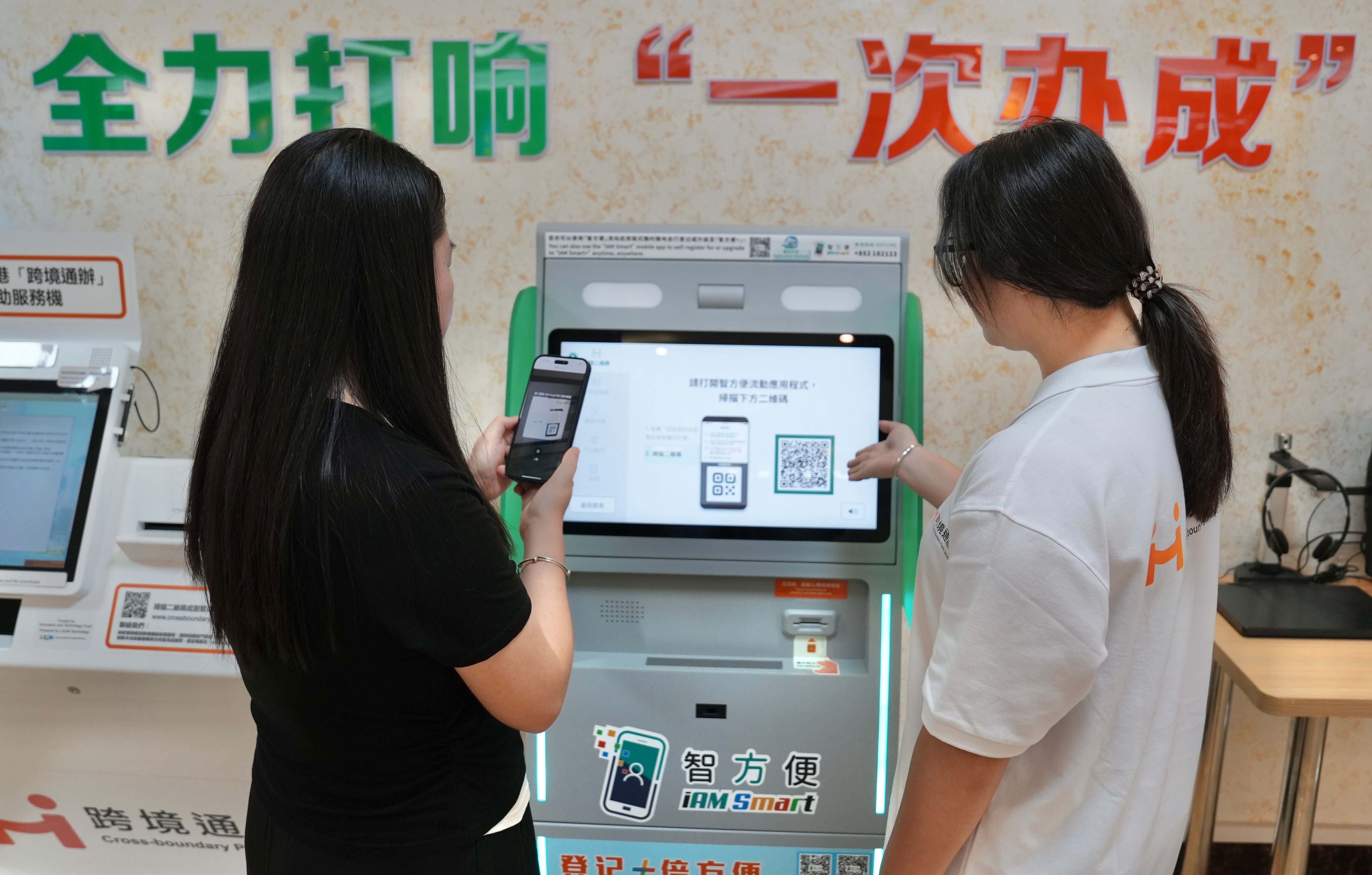
The initiative is powered by HK’s iAM Smart, as well as Guangdong province’s Unified Authentication Platform.
Through iAM Smart, HK residents can log into the Guangdong Government Service Network (Yue Sheng Shi) or the iShenzhen mobile app.
This allows the residents to access Guangdong and Shenzhen's public services in a more convenient and efficient manner, says Wong.
Self-service kiosks have been set up in both HK and cities across Guangdong province to allow residents from both sides to register for an account and access public services without the need for in-person travel.
In addition to setting up the essential frameworks and legal agreements for the cross-border exchange of personal data, Wong adds that the HK government is actively working with Mainland authorities to expand this arrangement to include research and development (R&D) data utilised by enterprises.
“We will explore sharing of research data and mutual recognition of research and development data between the Hong Kong Park and Shenzhen Park of the Hetao Co-operation Zone,” he explains.