How Czech’s cyber envoy is building alliances, from Brussels to the Indo-Pacific
Oleh Si Ying Thian
Successful cyber diplomacy demands empathy, trust and a focus on concrete, mutually beneficial deliverables to build global cyber resilience, says Czech Republic’s Special Envoy for Cyberspace, Marta Pelechová.
-1761208241162.jpg)
Be it Brussels or Indo-Pacific, Marta Pelechová advocates for a relationship-based, context-aware approach to ensure long-term cooperation between Czech Republic and partner countries. Image: Marta Pelechová
For more than a decade, lawyer-turned-diplomat Marta Pelechová has been representing the Czech Republic to lead complex negotiations around corruption and cybercrimes at major international tables.
In her current role as the country’s Special Envoy for Cyberspace, she focuses on turning high-level international agreements on cybersecurity into practical, real-world impact.
Czech Republic has topped the national cybersecurity index (NCSI) for the last two years, and has been using cyber capacity building as a mechanism for international cooperation.
In 2022, the country launched its strategy for Indo-Pacific, with a focus on developing cooperation in cybersecurity and counteracting cyber threats.
Be it Brussels or Indo-Pacific, Pelechová advocates for a relationship-based, context-aware approach to ensure long-term cooperation between Czech Republic and partner countries.
Speaking on the sidelines of the GovWare 2025 event, she shares more with GovInsider on her experience building alliances across regions, and where she sees the future of international cyber collaboration.
Czech’s capacity building niche
Pelechová sees international cooperation as a means for Czech Republic to become more cyber resilient.
“Cybersecurity doesn’t respect geography,” she says, highlighting that the threats faced and techniques used across Europe, Indo-Pacific and globally are similar.
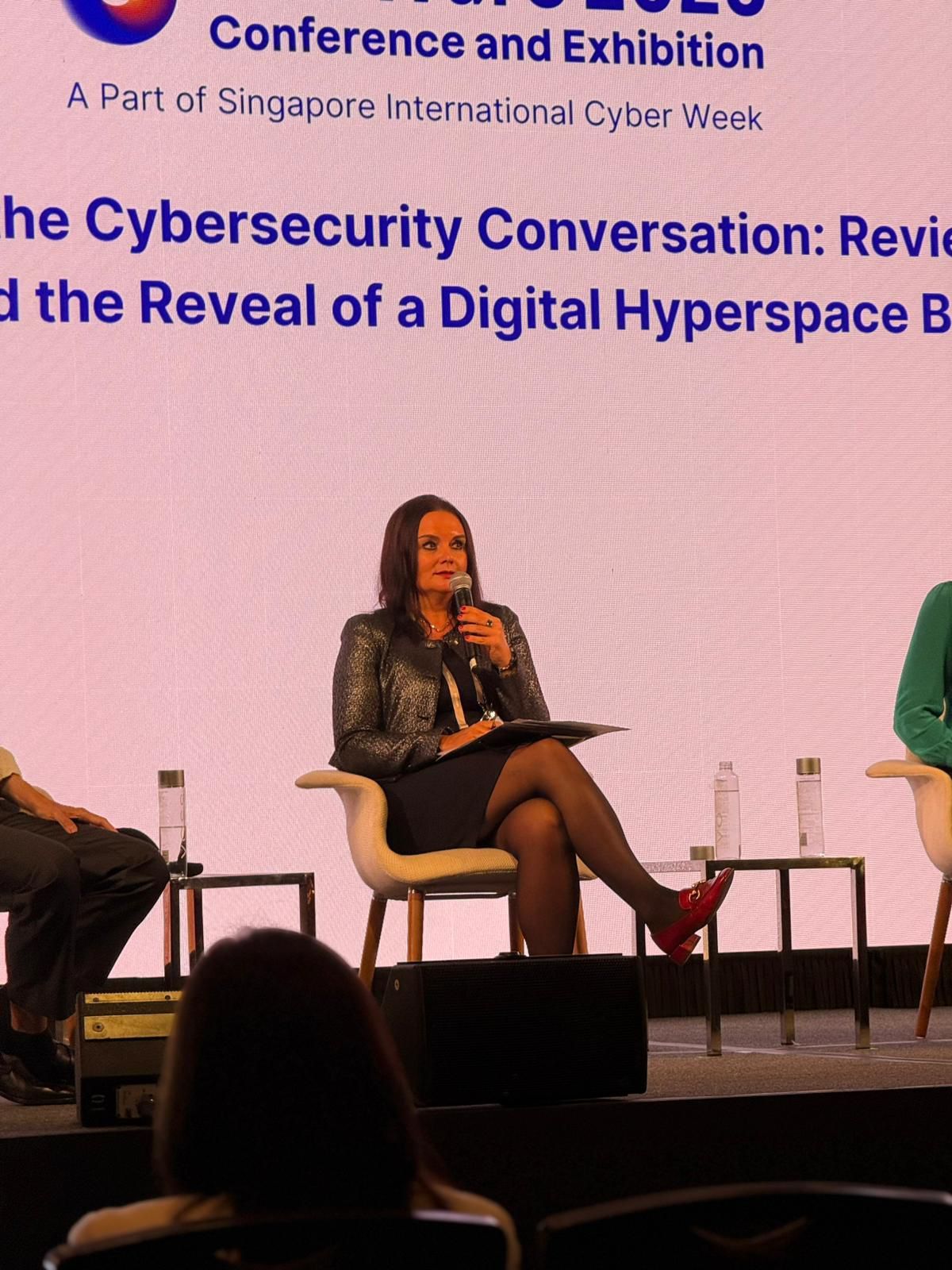
“This is why it’s so important for us to share our experiences and learn from each other. Maybe here in the Indo-Pacific, some countries have found effective responses to specific cyber threats, and vice versa,” she adds.
From Indonesia’s cybersecurity agency BSSN to Bhutan’s GovTech Agency, she emphasises that effective cybersecurity assistance is a partnership, and not a handout.
“The cornerstone of our approach to capacity building is tailoring it to the regional situation and needs of the partner country, so that the country has ownership of the programme,” she says.
This tailoring leads to distinct focus areas for each partner.
For a nation like Indonesia, Czech’s existing, long-standing cooperation supports strengthening the country's national strategies and interoperability within BSSN.
Demonstrating the approach's flexibility, the work with Bhutan - a landlocked country with very different requirements - was more legislative in nature. Pelechová shares that the work is focused on sharing the Czech Republic's own legislation to show them the basic legal framework necessary for cybersecurity.
While the Czech Republic takes a tailored approach to partner with different countries, she says that international cooperations generally follow a general principle to begin with concrete and mutually beneficial deliverables.
To subscribe to the GovInsider bulletin, click here.
The 101 of cyber diplomacy
Across the European Union (EU), United Nations (UN), Indo-Pacific and other major forums, she explains that the Czech Republic’s cyber priorities have remained constant.
These priorities focused on strengthening resilience, shaping responsible state behavior, and supporting capacity building.
The actions, however, differ based on the context, she explains.
Within the EU, Czech Republic actively helps define collective policy and frameworks.
Whereas in the Indo-Pacific, its role shifts to sharing these principles and establishing bilateral and regional cooperation with interested countries.
"We want to share our expertise in a way that respects local context here in the Indo-Pacific, and at the same time respects universal norms to lead to an open, secure, safe cyber space,” she says.
According to Pelechová, bilateral and multilateral approaches to cybersecurity are complementary forces – or “a package that is only effective when pursued together”.
While multilateral forums like the UN and EU are essential for establishing broad agreements and frameworks, bilateral partnerships put them into practice.
Bilateral partnerships tend to focus on a specific issue, be it incident detection or response, as well as research and development (R&D) of emerging technologies, and deliver more tangible results.
Vice versa, bilateral R&D work can also go back to become the “basis for directing the discussions” and shaping policies in multilateral forums, she adds.
Life of a cyber diplomat
Pelechová underlines the importance of empathy and ability to listen to others as essential skills for achieving sustainable diplomatic agreements.
Having a cultural understanding has allowed her to grasp what cybersecurity, or another cyber topic, means in the partner country’s context.

Working for the Ministry of Foreign Affairs, she emphasises that the most crucial deliverable is establishing strong personal relationships.
Always start with personal communication to build trust, and then follow up with tangible, practical cooperation, she says.
These personal contacts and resulting practical cooperation have helped the Czech Republic in receiving early warnings on emerging threats and in working together to solve such threats.
Trust is seen as essential for effective cooperation, not just in cyberspace but across other public policies as well, she highlights.