
Indonesia scales up social protection digitalisation pilot
Close collaboration between central and local governments will be critical as Indonesia looks at a nationwide rollout of the pilot.
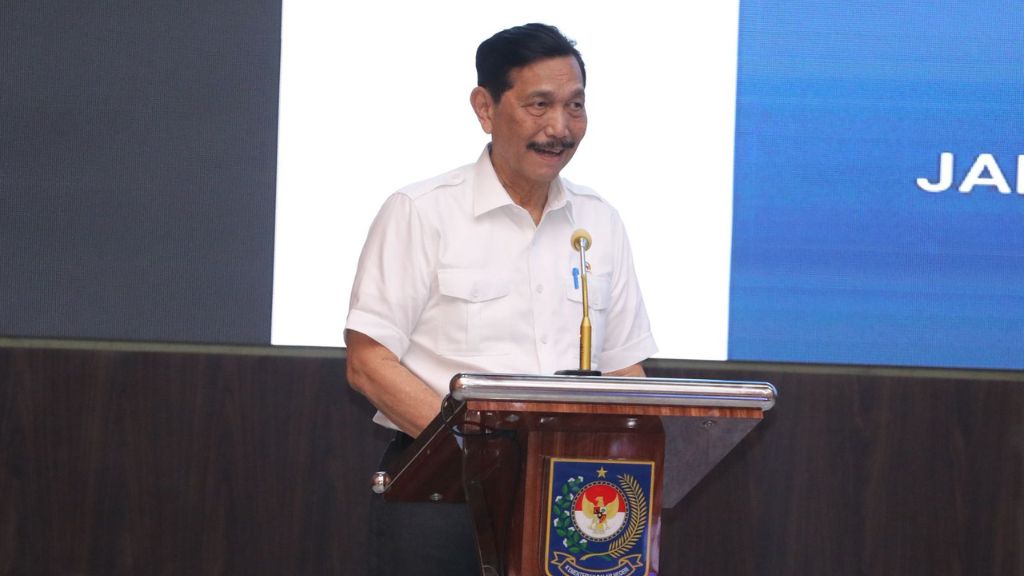
Close collaboration between the central and local governments will be key to the success of Indonesia's social protection programme. Image: Ministry of Home Affairs
The Indonesian government is preparing to scale up its pilot on the digitalisation of social protection programme (perlinsos) to other regions, following its success in Banyuwangi, East Java.
In this coming year, the initiative will cover 41 regencies and cities across 25 provinces, with 78 per cent of the locations outside of Java.
The piloting phase will begin this month and is expected to be completed by July.
Presidential Special Adviser on Government Digitalisation and Technology, Luhut Binsar Pandjaitan, said the expansion marks a crucial phase to test infrastructure readiness, system reliability, and data accuracy before nationwide implementation.
“The success of social protection digitalisation depends on central-local collaboration in preparing digital IDs, ensuring data interoperability, and strengthening local operational readiness,” said Pandjaitan in the National Briefing for the Social Protection Digitalisation Pilot event at the Ministry of Home Affairs Office in Jakarta, February 3.
Speaking before dozens of local government leaders from across Indonesia, Pandjaitan stressed that local governments are pivotal to the programme’s success.
One of the key priorities of the current Prabowo Subianto administration is poverty alleviation – and transparent and accountable social assistance delivery is key to achieving that.
With the system reinforced by artificial intelligence (AI), he expressed hope that the accuracy of beneficiary data would improve, while ensuring that data security and privacy are maintained.
Simplifying governance
Speaking in another keynote session, Minister for Administrative and Bureaucratic Reform (PANRB) Rini Widyantini highlighted that the initiative should not only be positioned as the adoption of a new technology, but as a more systemic reform to address long-standing challenges in assistance delivery.
These challenges ranged from fragmented data and cumbersome manual processes to mistargeted beneficiaries.
Through the perlinsos pilot, the business process for social assistance delivery has been significantly streamlined, from seven stages previously to just three: registration, validation and verification, and disbursement.
“This simplification makes services more accessible and reduces the administrative burden on beneficiaries,” she said.
The expansion of the pilot also serves as a change management strategy, allowing the government to improve targeting accuracy and reduce the risks of exclusion errors, which have long been major challenges in social assistance delivery.
However, Widyantini emphasised that technology and process design are not the only critical factors. Collaboration and shared commitment between central and local governments are equally essential.
“Transformation only works when everyone moves in the same direction.”

Support from local leaders is key
Deputy Minister of Home Affairs, Ribka Haluk, highlighted the importance of ownership and commitment from local governments in supporting the expansion of the perlinsos pilot.
“The perlinsos digitalisation pilot is not merely about applying technology, but a strategic instrument to map poor households more clearly.
“With consolidated data, central and local governments can act more in sync in delivering poverty alleviation interventions from the ground up,” she noted.
As the bridge between central and local governments, the Ministry of Home Affairs is encouraging governors, regents and mayors to fully support the programme implementation.
One form of support involves ensuring the security of identity verification systems for communities, given that the national ID card (KTP) forms the basis for compiling beneficiary data.
The ministry has also asked local governments to support the activation of the national digital ID, Identitas Kependudukan Digital (IKD).
Haluk also urged local leaders in the pilot locations in 2026 to learn from Banyuwangi Regency, which has already implemented the pilot.
Lessons from Banyuwangi Regency
In a presentation, Banyuwangi Regency’s Head Ipuk Fiestiandani shared her experience overseeing the perlinsos pilot in 2025.

According to her, the programme’s greatest challenge lays in the digital data collection stage, particularly in areas with limited connectivity and device ownership.
“In some areas, there is no signal at all, and not all beneficiaries own mobile phones,” she said.
Rather than waiting for perfect infrastructure, the Banyuwangi administration adopted a proactive, outreach-based approach, which mobilised more than 4,000 facilitators to collect data directly from residents.
These facilitators comprised of civil servants, village officials, community volunteers, as well as religious and community leaders.
“Everyone moved voluntarily, without a dedicated budget, with a shared understanding that social assistance digitalisation is essential for transparency and targeting accuracy,” Fiestiandani said.
For areas with limited connectivity, residents were scheduled to visit village offices in rotation, allowing for more stable and equitable use of available networks.
Banyuwangi’s experience shows that infrastructure constraints can be overcome through cross-actor collaboration, she concluded.
Read also:
Indonesia to link its social protection programme with DPI, Jul 23, 2025
Indonesia adopts use case approach to digital government, Aug 7, 2025