
Indonesia to link its social protection programme with DPI
Oleh Mochamad Azhar
The linkage, which will kick in from August, will utilise the country’s digital ID system to enhance the efficiency, integrity and verification protocols of the Perlinsos programme.
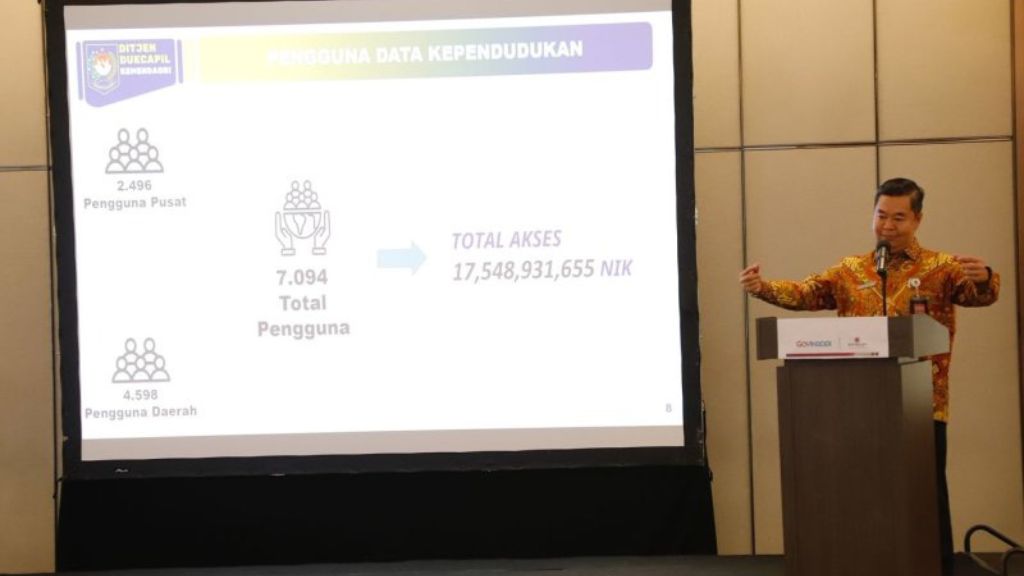
Ministry of Home Affairs' Director-General of Population and Civil Registration (Dukcapil), Teguh Setyabudi, highlighted the importance of population data verification as a key pillar of social protection policies. Image: Directorate-General of Dukcapil.
From August 17 onwards, Indonesia’s social protection programme, Perlinsos, will utilise the country’s digital public infrastructure (DPI) to onboard and verify its beneficiaries.
Perlinsos will connect data for beneficiaries with the Ministry of Home Affairs’ civil registration agency, Dukcapil's digital population identity (IKD) system.
Dukcapil’s Director-General, Teguh Setyabudi, said this integration aims to ensure that only eligible citizens receive these funds.
Setyabudi addressed the country's plans to accelerate the socio-economic impact of DPI during his keynote at the Empowering Citizens and Protecting Identities with Smarter, Faster Governance roundtable event, organised by GovInsider and Entrust in Jakarta on July 15.
According to him, DPI sets the foundation to strengthen digital transformation, through its three main pillars: digital ID, digital payment systems, and data exchange.
“If the Perlinsos data is integrated into the DPI, government social policies will be easier to implement. Aid will be more targeted, and the process will be faster, more accurate, and transparent,” he added.
The successful integration of Perlinsos with DPI could lead the government to apply this model to various other services, including education, healthcare, and population administration.
Building the national DPI
Indonesia’s journey to build its national DPI has been an inter-ministry endeavour to refine the system’s interoperability, governance and security design.
The discussions were led by Indonesian National Economy Council with the Dukcapil, the Ministry of Administrative and Bureaucratic Reform (PANRB), Ministry of Communication and Digital Affairs (Komdigi), Ministry of National Development Planning, and Ministry of State-Owned Enterprises.
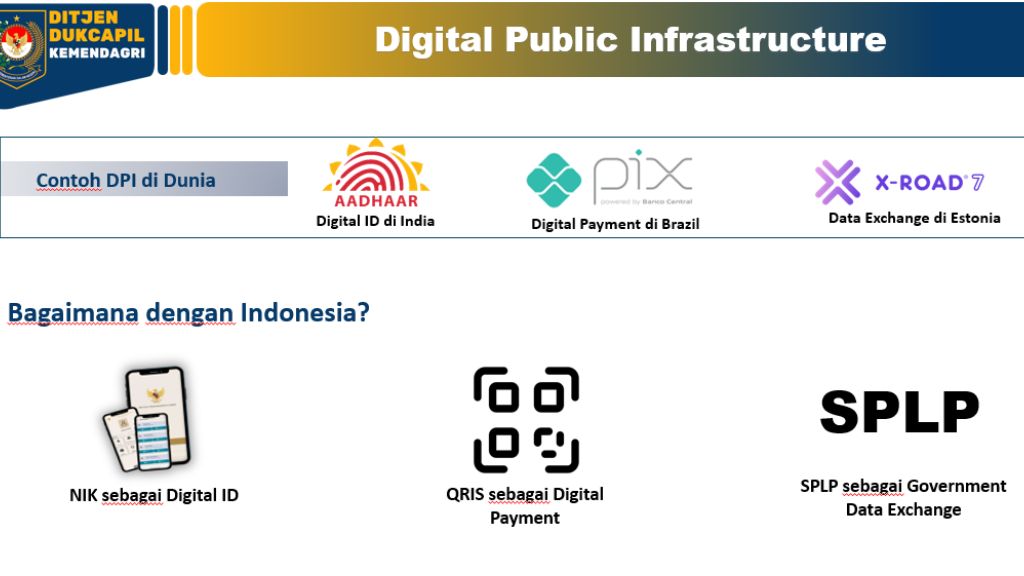
For this Perlinsos-DPI connection, one of the key components of DPI at work is the government API’s system (SPLP) managed by the Komdigi.
This system serves as the backbone for secure, rapid, and efficient data exchange between agencies.
“Komdigi operates the SPLP, while Dukcapil ensures its readiness so that other ministries can utilise and access the required data,” Setyabudi explained.
He added that access to population data services for Indonesian government agencies is free of charge. Fees are only applied to profit-oriented private entities, in accordance with government regulations.
According to Setyabudi, Indonesia has also picked up DPI best practices from various countries.
These include India’s digital ID system, Aadhaar, which have increased its financial inclusion from under 20 per cent of the population in 2009 to over 80 per cent within a decade, as well as Estonia’s data exchange platform, X-Road, which has digitalised 100 per cent of its government services.
“Despite Indonesia’s more challenging demographics, we can still learn from Estonia,” he said.
To subscribe to the GovInsider bulletin, click here.
Population data as the foundation of DPI
Setyabudi explained further about the role of population data in supporting this initiative.
He pointed out that while Indonesia's National Identification Number (NIK) is the core of a citizen's digital ID, the concept extends much further.
It is about creating an entire digital identity ecosystem that will unlock inclusive public and financial services throughout the country.
“By leveraging Dukcapil’s data, citizens can open bank accounts using facial verification and their NIK data without having to fill in multiple forms,” he noted.
According to him, Dukcapil’s data has been connected with over 7,094 institutions, enabling over 17.5 billion data verification access since 2013.
Each day, over 10 million data access transactions occur, primarily from the banking, healthcare, education, and telecommunications sectors.
In the financial sector, Dukcapil’s collaboration with banks has accelerated financial inclusion.
For instance, the digital financial service DANA was able to secure nearly 200 million users in a short period due to NIK-based digital verification.
By utilising DPI for digitalisation, Indonesia’s financial inclusion rate has reached 88.7 per cent this year, with the government’s target to increase it to 93 per cent by 2029.
Prioritising data security
Setyabudi emphasised that connecting Perlinsos with the DPI would only succeed if it were accompanied by strengthened data security measures.
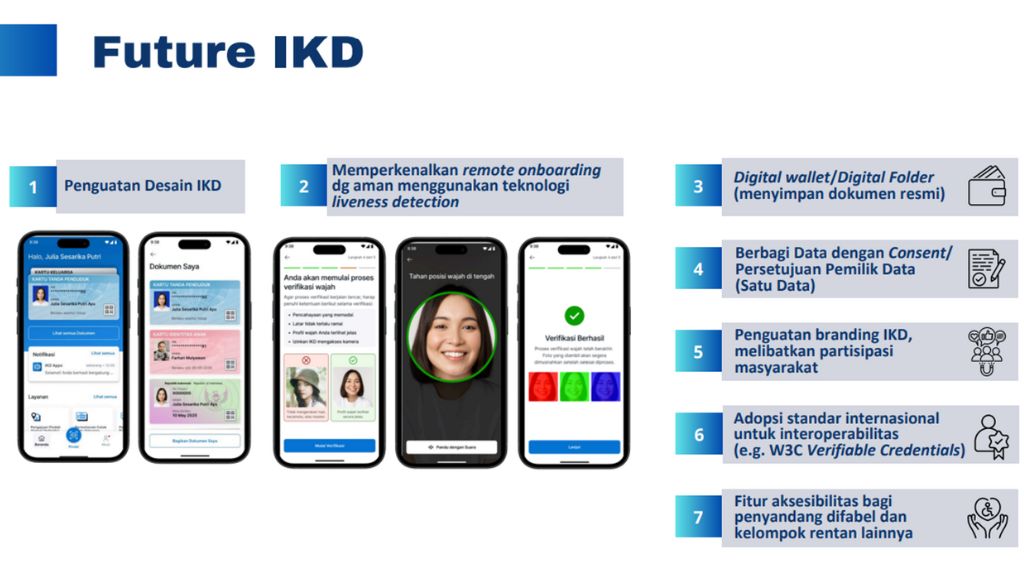
“We are now using facial recognition and will further develop it with liveness detection to ensure that the data used is valid and secure,” he said, adding that Dukcapil’s population data management adheres to personal data protection regulations.
To boost the adoption of the national digital ID (IKD), Dukcapil is prepared to directly engage with central and regional government agencies to assist in activating IKD for both government employees and the public.
“We are ready to come directly to your locations to assist with IKD activation together,” Teguh promised.
With support from the World Bank, Dukcapil will update the IKD design to improve usability, enrich its features, and transform it into a digital credential that meets international standards.
Dukcapil will also focus on ensuring the inclusivity of IKD, making it accessible to vulnerable groups and disabilities.