Japan space agency’s mission to use storytelling to bring satellite science back to earth
Oleh Si Ying Thian
Through its Earth Observing dashboard operated with ESA and NASA, JAXA leverages APIs and community engagement to turn technical metrics into practical tools for social change for citizens and policymakers, says Dr Naoko Sugita.

Japan’s story is one of those featured in the GovMesh Digest special report
Japan's story is one of those featured in the GovMesh Digest special report. You can find the individual stories on the other participating governments at GovMesh 4.0 here.
From hundreds of miles above the Earth, satellites can see so many things – from warming oceans to shifting city skylines. But this data alone is silent.
To make it speak, the Japanese Aerospace Exploration Agency (JAXA) is going back to the basics, turning to the oldest tool in human history: storytelling.
“It’s not the satellite data that people want, but what information people can extract from the data,” said JAXA’s Advisor to the Director, Earth Observation Research Centre, Dr Naoko Sugita.
She was sharing about how the Earth Observing dashboard has evolved from a simple viewing tool into a shared playground, empowering non-space stakeholders to use satellite data to study and solve the world’s most pressing problems.
The dashboard emerged from a collaboration between JAXA, European Space Agency (ESA), and the US’ National Aeronautics and Space Administration (NASA).
Dr Sugita was speaking the GovMesh 4.0 event on March 2 in Singapore, which is a by-invite-only event that convenes emerging digital governments to engage in candid discussions.
Making satellite data relevant for the rest of us
According to Dr Sugita, the dashboard was created in 2020 to monitor the worldwide impacts of the Covid-19 pandemic using earth observation data from ESA, NASA, and JAXA.
The space agencies worked with the common goal of making earth observation data more accessible for the public.
“If I can’t use it, other people outside the space agencies can’t use it too,” she reflected on her role as a policy person at JAXA and not a scientist or engineer.
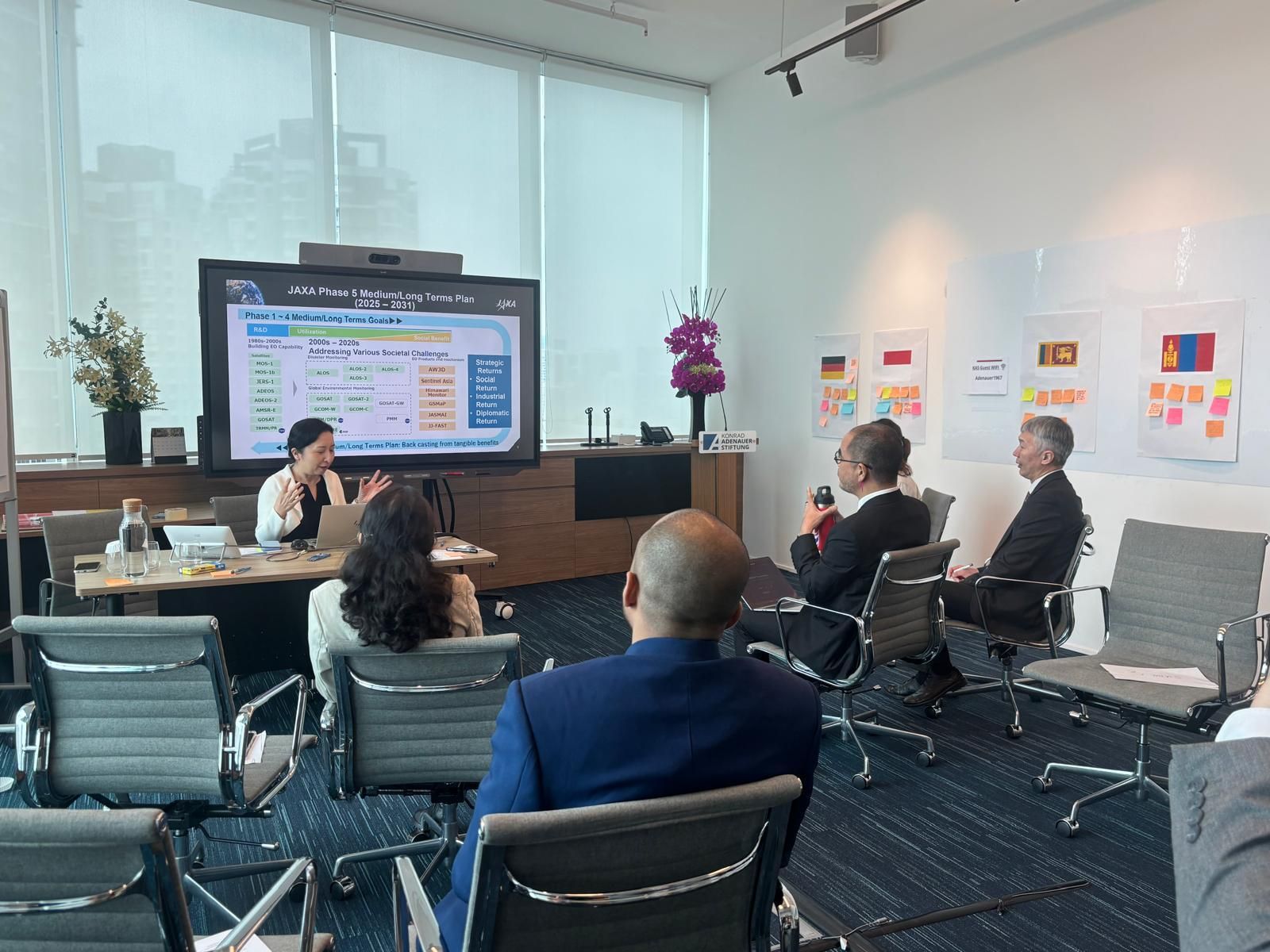
The dashboard was built within three months and delivered on a free, web-based platform, enabling access to more than 850 open datasets across the three agencies, she said.
In 2022, it expanded its data scope to cover more areas related to environmental change.
In addition to Covid-19 data, the new areas were in atmosphere, agriculture, cryosphere (Earth’s ice), oceans, biomass, economy, -and extreme events.
As of 2025, the dashboard has been used across 130 countries, reflecting expansion across Africa, small states, and emerging regions.
Static archive to living tool
Instead of a static archive, the dashboard started becoming a living tool.
Earlier intended to only facilitate earth observation data use among citizens, Dr Sugita highlighted that her team has been working towards enabling open science.
What this meant was encouraging participation from domain experts and other stakeholders to contribute their own narratives and evaluate the impact values.
“Initially we created the stories within the three agencies, but we’ve been opening this up to like researchers and graduate students. So, they’re creating these stories and we would verify it,” she explained.
To make it easy for others to build stories that matter to them, the dashboard used indicators in accessible language like CO2 daily, soil moisture, and lake quality, rather than technical metrics related to satellite data.
“Even if you don’t have any specific knowledge about handling satellite data, you can still use it and explore narratives on societally relevant topics or create new ones,” she explained.
Another key element of open science was for the dashboard to become a lab for others to plug in
In 2022, JAXA launched the “JAXA Earth API” to make it easier for developers and researchers to use JAXA’s satellite data easily in programming environments like Python and JavaScript.
She shared that JAXA recently organised a hackathon with Cyber University, where students used the “JAXA Earth APIs” to build innovative solutions in just two and a half days.
“This proves the strength of the application programming interfaces (APIs) and dashboard to make satellite data accessible. We would like these data to be used more,” she said.
The dashboard is also integrated with Jupyter Notebooks, which allows researchers to run the analyses themselves to verify the results or tweak the parameters for their own studies.
AI for greater accessibility
Dr Sugita sees artificial intelligence (AI) as a bridge between raw data and practical solutions.
Firstly, analytical AI could be used to detect anomalies and categorise satellite imagery. For example, turning ambiguous pixels into clear categories like “forest” or “urbanised area.”
Secondly, generative AI (GenAI) could be used as a consultant for the user.
She said that JAXA is looking to incorporate a GenAI layer on their own dashboard to allow users to ask text-based questions.
“The ideal way is to be able to ask the dashboard a question like ‘When should I plant my rice to get the best harvest?’,” she explained.
By combining past insights with real-time satellite data, the AI could provide actionable responses for the user.
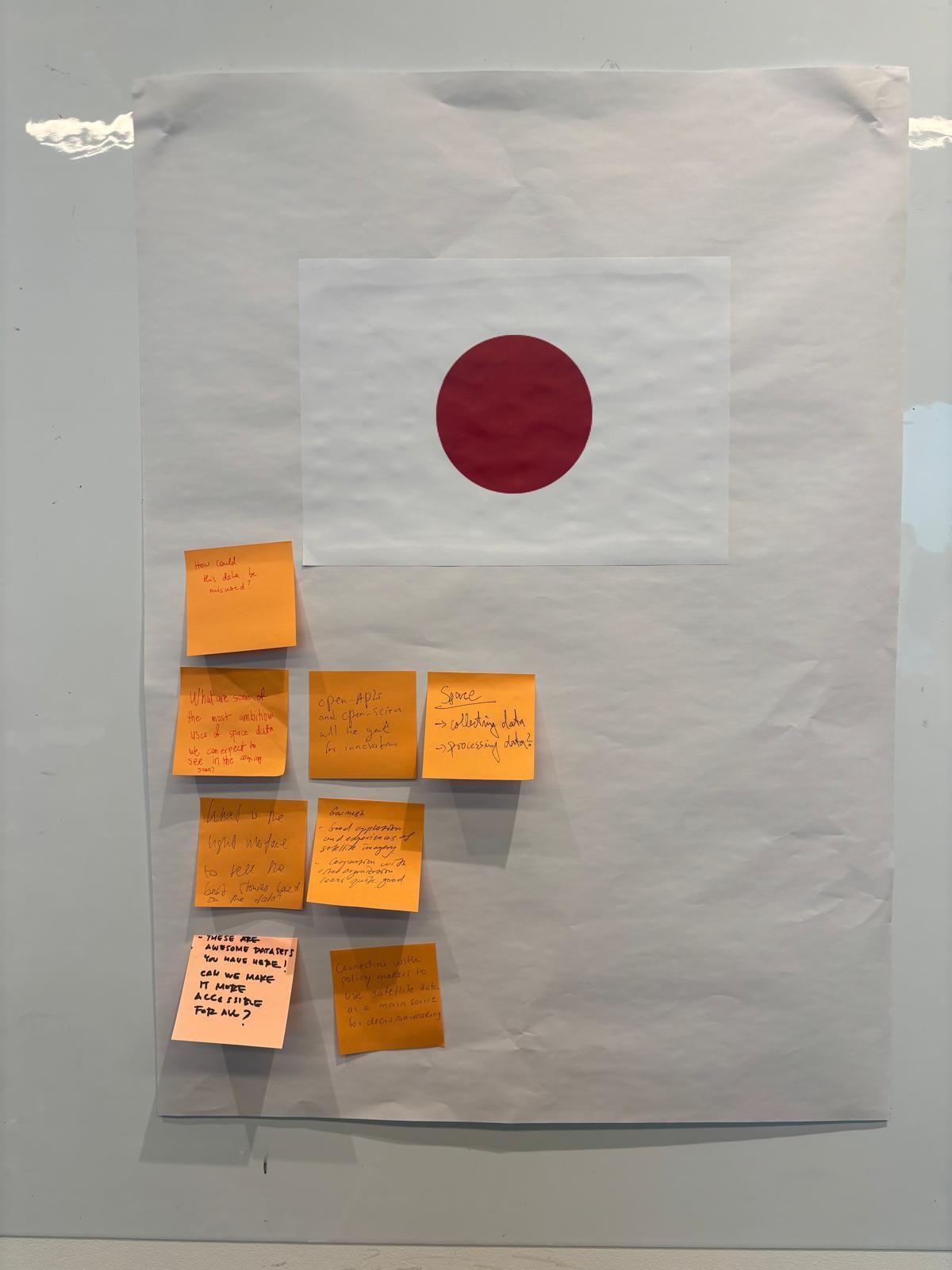
When Dr Sugita concluded her presentation, several participants shared how their own governments have already integrated open-access earth observation data to monitor shifting terrains and inform national planning.
The takeaway was that for data to be a truly transformative tool, it requires a human-centric infrastructure.
Through an accessible dashboard, APIs, AI and community engagement, governments can turn technical metrics into meaningful tools for other users to tackle broader societal challenges.