Philippines employs AI in Mindanao to promote sustainable agriculture
Oleh Yen Ocampo
The Department of Science and Technology (DOST) has been building a strategic framework to promote the efficient use of resources while promoting waste reduction and eco-friendly farming.

The Philippines Department of Science and Technology (DOST) initiatives are integrating the use of AI and software into various regional businesses, promoting the adoption of circular economy practices as effective development options. Image: Canva
By blending artificial intelligence (AI) with circular economy principles, the Philippines Department of Science and Technology (DOST) has been building a strategic framework for sustainable agriculture within farming communities.
This has helped farmers embrace smart farming technologies that boost productivity while caring for the environment in regions like Caraga and Davao, located in Mindanao, the country’s second-largest island and the world’s seventh most populous.
DOST has been empowering micro, small and medium enterprises (MSMEs) by supporting makerspaces and introducing digital tools such as MapX for tax mapping that demonstrate how technology can complement responsible development.
Speaking to GovInsider, DOST Secretary Renato U Solidum Jr, said the goal was to create more employment and livelihood prospects in the Caraga Region.
In Davao, through the Southern Mindanao Agriculture, Aquatic and Resources Research and Development Consortium (SMAARRDEC), DOST has been instrumental in bringing innovation straight to the fields.
Local farmers have been learning how to harness data, automation, and AI that are transforming traditional agriculture into a smarter, more sustainable way of life.
Eco innovation
Solidum stressed that DOST's initiatives aimed to integrate the use of AI and software into various regional businesses, promoting the adoption of circular economy practices as effective development options.
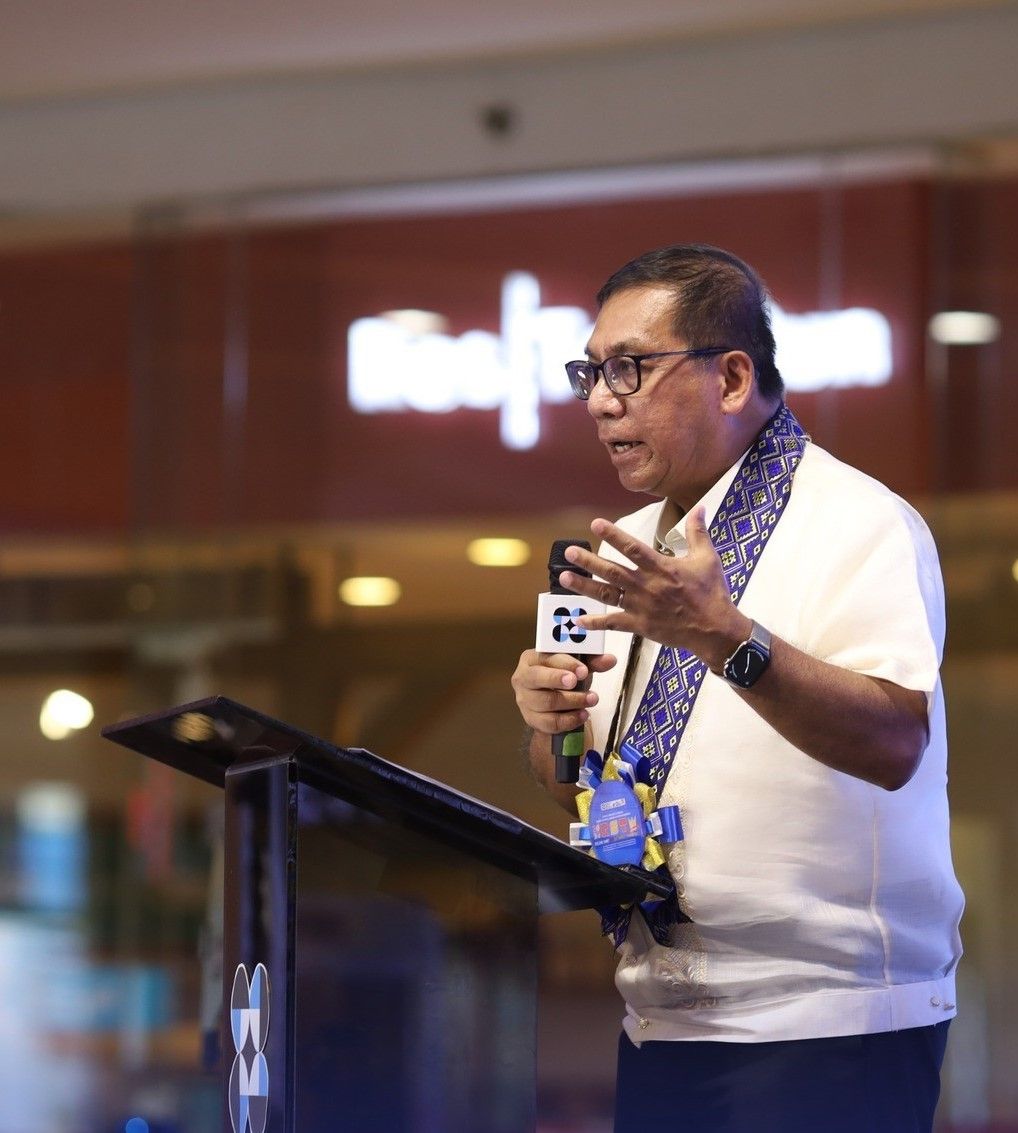
“These are not mere trends - they are essential lifelines for resilient and adaptive development in the face of climate change, digital acceleration, and a globally competitive landscape,” said Solidum.
He added that there was a need to move away from the traditional “take, make, dispose” model and adopt practices that promoted resource efficiency by eliminating waste and maximising the reuse of materials.
Solidum said Caraga was already making strides in sustainability with projects like mine tailings valorisation, ScrapCycle Technology, and Project GreenWAVE in Siargao Island; these efforts showed how innovation could turn waste into opportunity, from reusing mine materials to creating cleaner energy solutions.
Solidum emphasised the efforts to promote science and technology in Caraga, pointing out that since 2022, more than 1,000 DOST scholars had been training locals in robotics, AI, and Industry 4.0 through nine Innovation and Makerspaces initiatives.
Regional MSMEs made almost ₱400 million (S$9 million) through the small enterprise technology upgrading programme (SETUP) in 2024, while Caraga's “creativity continued” to expand thanks to 30 innovation centres, including Food Creativity Centres and R&D hubs.
“One standout solution is MapX - a homegrown, web-based tool that allows local government units (LGUs) to digitise land parcels, overlay satellite imagery, and automate tax mapping. This innovation has already generated millions in revenue and has the potential to scale nationwide,” Solidum said.
Smart farming
Among DOST-Davao’s many initiatives were smart farming technologies, developed in collaboration with the Southern Mindanao Agriculture, Aquatic and Resources Research and Development Consortium (SMAARRDEC).
The agency has been helping local farmers adopt innovations that merge data, automation, and AI, promoting smarter and more sustainable agricultural practices.
One of the innovations was Zappify, an Internet of Things (IoT)–based pest control device that automated the detection and management of pests.
Using sensors and connectivity, Zappify autonomously identified pest activity and triggered control measures only when necessary, reducing chemical pesticide use and lowering operational costs.
This has enabled farmers to protect crops more efficiently while lessening environmental impact.
To subscribe to the GovInsider bulletin, click here.
Another breakthrough leveraged multispectral data for precision agriculture.
By capturing light beyond the visible spectrum, multispectral imaging provided detailed insights into plant health, soil conditions, and moisture levels.
This information allowed farmers to make informed decisions on irrigation, use of fertilisers, and harvesting, leading to higher yields and improved resource management.
Another initiative INDAI (INspection of Durian using AI), demonstrated how AI has transformed one of Davao’s signature crops.
The system employs non-invasive imaging and AI algorithms to evaluate durian quality without cutting the fruit open, ensuring consistency, reducing waste, and helping growers meet market standards while increasing income.
According to DOST Davao Regional Director, Anthony C Sales, these technologies were proof that science and innovation were not abstract concepts but real, practical tools that could transform the way farmers work.
Sales added: “By empowering our agriculture sector with smart technologies, we are securing not only better harvests but also a more sustainable and competitive future for Mindanao”.