-1783304403050.jpg)
Poon Yu Hui, Senior Clinical Informatics Specialist, Synapxe, Singapore
Oleh Sol Gonzalez
Meet the young public sector officials in the inaugural Young & Official Report 2026.
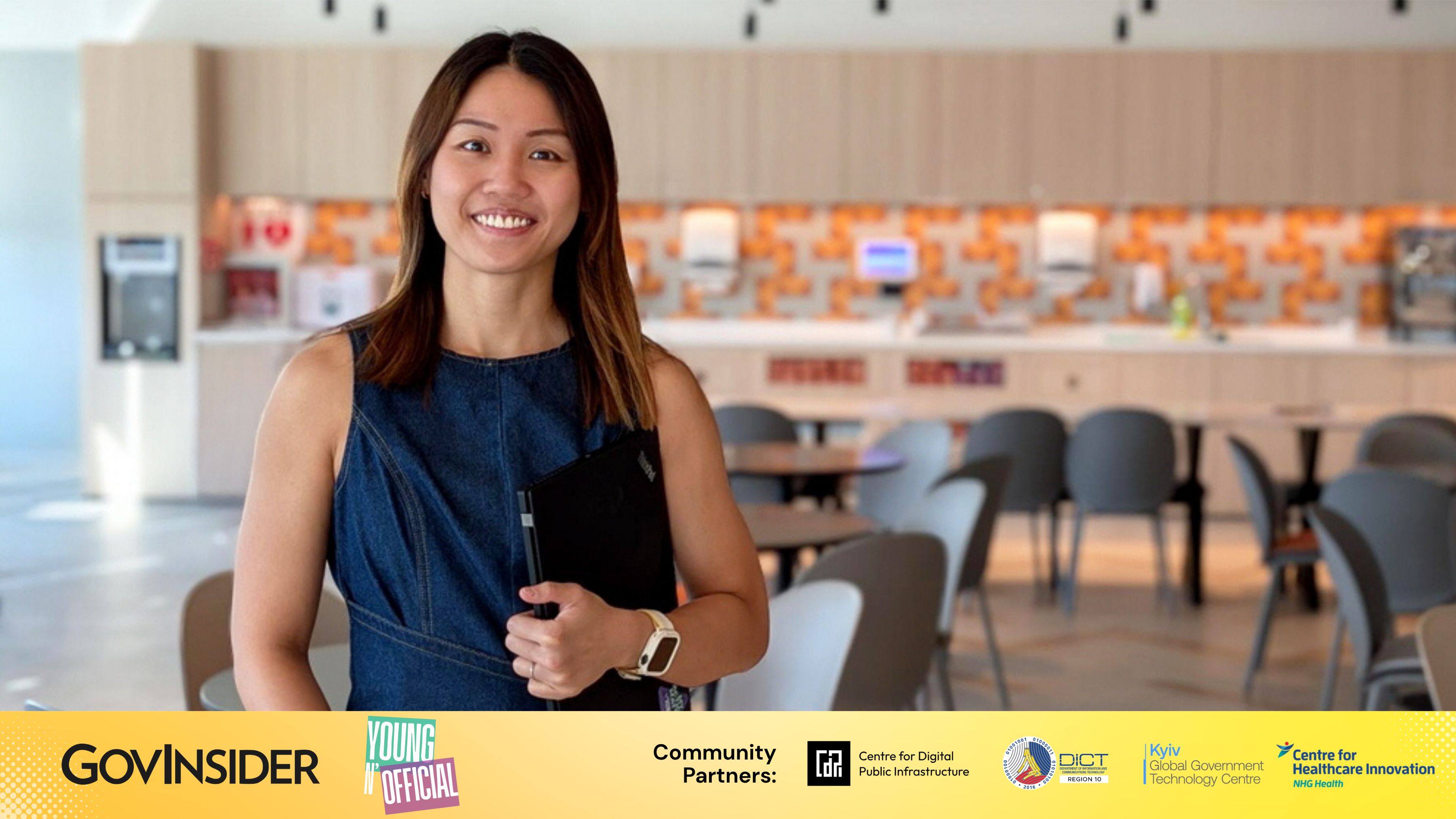
Poon Yu Hui, Senior Clinical Informatics Specialist, Synapxe, Singapore. Image: Synapxe
1) What does public service mean to you? Can you share more about your role in the public
sector?
To me, public service is, as the term implies, serving the Singapore public.
Prior to joining Synapxe, I worked as an outpatient pharmacist at the Singapore General Hospital, performing drug medication reconciliation, reviewing drug orders, catching drug interactions, counselling patients and caregivers, and ensuring that patients left the counter understanding their medications.
At that point, I felt that was the most immediate, tangible sense of public service.
As a Clinical Informaticist today, my work is less visible to the public. Most days, I maintain clinical terminology code sets used in our IT systems, to keep them accurate and current for those who use them.
I also serve as a clinical subject matter expert for our technical teams, translating between what clinicians actually need and what systems should deliver. From time to time, I share the clinician’s perspective with my tech colleagues—both during onboarding for new joiners and in project work—to help ground the work in real clinical needs.
My workday looks so different now and I don’t get to see patients face to face. However, I know that the contribution is still very essential, and I continue to deliver on the mission – serving the Singapore public, but this time, through healthtech.
2) Tell us about a project you were involved in. What impact did it have on the community?
One exciting project I worked on was to use generative AI to assist in drug authoring for the
Singapore Drug Dictionary, the national standard for drugs.
Traditionally, authoring a single drug entry is painstaking work: over 60 detailed fields distilled from dense, highly technical product inserts. I collaborated closely with our data science team to reimagine this process – building AI capabilities that can intelligently sift through complex documents, extract critical information and pre-populate the drug authoring portal.
This wasn’t just about efficiency—it was about raising the bar for accuracy and safety. With a high volume of drugs processed weekly, even small omissions can have downstream impact.
By reducing manual burden and minimizing human error, we’re strengthening the reliability of a system that ultimately supports clinicians and safeguards patients nationwide.
Separately, my capstone project allowed me to explore how AI can assist in curating and maintaining sensitive diagnostic code sets. Here, the challenge is not just technical but deeply meaningful – classifying which health data requires extra protection as it moves across healthcare systems.
The goal is to enable smarter, more secure handling of information that people trust us to protect.
While each project operates at a different layer of the healthcare ecosystem, they all connect to a common purpose – using technology to improve, empower, and serve the public. That’s what makes the work both impactful and deeply motivating for me.
3) As a young professional, how has your unique background or perspective allowed you to identify a solution that others in your organisations might have overlooked?
Something unique I can bring to the table is my combination of clinical and technical knowledge.
Trained as a pharmacist, I understand clinical workflows, patient safety considerations, and how healthcare professionals think and practise.
Through my current Masters in AI specialisation, I have developed the technical literacy to understand software pipelines and AI models.
This dual perspective lets me translate between teams. I can discuss technical concerns with engineers and at the same time, address clinicians’ practical pain points in their language. Acting as a bridge speeds progress and helps me contribute meaningfully on either side where necessary.
4) What is your personal strategy for maintaining your creative energy when faced with bureaucracy?
While bureaucracy can be frustrating at times, I have learnt to see it from a different perspective: rigorous processes exist for a reason, and working in the public sector carries a responsibility to ensure decisions and resources meet high standards.
When I remind myself of that, the checks and oversight feel less like obstacles and more like something worth upholding.
It also helps to have personal interests outside of work to keep me grounded and it’s a bonus if it is aligned to my day job. I enjoy keeping up with the latest advancements in AI and experimenting with new tools — it keeps my curiosity and knowledge current, without the constraints that sometimes come with formal processes.
5) If you had just one area to invest in to accelerate transformation in the public sector
(regulation, technology, talent, etc.), which one would you choose and why?
If I may, I would actually choose two areas, because I see them as deeply interconnected and equally important. The first is investing in continuous experimentation and innovation, and the second is investing in people, specifically in helping them build the confidence and skills to use technology well.
On experimentation, I believe in taking calculated risks, supported by proper resourcing for experimentation. From my experience, transformation falters not because people lack ideas, but because the journey from innovation to implementation is inherently complex.
The rigorous processes of testing, iteration, and validation are necessary, but they can mean that even strong innovations take time to mature. So, without deliberate investment in experimentation—whether it’s time, funding, or structured sandboxes—many good ideas just don’t get the chance to scale. The ability to test, learn, and refine quickly is critical to accelerating real change.
At the same time, we sometimes underestimate the importance of bringing people along.
Technology alone doesn’t transform anything—people do. As tools like AI become more embedded across sectors, it’s no longer enough to just introduce new systems. People need to understand how to use them, and just as importantly, how to question and interpret them.
Coming from a healthcare perspective, this is especially important. Clinicians and those supporting clinical systems need to understand what AI can and cannot do. These tools are meant to support our work, not replace human judgement. Human-centred care still needs a human in the loop, and accountability must remain with people, not with the technology.
For me, I’d invest in both—creating the environment where innovation can be safely tested and scaled, and equipping people with the skills and judgment to use those innovations responsibly. That’s where I think sustainable transformation really happens.
6) What is your greatest ambition as you grow in your public service career?
My bachelor’s degree and first official training was in the pharmacy domain and that’s shaped what I care about most – better healthcare for Singaporeans. That ambition has stayed constant, even as my work has evolved.
I envision a future where medication information isn’t fragmented or hard to navigate, but accurate, accessible, and intelligently connected across the entire care journey—from prescribing and dispensing to long-term monitoring and patient education.
As I grow in public service, I hope to take on roles that help develop and deliver that, improving the experiences for clinicians and ultimately serving the public.
7) What is a “universal value” that connects everyone in your department – from interns to
directors – and how do you use that to drive collaboration?
A genuine sense of ownership – and the belief that the quality of the output is everyone’s responsibility. My department is made up of clinicians, and they take a pragmatic approach when faced with challenges, moving quickly to identify problems and figure out how to address them, rather than dwelling only on hurdles and how things can go wrong.
What I also appreciate is a culture where hierarchy is structurally present but does not create excessive interpersonal distance. I can approach a senior colleague with a question or a half-formed idea without much hesitation, allowing me to clarify doubts quickly, learn swiftly and problem solve as early as possible.
8) What is the best piece of advice you’ve got for the next generation of public servants?
I would say: Remember the who, not just the how. It is easy to get absorbed in systems, technology, and processes - but those are means, not the end. The point is always the person at the end: the patient, the caregiver, the member of the public.
Public service is, at its core, about serving people. If that is not the starting orientation, the
technical work will eventually feel hollow.
9) What is a myth you wish to debunk about young public servants?
One myth I often hear is that young people in the public service are only here for the 9-to-5, doing the bare minimum. That hasn’t been my experience.
Many of the younger colleagues I work with are driven by a genuine commitment to improving systems for patients and caregivers. That motivation pushes them to explore new approaches in their own time, integrate them to improve existing processes, and push for improvements even when the pace is frustrating.
It is critical work that rarely wins externally recognition, as much of it happens quietly behind the scenes. Nonetheless, their commitment is unwavering, and it is inspiring to me.
10) Write a letter to your future self in 2035.
Dear future me,
Firstly, I am proud of you for taking the leap.
Leaving a clinical role, you had spent a substantial amount of time mastering was not without fear. You ventured into something as unfamiliar as health informatics and AI, and it was not the easiest path to take.
More than just making the switch, your curiosity and dissatisfaction with yourself led you to upskill, pushing you to sit with the discomfort of starting from the bottom, of not knowing, but you did the work anyway.
I hope that your knowledge has led you to make a greater impact in these 10 years, and that this
sense of curiosity and drive to keep growing never leaves you, even as you grow older.
And I hope, above everything else, that you never lose sight of who you are ultimately serving.
Always remember why you started here.