-1783304403050.jpg)
Riswanto MR, Junior Planner, National Civil Service Agency, Indonesia
Oleh Mochamad Azhar
Meet the young public sector officials in the inaugural Young & Official Report 2026.
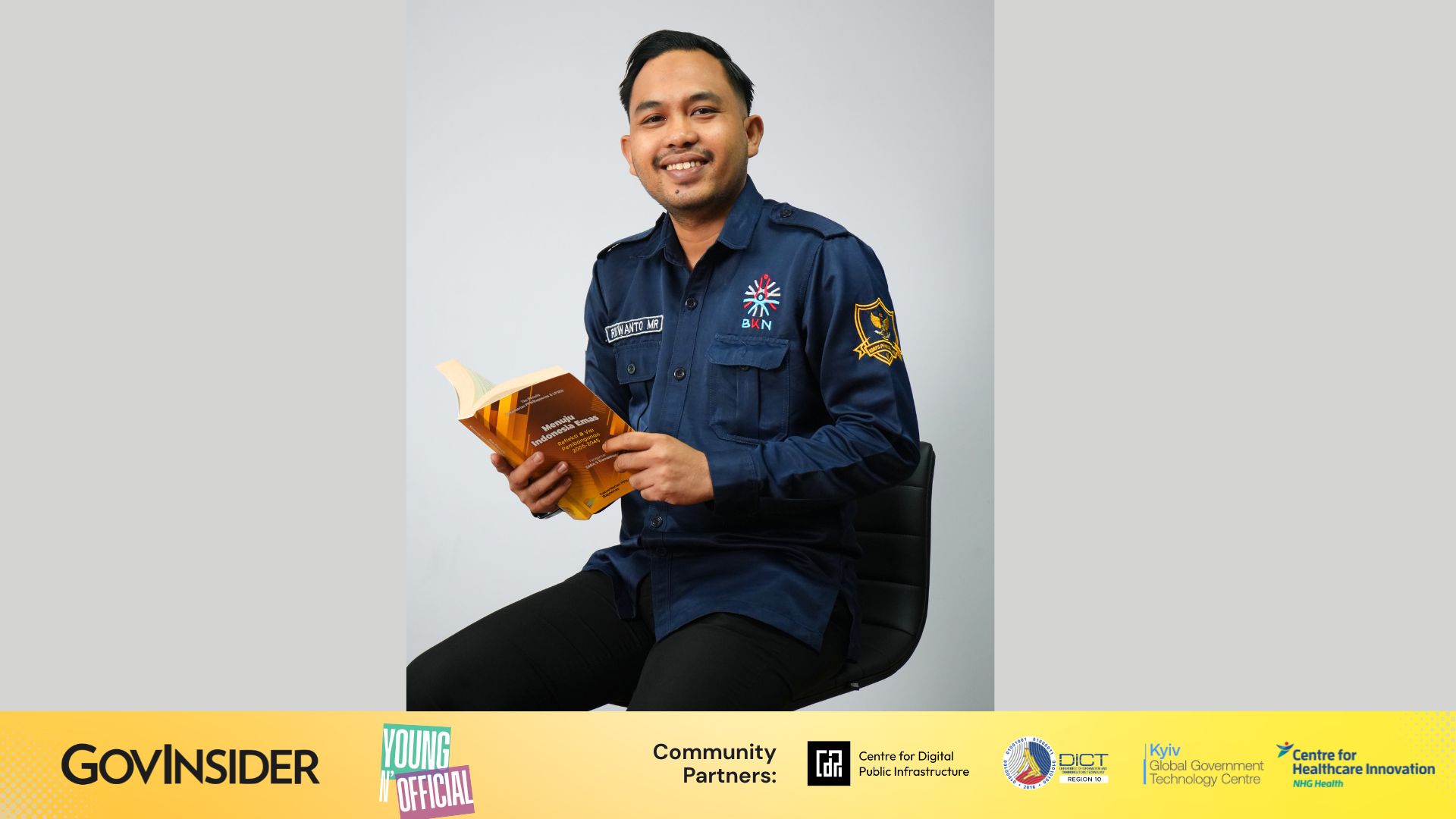
Riswanto MR, Junior Planner, National Civil Service Agency, Indonesia
1) What does public service mean to you? Can you share more about your role in the public sector?
Public service, to me, is how we fulfil what is rightfully owed to the public.
Public service is certainly not merely about following procedures, but rather about ensuring that every recipient of services feels that the state is always present in meeting the needs of its citizens.
In my current role, I work largely behind the scenes – designing concepts, building systems, simplifying processes, and trying to align technology with the real needs of the organisation. I play a significant part in realising bureaucratic reform that is not only output-based but strives to ensure that the reform we have long championed truly has an impact on society.
2) Tell us about a project you championed. What impact did it have on the community?
One of the most meaningful was this year, when I was entrusted with leading the Development Project for an Organisational Performance Management System integrated with Individual Employee Performance. This project was born as an important part of realising accountability in both organisational and individual employee performance.
The overarching narrative I built was about how every employee can make a genuine contribution in supporting the goals of the organisation and the state. A flexible working culture needs to be supported by a reliable performance monitoring system.
Through this system, I hope that the distribution of employee workloads becomes more equitable and serves as the basis for reward and punishment within the organisation.
For the organisation itself, the data presented in the system can serve as a basis for strategic decision-making by leadership.
This project may not directly target the public, but it serves as an enabler that bridges the way every government institution delivers accountable and evidence based public services.
3) As a young professional, how has your unique background or perspective allowed you to identify a solution that others in your organisations might have overlooked?
I come from the perspective of a generation raised within conventional and largely manual bureaucratic patterns, who then faced a transition period called "digitalisation". I have observed that with this shift in governance paradigm, nearly every institution has rushed to create systems in the name of change projects.
I often ask myself: is this what we call digitalisation, or is it merely computerisation? Simply moving work from the desk into a computer whilst in reality never truly leaving behind conventional ways of working. That approach has pushed me not to fall into what is known as policy inertia.
I prefer to build something minimal yet meaningful, then develop it incrementally. Sometimes, a simple way of thinking can break old habits in ways that some seniors would never have considered.
4) What is your personal strategy for maintaining your creative energy when faced with bureaucracy?
I always remind myself that bureaucracy is a system, not an enemy. My primary strategy is to look for opportunities to experiment with small concepts and frameworks that can demonstrate tangible results.
I always bring enthusiasm to every assignment from leadership, whether within the office environment or outside it – meeting new people and sharing new ideas is the most valuable incentive. Beyond that, I make a habit of reading and observing things outside of work to keep my perspective fresh, and of building networks and communities that share the same passion for change.
5) If you had just one area to invest in to accelerate transformation in the public sector, which one would you choose and why?
I would choose to invest in talent and ways of thinking. Technology and regulations can be bought or created, but without people who possess curiosity, integrity, and critical thinking skills, everything else will be in vain.
We need civil servants who do not merely comply with rules, but who are capable of questioning whether those rules are still relevant and of steering the organisation through the waves of change. That is the most difficult yet most powerful foundation of all.
6) What is your greatest ambition as you grow in your public service career?
I have an ambition to be part of the generation that successfully builds Bureaucracy System 5.0, where the delivery of public services is truly centred on the human life cycle. Society would have access to services from birth to death – public services that make people proud to be citizens of this nation.
Since the very beginning of my career as a civil servant, I have also dreamed that one day I will produce a book entitled “Bureaucracy 5.0”.
7) What is a “universal value” that connects everyone in your department – from interns to directors – and how do you use that to drive collaboration?
As someone of Bugis heritage, I have always firmly upheld the principles of Sipakatau (mutual respect and humanising one another), Sipakalebbi (mutual honour and appreciation), and Sipakainge (mutual reminder towards goodness).
This philosophy applies not only in the workplace, but wherever we set foot. I believe that these three values form the foundation for building strong collaboration. I put them into practice by creating open spaces for discussion where ideas and criticism from anyone – from interns to leadership level – are valued, so long as they are of benefit to the organisation and society.
8) What is the best piece of advice you’ve got for the next generation of public servants?
I recall what Victor Frankl wrote in his classic book Man's Search for Meaning. The essence of which is: never chasing success, for success is not something to be chased but something to be created, and it can be achieved through dedication to a purpose greater than oneself.
That is the best advice for the next generation. Show your dedication, and success will come to find you.
9) What is a myth you wish to debunk about young public servants?
There is a myth that young civil servants are immature, lack experience, and are too hasty. In my view, in today's era, measuring a person's maturity should not be based on how many years they have formally worked in an office, but rather on their ability to adapt to change and the speed and accuracy of their decision-making.
We must be honest — young civil servants like us are full of enthusiasm and ideas, yet are often constrained by a system that is not yet ready to embrace change. This younger generation actually has a remarkably sharp sensitivity to technology and societal issues. Give them trust and space, and they will surprise you.
10) Write a letter to your future self in 2035
Hello Riswanto MR,
Today you have entered the year 2035, one decade away from this nation's noble aspiration of becoming a Golden Indonesia 2045.
As you read this letter, nine years have passed since you wrote it in the cold of the early morning hours. When dreams were still small notes whispered in the verses of your prayers. I hope you still remember why you chose this path. I hope you have not lost the fire that once burned brightly as you faced piles of tasks and long meetings.
I hope that you, now sitting in a seat of strategic leadership, still carry the same gleam in your eyes as you do today – eyes full of optimism, eyes whose every blink holds hope.
Do not let your position make you forget the way home. Do not let the respect you receive make it hard for you to apologise and to forgive. And do not let your busyness cause you to lose time sitting alongside those who love you unconditionally.
I want you to remain with someone who believes that kindness, no matter how small, will never be in vain. Keep learning, inspiring, and stay humble.
From you, Riswanto MR, in 2026.