Singapore introduces new benchmark for data centre IT equipment
Oleh Amit Roy Choudhury
To be part of the government’s bulk tendering process, the new standard mandates that IT equipment, especially those meant for data centres, should be able to operate at temperatures up to 35°C, thus reducing energy demand for their cooling.
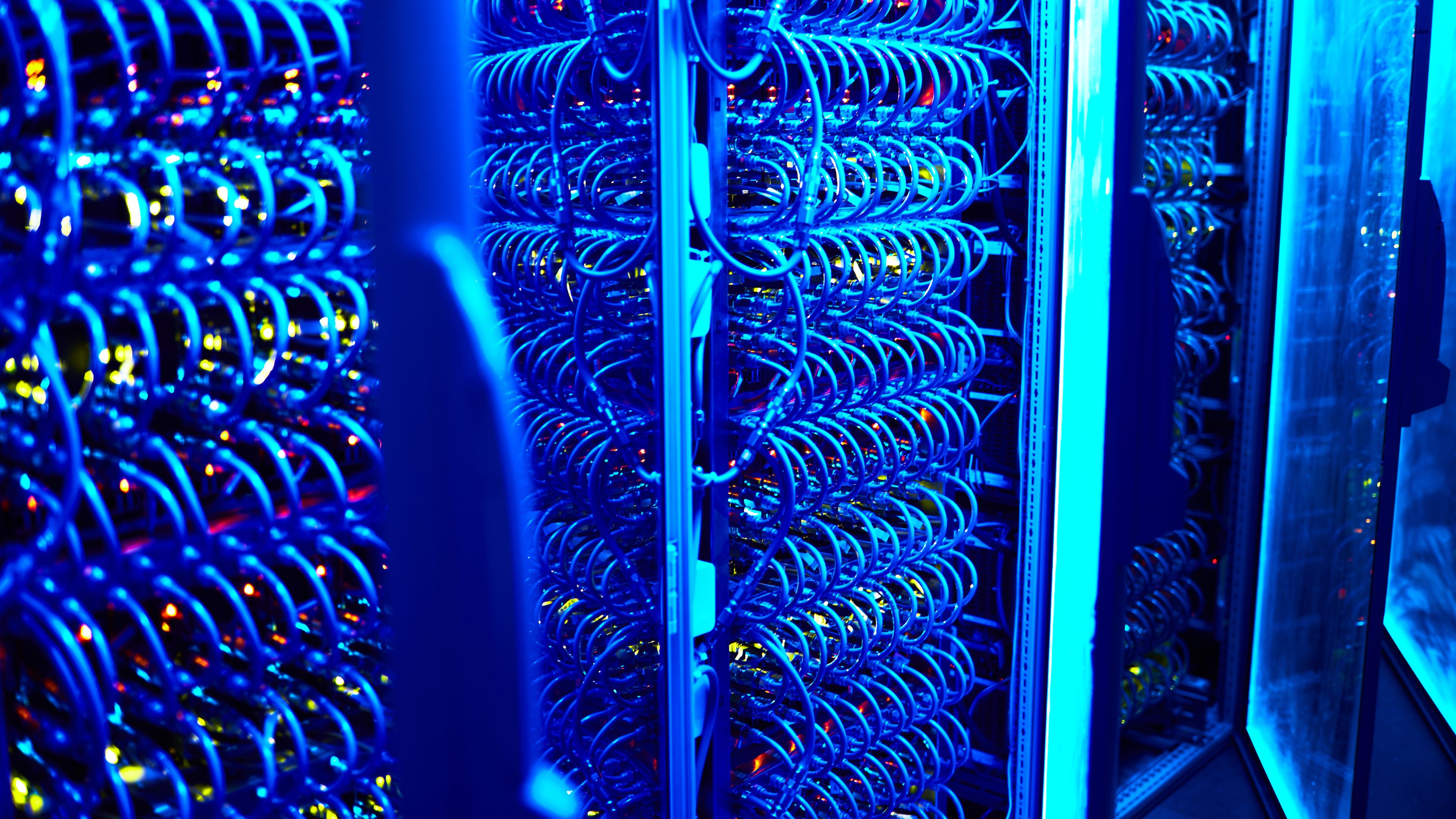
The Energy Efficiency of Data Centre IT Equipment standard specifies that the equipment should be able to run safely at temperatures up to 35°C. It is part of Singapore’s Green Data Centre Roadmap. Image: Canva.
Singapore has become one of the first countries in the world to launch a benchmark standard for IT equipment used in data centres (DCs) that are located in the tropical region.
The new standard, SS 715:2025: Energy Efficiency of Data Centre IT Equipment, will help DC operators select IT equipment for energy efficiency and operation at higher temperatures, thus requiring less cooling.
The standard specifies that the equipment should be able to run safely at temperatures up to 35°C.
IT equipment typically accounts for 60 per cent of energy usage, and DCs which adhere to the SS 715:2025 standard are expected to see at least 30 per cent saving in energy consumption.
Additionally, DCs running at higher temperatures could also potentially benefit from a further two-five per cent energy saving on the cooling systems, with every 1°C increase in the DC operating temperature.
The new standard was part of Singapore’s Green Data Centre Roadmap, released in May 2024, which charts the sustainable, continued growth of data centres in support of Singapore’s ambitions to grow the digital economy.
A statement by the Infocomm Media Development Authority of Singapore (IMDA) noted that the energy consumed by DCs was expected to increase further with the growing use of Artificial Intelligence (AI), where the IT compute energy consumption was more intensive.
Data supports this assertion.
The International Energy Agency (IEA) said global DC electricity consumption was set to hit 945 Terawatt-hour (TWh) by 2030, which was slightly higher than Japan’s total electricity consumption today.
IEA noted that AI was the most important driver of this growth, alongside growing demand for other digital services.
In another report, Goldman Sachs said the explosion in the interest in generative AI (GenAI) would result in the global power demand from DCs increasing by 50 per cent by 2027 and by as much as 165 per cent by the end of the decade (compared with 2023).
Operational efficiency important
According to IMDA, apart from procuring energy-efficient IT equipment, it was also important to ensure that such equipment was operated efficiently.
The standard provided best practices and guidelines on the selection, deployment and operation of IT equipment, including reducing the amount of equipment in the DCs by replacing older ones with fewer but newer IT equipment that performed more work (such as more transactions) with the same amount of energy consumed.
It also provided guidelines for regular monitoring of IT equipment utilisation rates to ensure that all equipment was well utilised, and low-utilised or idle equipment that could cause energy wastage was replaced or discarded.
To subscribe to the GovInsider bulletin, click here.
IMDA noted that DC end-users could tap on IMDA’s Energy Efficiency Grant for the DC sector to support the upgrade of their IT equipment to meet the energy efficiency baselines defined in the new Standard.
The grant co-funds DC end-users’ purchase of pre-approved energy-efficient IT equipment by partially subsidising the purchase of pre-approved energy-efficient IT equipment.
Financial support was capped at S$30,000 per company.
Critical foundation
IMDA’s Deputy Chief Executive, Aileen Chia, noted that DCs provide a critical foundation for Singapore's digital economy, enabling innovation and growth.
“This new IT EE standard builds on the progress made following the launch of the Green Data Centre roadmap and the Tropical Data Centre standard to accelerate both facility and IT energy efficiency in DCs.
“We will continue to work closely with industry to advance sustainable Green Data Centre growth in Singapore.”
GovTech Singapore’s Senior Director, Government Productivity Engineering, Richard Tay, added that the agency would incorporate the energy efficiency baselines from SS 715:2025 into the government’s upcoming IT Bulk Tender.
This would require suppliers of enterprise-class IT equipment to meet the standard’s energy efficiency requirements.
“Additionally, we will mandate the use of energy-efficient IT equipment within government DC hosting environments.
“These initiatives are part of our broader efforts to reduce the public sector’s carbon footprint and accelerate the adoption of greener, more sustainable digital infrastructure, supporting Singapore’s long-term sustainability goals,” Tay said.