Syarifatul Ulya, Product Manager, Jabar Digital Service, Indonesia
Oleh Mochamad Azhar
Meet the Women in GovTech 2025.
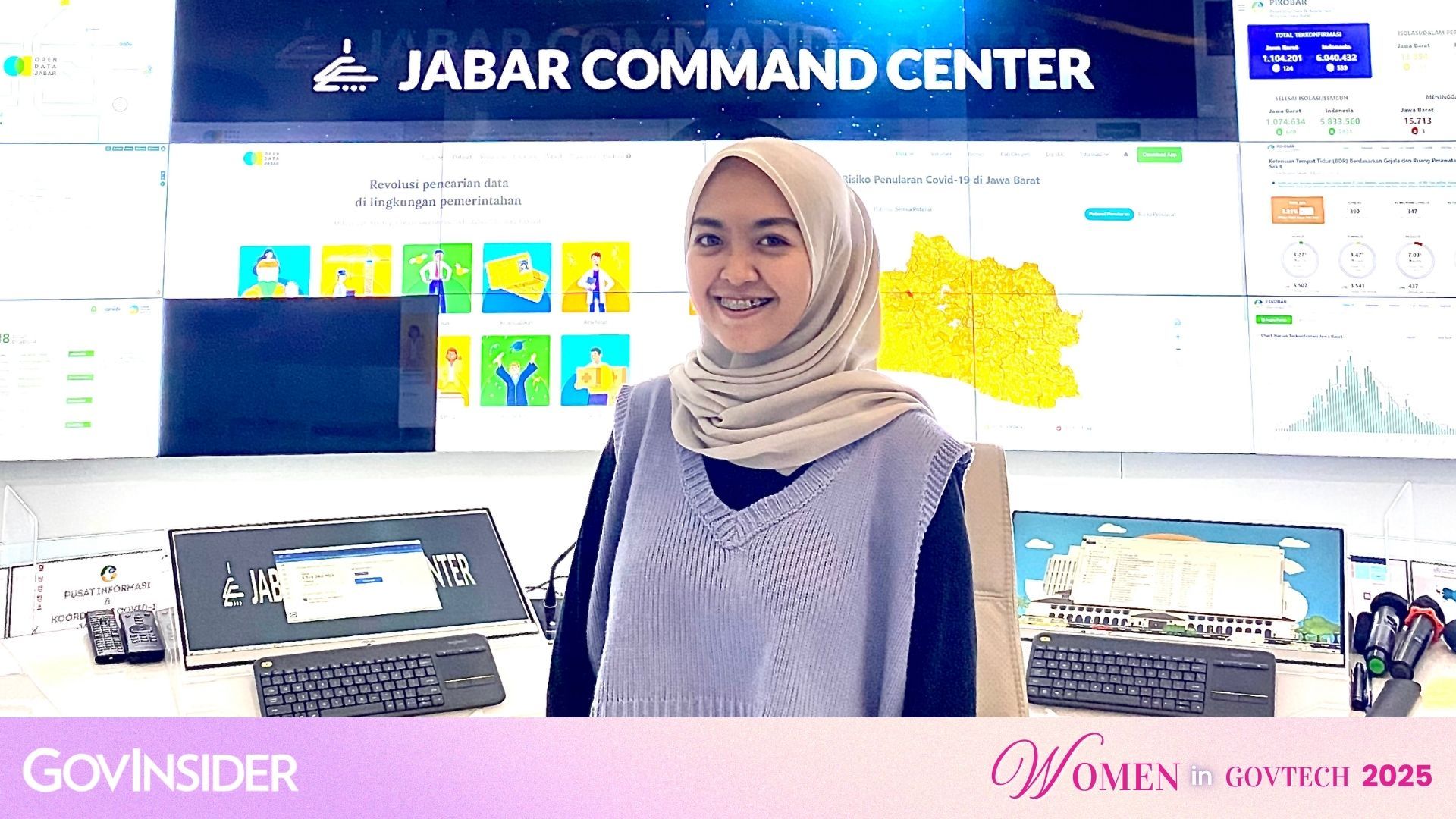
Syarifatul Ulya, Product Manager, Jabar Digital Service, Indonesia, shares her journey. Image: Jabar Digital Service
1. How do you use your role to ensure that technology and policy are truly inclusive?
For me, inclusivity is not just a checklist. It is a mindset that must be embedded into every stage of technology and policy development. I always start by ensuring the whole team shares the same definition of inclusivity.
Inclusivity is not about designing the majority. It is about ensuring that every individual – with different backgrounds, limitations, and usage contexts – can genuinely benefit from the products we build.
Inclusive principles must be applied end-to-end, from discovery, development, to delivery.
During the discovery stage, I ensure our research is unbiased and involves various user archetypes, including users with disabilities. This is crucial to ensure that the insights we gather truly represent diverse user needs.
In the development stage, I encourage the team to comply with inclusive standards such as Web Content Accessibility Guidelines (WCAG). For me, compliance is not merely a requirement. It is a moral commitment. Technical requirements – from colour contrast, keyboard navigation, content structure, to alternative text – must be fulfilled.
We also ensure that the product can be accessed across various device conditions and network qualities, including areas with unstable connectivity.
In the delivery stage, our implementation team is asked to prepare distribution and adoption strategies that reach all groups, including communities in remote areas and people with disabilities.
Finally, inclusivity must be evaluated continuously through regular checks on whether the product still meets WCAG standards and whether new needs have emerged in the field.
In short, inclusivity is an end-to-end commitment: from how we define problems, build solutions, test, release, and ensure the product truly reaches and benefits everyone.
2. What’s a moment in your career when you saw firsthand how technology or a new policy changed a citizen’s life for the better?
The first moment happened during the Covid-19 pandemic. I was involved in developing the Laboratory Management Information System to accelerate swab testing processes across various laboratories in West Java.
Through this system, previously manual workflows became digital, structured, and significantly faster. Test results were directly connected to the central system.
The impact: more than 80 laboratories were supported, and over 20,000 citizens were able to undergo swab tests and receive their results without long delays. There is a very distinct feeling when you know that the product you build truly helps people during one of the most critical periods of their lives.
The second moment came from my work on the Jabarprov.go.id Portal. This portal was developed to make public information more easily accessible, integrated, and inclusive. As of November 2025, the portal achieved a CSAT score of 80 per cent.
What felt most meaningful was the user testing sessions with people with disabilities. Hearing directly how they felt emotional because they could finally access public information easily was incredibly moving.
These two experiences constantly remind me that good technology is not only about features or bureaucratic efficiency but about creating real change in people’s lives through user-centred design.
3. What was the most impactful project you worked on this year, and how did you measure its success in building trust and serving the needs of the public?
One of the most impactful projects is Jabar Site, a website builder integrated with the Jabarprov.go.id Portal. For years, every West Java government agency was required to have its own website – but not all had sufficient resources. Many sites were error-prone, inaccessible, or outdated, making public information difficult to deliver effectively.
We asked ourselves: what if the local government had a unified platform that was standardised, easy to use, cost-efficient, and operable by anyone? That question gave birth to Jabar Site.
This year, more than 40 agencies began transitioning to Jabar Site, with 26 already published. Regional budgets were saved by hundreds of millions of rupiahs.
What makes me most proud is how Jabar Site improves the quality of public information access. With standardised interface design and information architecture, citizens can access information more easily and consistently. Its integration with Jabarprov.go.id ensures previously scattered data is now well connected.
For me, Jabar Site is proof that the right innovation can make government work more effectively, save resources, and deliver a much better public service experience for West Java residents.
4. What was one unexpected lesson you learned this year about designing for real people?
The most important lesson is understanding how to become an enabler who can bridge two often conflicting needs: what leaders or stakeholders want, and what citizens truly need.
Through agile methods, open communication, and healthy stakeholder management, a middle ground between government strategic priorities and real public needs can be achieved.
Involving citizens in the design and development process has proven invaluable. It helps validate decisions and ensures solutions remain grounded. I am increasingly convinced that no product creates a real impact without the support of a strong team. Collaboration, trust, and a shared willingness to grow are the foundations that make everything possible.
A product’s success is not only about strategy or technology. It is about a cohesive team with a unified vision.
To subscribe to the GovInsider bulletin, click here.
5. We hear a lot about AI. What's a practical example of how AI can be used to make government services more inclusive and trustworthy?
AI has huge potential to make government services far more inclusive and trustworthy. One of AI’s greatest strengths is its ability to simplify access. AI-powered chatbots through WhatsApp or other popular channels allow citizens to obtain information without needing to visit portals or physical service offices.
AI also creates new opportunities for accessibility. For example, it can help evaluate whether a digital product meets WCAG standards. A process that traditionally requires time and specialised expertise can now be automatically assessed by the system. This ensures government products are more disability friendly.
AI also enhances trust. Automation and data analysis enable services to be more consistent, transparent, and less biased. AI can detect anomalies, provide objective insights, and ensure decisions are made based on clear data.
I see AI as an enabler that helps government services become faster, fairer, and more accessible to everyone.
6. How are you preparing for the next wave of change in the public sector? What new skill, approach, or technology are you most excited to explore in the coming year?
The best way to navigate change is to maintain a growth mindset and become a lifelong learner. Technology evolves quickly, public policy continues to develop, and the key is not only technical capability but the willingness to stay curious and open to new approaches.
I try not just to react, but to be proactive: reading trends, learning from communities, and evaluating my own workflows.
Next year, I look forward to AI Assistive Tools for Government Product Development – from automated accessibility evaluation, generative design for wireframes and prototyping, to AI for large-scale analysis of user feedback.
I am also keen to deepen my work in data-driven policymaking, particularly how data and machine learning can help government make faster, more objective, and citizen-centred decisions.
For me, change is not something to fear. It is an opportunity to grow.
7. What advice do you have for public sector innovators who want to build a career focused on serving all citizens?
My advice is to cultivate a strong growth mindset and deep empathy. Innovation must go hand-in-hand with regulation, so sensitivity to public policy is crucial.
And most importantly: build mental resilience. The public sector is highly dynamic, and only those who are tough, adaptive, and eager to keep learning can deliver meaningful impact.
8. Who inspires you to build a more inclusive and trustworthy public sector?
My inspiration comes from colleagues, mentors, and discussion partners who constantly offer new insights. I am also deeply inspired by activists working in the field of inclusivity who advocate for fairer access.
But my greatest inspiration is the public itself. Their complaints about the difficulty of accessing services remind me of why this work matters. The voices and experiences of people with disabilities continually motivate me to ensure that every product provides equal access.
9. If you had an unlimited budget, what would your dream project be?
My dream project is to build the West Java Portal with a global search capability as the main entry point to all public information and services in West Java.
This portal would be fully WCAG-compliant and would not only provide information but also transactions for various public services in one place.
I envision a portal that is both informative and interactive, a social platform for communities, an integrated service space, and even an e-commerce platform for village business.
To achieve this, substantial funding is not enough. It also requires full government support for cross-agency and cross-system integration.
10. Outside tech, what excites you the most?
Regulations. As technology evolves rapidly, regulation must adapt. I see regulation not only as a constraint but as a framework that creates a safe space for innovation to grow.
It is fascinating to observe how these two worlds influence each other and must move in harmony to ensure technology delivers sustainable impact.