
The hidden skill governments aren't hiring for
Oleh Trond Arne Undheim
Across Singapore, Europe and the US, public sector hiring systems reward stability in an era when AI-driven public services demand adaptability.
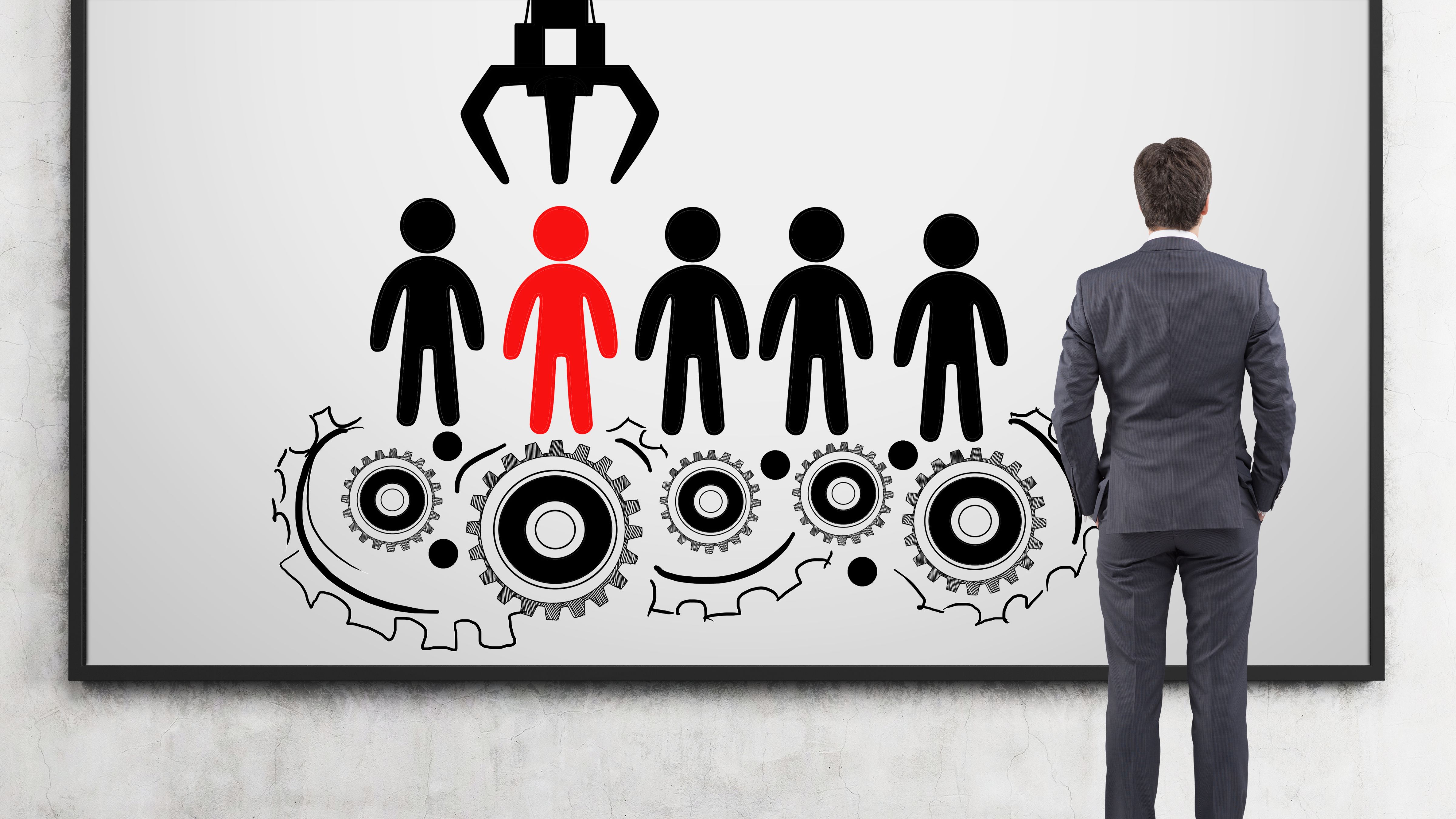
While Government-run technology and innovation institutions urgently need people who can operate across boundaries, adapt quickly, and make sound judgments in uncertainty, their hiring systems unintentionally screen against the very talent they most need. Image: Canva.
Humans don't resist technology. Systems do.
Every digital leader knows this pattern: AI reshapes workflows faster than policy can keep up. Teams must adapt in days, not months. The barrier is almost never motivation.
And nowhere is structure more revealing than in how governments hire.
Over two decades, I've seen this up close in three different systems: Singapore's GovTech, the European Union's innovation bodies, and the United States' federal digital corps.
Each institution is world-class in ambition.
All of them urgently need people who can operate across boundaries, adapt quickly, and make sound judgments in the face of uncertainty.
Yet all three unintentionally screen against the very talent they most need.
Singapore: A world-leading GovTech with legacy hiring filters
Singapore's GovTech is admired globally for its speed, engineering depth, and national-scale digital services. But its hiring signals reveal a quiet tension.
-1764134553797.jpg)
The job scope of the Senior Manager at the Product Strategy Office covers looking at "nationally critical digital services" and complex digital ecosystems requiring rapid iteration and cross-functional navigation.
It is a role built for someone who can sense when a policy shift will cascade into data architecture, when an upstream service will break authentication flows, or when an AI model needs human override.
Yet, the hiring filters still emphasise traditional programme governance, lifecycle management frameworks, and structured stakeholder processes.
These filters prioritise experience with established processes over the ability to diagnose cascading system issues when artificial intelligence (AI) or policy changes disrupt dependencies.
These aren't irrelevant skills.
But they are not the capabilities that determine whether a government service stays stable when an AI model misfires, or an unexpected policy change forces a rapid rebuild.
GovTech's mission is adaptive. Some of its hiring filters still signal stability.
Europe: Less bureaucratic, but the same blind spot
The European Institute of Innovation & Technology advertises its Programme Officer (AD6) roles as "dynamic," "innovation-driven," and "impact-focused."
But beneath the language sits a familiar structure: compulsory Europass CVs, AD-grade qualification mapping, competency scoring grids, multi-round interviews, and reserve lists with no guaranteed job.
To Europe's credit, the Europass CV is simpler and more outcome-focused than the US federal résumé. It is readable, concise, and designed to help candidates - yet it still assumes linear career progression and neatly documented skill sets.
People who built systems during crises, pivoted across disciplines, or learned through repeated experimentation do not always fit those expectations.
The US: Innovation rhetoric, compliance reality
The U.S. Presidential Innovation Fellows program was created to bring entrepreneurial technologists into federal agencies. Its mission language is perfect: ambiguity, agility, and innovation.
But the required résumé format punishes the very careers PIF claims to prize.
A federal résumé requires exact dates, hours worked per week, salary history, supervisor names and phone numbers, and keyword alignment with rigid OPM competency taxonomies. It can run seven pages.
The more adaptive a candidate has been - across crises, pivots, or sectors - the harder it becomes to document that experience in a format built for compliance.
By the time the most innovative technologists finish assembling their résumés, many simply walk away.
Three capabilities governments need - but do not explicitly hire for
Across Singapore, Europe, and the US, the same blind spot emerges. It's not a shortage of talent. It is a shortage of recognition.
The crucial capabilities for AI-era public service are almost invisible in legacy hiring systems.
Systems intuition: AI changes not just tasks but everything around it. A tweak to a machine-learning model in tax processing can ripple across appeals, hotlines, fraud systems, and payment cycles. This intuition grows from lived disruption—not from frameworks.
Human-AI judgment: Public servants now work alongside AI, which flags, predicts, sorts, and recommends. The differentiating skill is the ability to know when to trust the model -and when to override it. No résumé template on any continent measures this ability.
Interoperability mindset: Digital governance happens across ministries, vendors, regulators, and crisis teams. The ability to operate in ambiguous environments, across unclear boundaries, is now a critical safety skill. Traditional hiring prefers candidates who fit in boxes. Interoperability is the opposite of a box.
Asia's opportunity - and risk
Asia's digital governance is advancing faster than any region in the world.
Singapore's national stack, South Korea's AI-enabled services, Indonesia's super-app governance models, and Japan's identity reforms are global reference points.
But speed amplifies fragility.
To subscribe to the GovInsider bulletin, click here.
If governments continue hiring for stability in an age defined by uncertainty, they risk building workforces optimised for yesterday's challenges rather than tomorrow's shocks.
A practical path forward
The answer isn't to abandon structure. It's to modernise what structure measures.
Evaluate how candidates reason through system failures, not just how they manage projects. Use live case simulations, not keyword filters. Prioritise demonstration-based assessments.
Look for people who can explain not just what they achieved, but how their environment shifted as they solved the problem.
Singapore already runs advanced assessment centres. Europe uses case-based scoring. The US has SME-QA models. The tools exist - they just need to become the norm rather than the exception.
The global lesson
Every government is navigating the same crossroads: AI-era public service demands people who excel in ambiguity.
If hiring systems assume stability, they will continue screening out the very people who can help governments survive instability.
Adaptability is not a soft skill. It's a public safety capability. And in the AI era, it may determine whether digital government systems withstand their next disruption—or break under it.
--------
The author is a former National Expert on e-Government at the European Commission and a former Research Scholar at Stanford's Center for International Security and Cooperation, and author of The Platinum Workforce (Anthem Press, 2025). He speaks regularly at digital government conferences on workforce transformation and AI-era public service.