Unlocking climate finance in Southeast Asia: Practical pathways for action
Oleh Leslie Maasdorp
UK government's development finance institution, British International Investment (BII), highlights the impact of risk-reducing financing models to accelerate and sustain the region’s green transition.
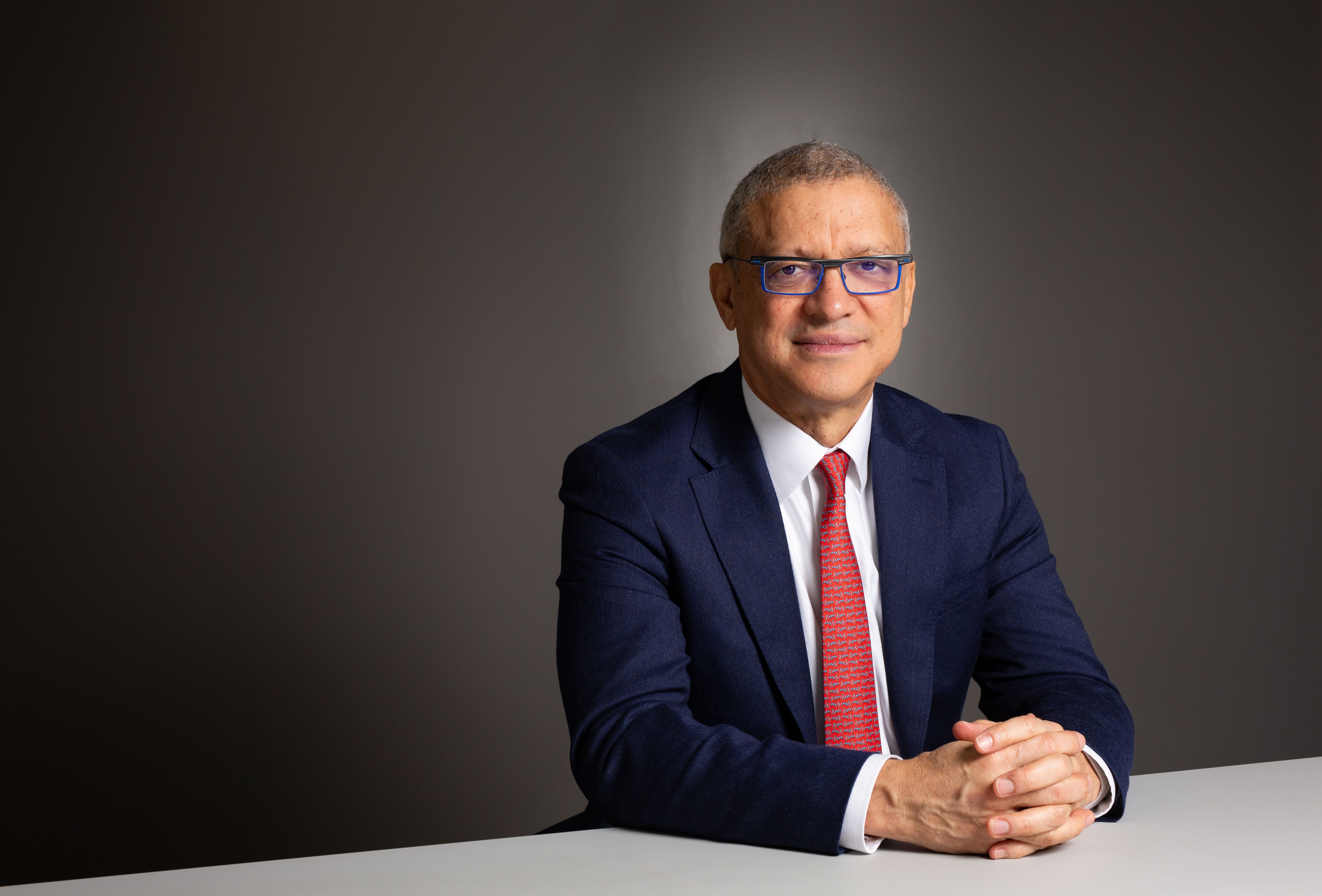
Leslie Maasdorp is the CEO of the British International Investment (BII), the UK government's development finance institution. Image: BII
Southeast Asia is at a critical juncture. Ambitious climate pledges have been made, but turning promise into progress is anything but straightforward.
COP30 amplified the region’s voice with ASEAN’s first dedicated space in Belém and delivered momentum through commitments like the Baku-to-Belém roadmap, which targets US$1.3 trillion (S$ 1.6 trillion) in climate finance for developing economies.
Yet, with an annual funding gap of US$210 billion (S$ 272 billion) to close by 2030, the challenge for Southeast Asia is clear: how do we mobilise private capital at scale and create investable pathways?
At British International Investment (BII), we believe the solution lies in building investor confidence through risk-reducing financing models, fostering resilient ecosystems and driving policy innovation.
These are critical steps to accelerate the region’s green transition and deliver impact at scale.
Mobilising capital through blended finance
Blended finance is a powerful tool for unlocking private investment in markets where risk perceptions are high.
By combining concessional capital with commercial funding, these structures absorb early-stage risks, improve project bankability, and create incentives for institutional investors to participate.
This approach is essential for scaling climate finance in emerging and developing economies, where projects often struggle to attract capital despite strong long-term potential.
Our partnership with Green Investment Partnership (GIP) is a strong example of how this works in practice.
It was set up under Financing Asia’s Transition Partnership (FAST-P) which was launched by the Monetary Authority of Singapore (MAS) in 2023, to finance and de-risk climate projects in the region.
Using a tiered capital structure, GIP secured US$510 million (S$660 million) from a diverse mix including governments, multilateral development financial institutions, philanthropies, private investors, banks, and other financial institutions.
We committed US$60 million (S$77 million) to GIP, including a portion allocated to the concessional tranche of the structure.
This concessional layer provides first-loss protection, reducing downside risk for commercial participants and making early-stage or marginally bankable projects more attractive to private investors.
This approach not only unlocks financing for renewable energy and other critical sectors but also signals confidence to the market, creating a replicable blueprint for blended finance in emerging and developing economies.
Scaling up through platforms
Commercial investors require scale and standardisation before they can commit capital, as these elements reduce complexity, lower transaction costs, and make investments more attractive.
Without these elements, projects remain fragmented and costly to execute, limiting private sector participation.
That’s why we don’t just fund projects – we help build them from the ground up.
Sustainable Asia Renewables Assets (SARA) is a co-investment platform we launched earlier this year with FMO, the Dutch entrepreneurial development bank, and SUSI, a specialist fund manager focused on mid-market infrastructure opportunities that advance the energy transition.
It is designed to develop 500MW of greenfield renewable energy projects across select countries in Southeast Asia.
By creating platforms like SARA, we’re reducing risk through scale and standardisation, giving institutional investors the confidence to participate and mobilising private capital into markets that need it most.
Strengthening local ecosystems
We’re also building stronger, more resilient ecosystems that attract investment and support green growth at every level.
By financing small and medium-sized enterprises (SMEs), we create supply chains and local networks that make markets more robust and inclusive, not just dominated by large companies.
Our partnership with VPBank in Vietnam, which included a US$50 million (S$ 64 million) investment, expands access to finance for SMEs, helping them thrive in the low-carbon transition.
These efforts strengthen the foundations of the economy, reduce risk for investors, and build confidence that climate action can deliver sustainable returns.
To subscribe to the GovInsider bulletin, click here.
Driving policy shifts
The climate finance gap isn’t just about capital, it’s about creating trust through coherent policies, clear rules, and common standards.
Fragmented regulations and perceived risks continue to deter commercial investors, making it harder to mobilise funds at scale.
Overcoming these barriers means creating predictable frameworks that give investors certainty and reduce risk.
This includes critical policy shifts such as establishing bankable tariff structures for renewable PPAs - for example, clear long-term pricing that allows developers to secure financing.
Also important is linking blended finance to policy incentives that reward early-stage risk-taking.
A call to action for more collaboration
Bridging the climate finance gap in Southeast Asia is both an economic and moral imperative.
As the UK’s development finance institution and impact investor, BII is on track to investing up to £500 million (US$660.75 million, S$856 million) in climate finance by 2026 to support Southeast Asia’s green transition.
But we can’t do it alone. The next decade must be defined by collaboration.
Our shareholder, the Foreign, Commonwealth and Development Office (FCDO), is already working closely with the governments of Vietnam and Indonesia on the Just Energy Transition Partnership (JETP).
The partnership aims to promote the development of clean energy sources, energy efficiency, and energy conservation measures while ensuring that the transition is just and equitable for all. This collaboration reflects the kind of partnership needed to accelerate progress, and we want to build on this momentum.
We’re keen to work with governments and other stakeholders to shape enabling environments, set regional standards, and support policy innovation. By combining these efforts with catalytic financing, we can reduce uncertainty, crowd in private investment, and turn climate ambition into tangible, scalable action.
---------------------------
Leslie is the CEO of British International Investment (BII), the UK government's development finance institution.