
Water resilient data centres can drive Asia’s digital economy
Oleh Lavan Thiru
To sustain the region’s booming digital economy, there is a need to adopt new technologies to ensure data centres become more eco-friendly.
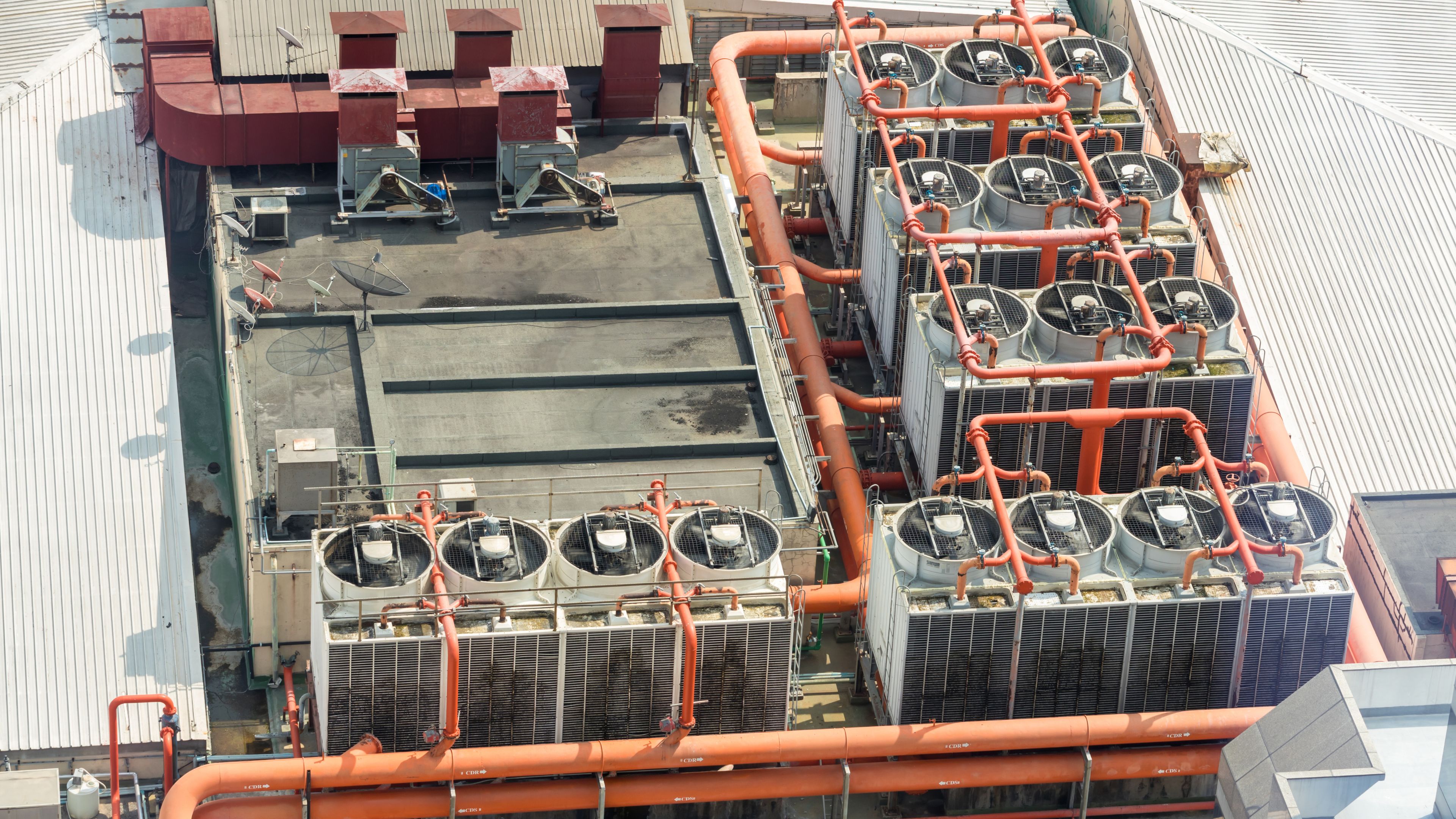
The data centre industry has been increasingly adopting circular water solutions to minimise freshwater intake by creating closed-loop systems where water is continuously treated, recycled, and reused rather than consumed once and discharged. Image: Canva.
Asia's digital economy is booming, with Southeast Asia alone projected to reach US$600 billion in gross merchandise value (GMV) by 2030.
This surge is driven by a growing urban population, rising incomes, and the widespread adoption of digital technologies.
Behind this remarkable growth lies an often-overlooked enabler: the data centre industry, which attracted US$15.5 billion in investment across Asia-Pacific in 2024, more than any other region globally.
Over the years, data centres have evolved in both scale and sophistication.
Today, artificial intelligence (AI) is creating new, unprecedented demands for this infrastructure, with global demand for data centre capacity projected to more than triple by 2030.
Yet, these facilities rank among the world's most energy and water-intensive infrastructure, raising questions about sustainability as demand continues to climb.
The water footprint of data centres
Increasingly, data centre operators are turning to liquid-based cooling over air cooling due to its higher energy efficiency and lower carbon emissions. This is contributing to an exponential increase in water usage.
A single hyperscale data centre can use up to 1.5 million litres of water a day for cooling. As urban centres in ASEAN transform into digital hubs, there is growing interest in adopting more sustainable practices to decouple digital growth from rising water consumption.
Currently, an estimated one in five data centres has adopted liquid cooling technologies. This shift has intensified demand on already scarce water resources, especially in fast-growing and water-stressed cities like Jakarta and Manila.
As these urban centres grow into digital and AI hubs, it is important to manage technology-driven growth and the need to preserve vital resources for people, agriculture, and ecosystems.
Circular water solutions
The data centre industry is increasingly adopting circular water solutions - approaches that minimise freshwater intake by creating closed-loop systems where water is continuously treated, recycled, and reused rather than consumed once and discharged.
Closed-loop cooling systems exemplify this circular approach.
By implementing innovative water recycling infrastructure, rainwater harvesting and wastewater reclamation, data centres have demonstrated potential freshwater savings of 50-70 per cent compared to conventional systems.
These closed-loop systems feature continuous water-quality monitoring that triggers immediate alerts for any abnormalities, helping prevent leaks or excessive bleed-off.
Using reclaimed water for data centre cooling has also been gaining traction across Southeast Asia.
In Malaysia, AirTrunk, a data centre group, has partnered with Johor Special Water (JSW), a state-owned entity, to develop the country's largest recycled water supply scheme for data centres, treating unused wastewater for non-potable cooling use.
In Thailand, Singapore’s ST Telemedia Global Data Centres (STT GDC) has been working with PTT Digital Solutions, the IT arm of state-owned energy giant PTT, to explore the use of cold energy released during the regasification of liquefied natural gas (LNG) as a sustainable cooling method for data centres.
Desalination and alternative water sources
In Asia, desalinated seawater is also being considered for data centre cooling in water-scarce regions.
Thailand's Eastern Economic Corridor (EEC), encompassing Chonburi, Rayong, and Chachoengsao provinces, forms a strategic economic zone aimed at driving industrial growth and innovation in the region.
To subscribe to the GovInsider bulletin, click here.
The Industrial Estate Authority of Thailand (IEAT), in collaboration with the EEC Office, has been exploring seawater desalination as a drought-resistant solution for several high-tech industrial parks along the coast.
While desalination involves higher upfront investment and energy consumption, it offers a reliable water supply independent of fluctuating rainfall and groundwater availability.
Efficiency through technology and management
Beyond sourcing alternatives, the industry has also been making strides in reducing the total amount of water used - moving beyond improving efficiency to reduce overall consumption through technological and operational improvements.
For example, thermal management startup KoolLogix uses intelligent algorithms to dynamically adjust cooling setpoints and airflow rates at its data centres.
The company also leverages an Internet of Things (IoT) platform for remote monitoring of heat removal systems with predictive fault detection capabilities.
The impact of such innovation is becoming evident.
In 2023, AWS reported a Water Usage Effectiveness (WUE) of 0.18 L/kWh, while Microsoft reported a WUE of 0.30 L/kWh as of 2024 - both below the US average of 0.36 L/kWh.
This marks a substantial improvement in water efficiency, especially when compared to conventional setups that previously averaged close to a WUE of 1.8 L/kWh back in 2021.
Pushing boundaries in sustainability
It is important to recognise that transforming Asia's data centre landscape to advance digital growth alongside water resilience requires more than isolated technological solutions.
Singapore's comprehensive strategy demonstrates how this transformation needs to be backed by a multifaceted approach across multiple stakeholders, combining strategic planning, collaboration, and localised solutions.
- Policy and regulatory frameworks: Singapore's Green Data Centre Roadmap requires data centres with high water consumption (i.e., above 60,000m3 per year) to comply with the nation’s Public Utility Board (PUB)’s Mandatory Water Efficiency Management Practices. Similar approaches tailored to local conditions could accelerate the adoption of water-conscious practices across emerging digital hubs.
- Industry-wide collaboration: Innovative collaborations are essential for developing and scaling shared infrastructure that can serve multiple data centres more efficiently than individual solutions. An example is the collaboration between the Infocomm Media Development Authority (IMDA) and global tech leaders like IBM and Microsoft to promote green software development. As the first Asian country to join the Green Software Foundation and the European Green Digital Coalition, Singapore is driving efforts to equip the digital ecosystem with tools and practices for designing energy-efficient applications, contributing to more sustainable cooling and reduced water consumption in data centres.
- Customised solutions for local conditions: Continued development of cooling technologies specifically designed for Southeast Asia's unique climate conditions remains critical. Launched in 2023, Singapore’s Sustainable Tropical Data Centre Testbed (STDCT) is the world’s first full-scale facility focused on tropical data centre cooling. The collaboration between two local universities and 20 industry partners aims to reduce energy and water consumption by up to 40 per cent. Supported under the Research, Innovation and Enterprise (RIE) 2025 plan, STDCT positions Singapore as a hub for green digital infrastructure innovation.
These solutions do more than reduce impact - they position Asia to lead in building infrastructure that is both high-performing and resource-conscious.
By implementing innovations tailored to local conditions, the region's data centres have been demonstrating that the rapid growth of the region’s digital economy need not come at the expense of precious water resources.
This balance between technological advancement and environmental stewardship positions Asia's emerging digital hubs to thrive even as AI-driven demand continues to surge.
Infrastructure Asia remains committed to fostering solutions that enhance infrastructure resilience and sustainability.
By connecting the right expertise and investment, we can collectively scale these innovations. This will enable cities to benefit from both digital economic growth and resource resilience as the region navigates the challenges of climate change and urbanisation in the decades ahead.
--------------
The author is the Executive Director of Infrastructure Asia, a project facilitation office set up by Enterprise Singapore and the Monetary Authority of Singapore to support Asia’s growth through sustainable infrastructure development.