-1783304403050.jpg)
Where does government-citizen partnership capability live? Not inside one office
Oleh Si Ying Thian
The Singapore Government Partnerships Office (SGPO)'s director Hasliza Ahmad shares why her team is expanding the agency's reach by handing capability off to stakeholders instead of holding on to it, so that the agency isn't the only one that's good in citizen engagement.
-1785225039627.jpg)
The Singapore Government Partnerships Office (SGPO)'s director Hasliza Ahmad wants to steer the agency towards a path less travelled: growing capabilities outwards to community builders and other public agencies, rather than holding it inside SGPO alone. Image: SGPO
Most government offices grow by taking on more responsibilities, centralising and then claiming a certain mandate.
Two years after its launch, the Singapore Government Partnerships Office (SGPO)'s director, Hasliza Ahmad, wants the agency to grow differently, which is harder to do than it sounds.
SGPO was set up to be the Singapore government's bridge to citizens who want to do good.
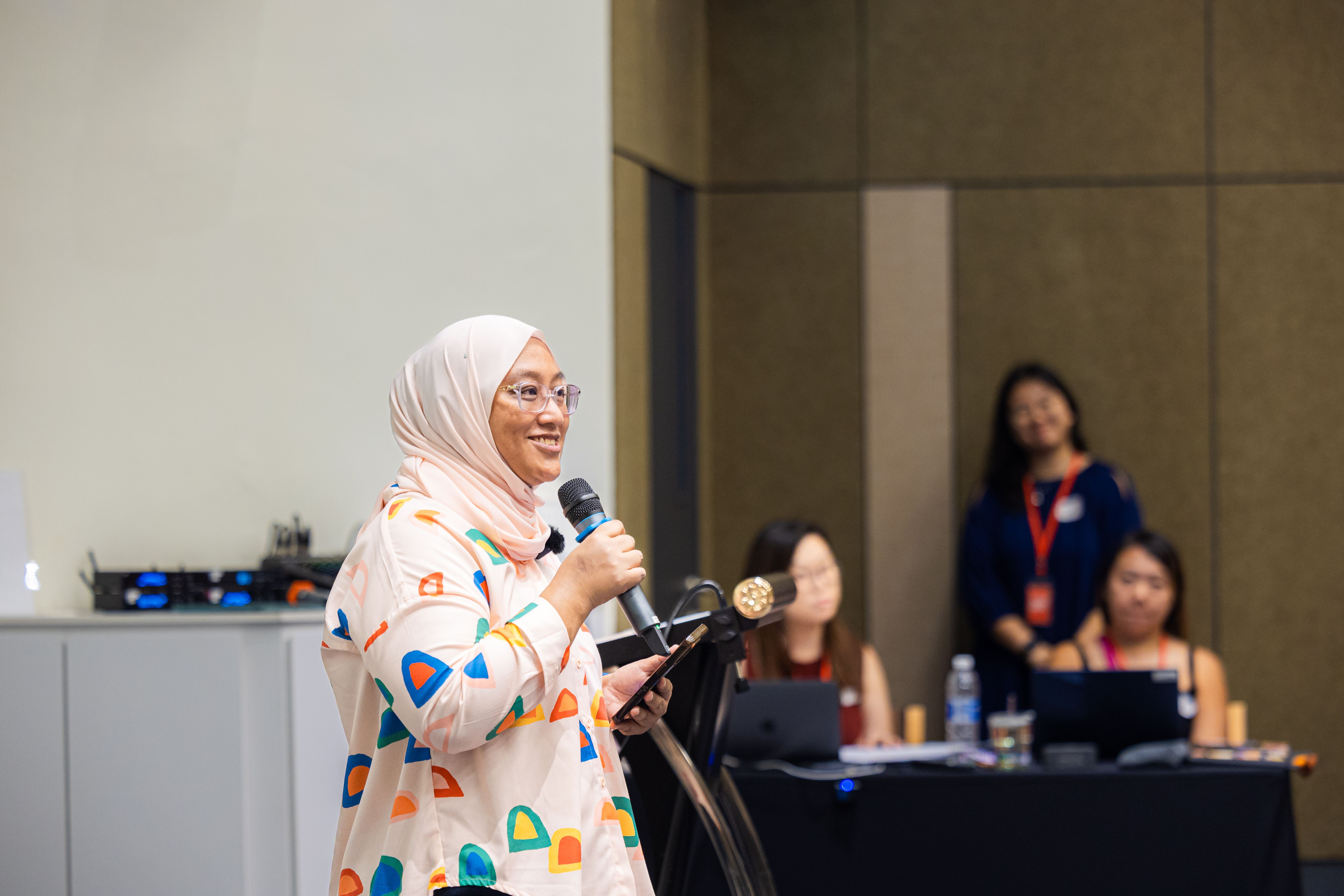
She tells GovInsider: "The expertise and capabilities don't reside with SGPO alone. It's actually all over the government and [with] other stakeholders."
Given SGPO’s mandate, it would have been easier for the young agency to become the sole gatekeeper that every ground-up group would have to pass through.
Instead, Hasliza wants to steer SGPO towards a path less travelled: growing capabilities outwards to community builders and other public agencies, rather than holding it inside SGPO alone.
On the sidelines of SGPO's first community exchange to bring together civic groups and ecosystem enablers, we speak to Hasliza to find out why an agency built to lead citizen partnership is trying not to be the only one that's good at it.
We also catch up with a recipient of SGPO's SG Partnerships Fund, Little Wishes founder Loke Wai Yee, for a ground-level view of what that philosophy looks like in practice.
Little Wishes is a platform that lets donors fund Christmas gifts for children in need in amounts as small, and organises in-person gatherings that bring donors and children together rather than ending the exchange at the donation itself.
SGPO's playbook: find who's already solving it
Most agencies measure ambition by what they build. SGPO offers a different model of ambition that when you know the ecosystem well enough, building rarely becomes necessary.
Hasliza is clear about where SGPO's core skillset needs to sit, which is learning how to partner well with people who are already doing the things that need to be done, including different civic groups and ecosystem enablers like foundations.
"How do we better partner with the ecosystem enablers in supporting the journey of all these different ground-up initiatives?" This question shapes how SGPO operates, she says.
"It's also to look at what our other stakeholders are already providing... [and] seeing how we can redirect them to different ground-up initiatives," she explains.
She cites SGPO's partners portal as a first stop for citizens to identify what is already being done and how to reach out if they are unsure of anything or want to start something.
SGPO applies the same principle to add value rather than duplicate effort to its own work. Hasliza highlights that she is wary of the agency trying to "churn out events after events."
Instead, she wants SGPO's work to be "meaningful and purposeful" and guided by what SGPO hears from ground up.
Building and connecting capacities across civic groups
Aside from funding, SGPO has been focusing on building the capacities of civic groups. Her team observes that many founders are strong at running programmes but need other forms of support to lead an organisation.
"I think the value of the partnership goes beyond just monetary needs," says Loke, Little Wishes’ founder and a recipient of the "Seed" tier of the SG Partnerships Fund.
"The platform has actually just been me as the founder. Having to make decisions by myself, it can
-1785225110694.jpg)
be a bit hard sometimes. So, it's really helpful that I have somebody to ask or double check [with]," she says.
Compared to other grant funders, Loke says, SGPO leaves her feeling supported in terms of the advice, connections and answers she gets to the questions she has as a founder.
She shares an example: when her platform needed a website, SGPO suggested possible vendors who could support her with website development which was also supported with the grant.
About 100 ground-up founders and changemakers attended SGPO's first community exchange, where attendees gathered into small groups to discuss and share the common challenges faced as well as what worked for them.
Building partnership muscle across government
SGPO isn't only in the business of connecting citizens with the government. It also works to build the capabilities of public service to strengthen the way it works with citizens.
Hasliza describes a second, less visible mandate running alongside SGPO's ground-up work: Building partnership capability inside other agencies across the whole-of-government.
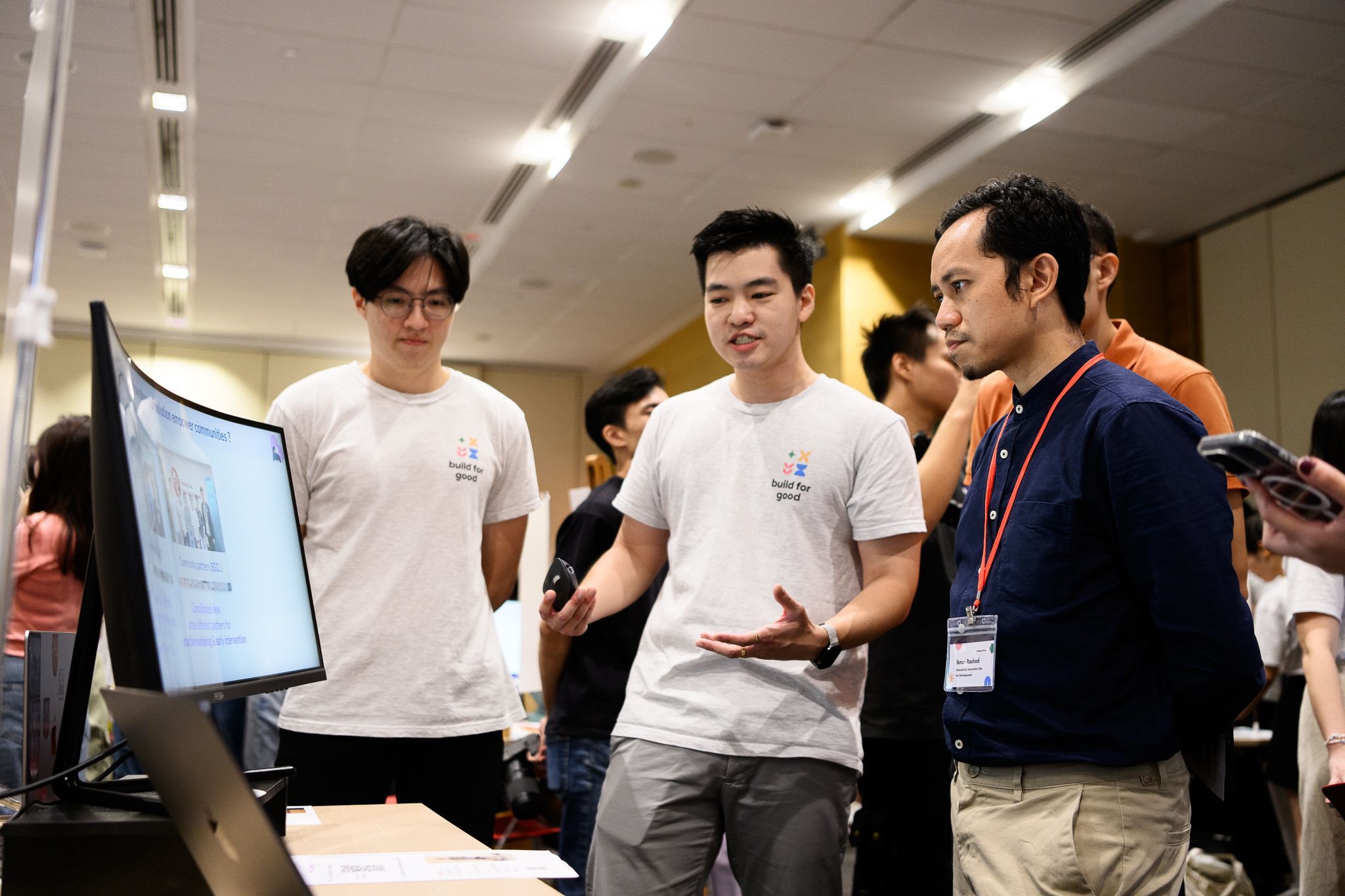
One example is SGPO's partnership with Open Government Products (OGP) on the latter's citizen hackathons.
What started as SGPO helping OGP curate specific sessions has since evolved into something broader. "It's no longer just about ideation, but for implementation," she says.
SGPO's role picks up after the hackathon by offering participants a suite of levers like funding, connection and guidance to scale their prototypes.
Having previously been involved in organising and curating the inaugural National Youth Council (NYC)'s Youth Panels, a different citizen engagement model that I contrast directly with SGPO's own, Hasliza highlights that the model has been built around policy literacy.
That helps younger citizens understand how policy gets made, and helping agencies appreciate that perspective in turn.
While NYC's work focuses on engaging youths, SGPO serves Singaporeans of all ages. Hasliza highlights that the underlying citizen engagement principles remain applicable in both contexts.
Scaling by stepping back at the right moment
For SGPO, restraint isn't just about resisting the urge to do more itself but extends to helping citizens do more.
"Where we want to shift towards is that the ownership of problem solving is not just on government, but also on citizens," she says, while recognising that "not everybody knows how to navigate to become a change maker".
This is why SGPO still positions itself as a convener, pointing people to the right resources rather than solving problems on their behalf.
That's a slower way to grow than how younger public agencies choose, as convening takes longer to show results than running programmes directly.
Two years on, Hasliza seems to have made peace with her work in citizen engagement.
If it works, the sign won't be a busier SGPO, but ground-up groups navigating change on their own, and other agencies partnering with citizens - with SGPO supporting this work by connecting people and sharing expertise.