Why Maharashtra is emerging as one of Asia’s most execution-ready investment destinations
Oleh Devendra Fadnavis
India's largest state economy today hosts nearly 60 per cent of India’s data centre capacity, providing a robust foundation for AI-enabled services and digital industries.
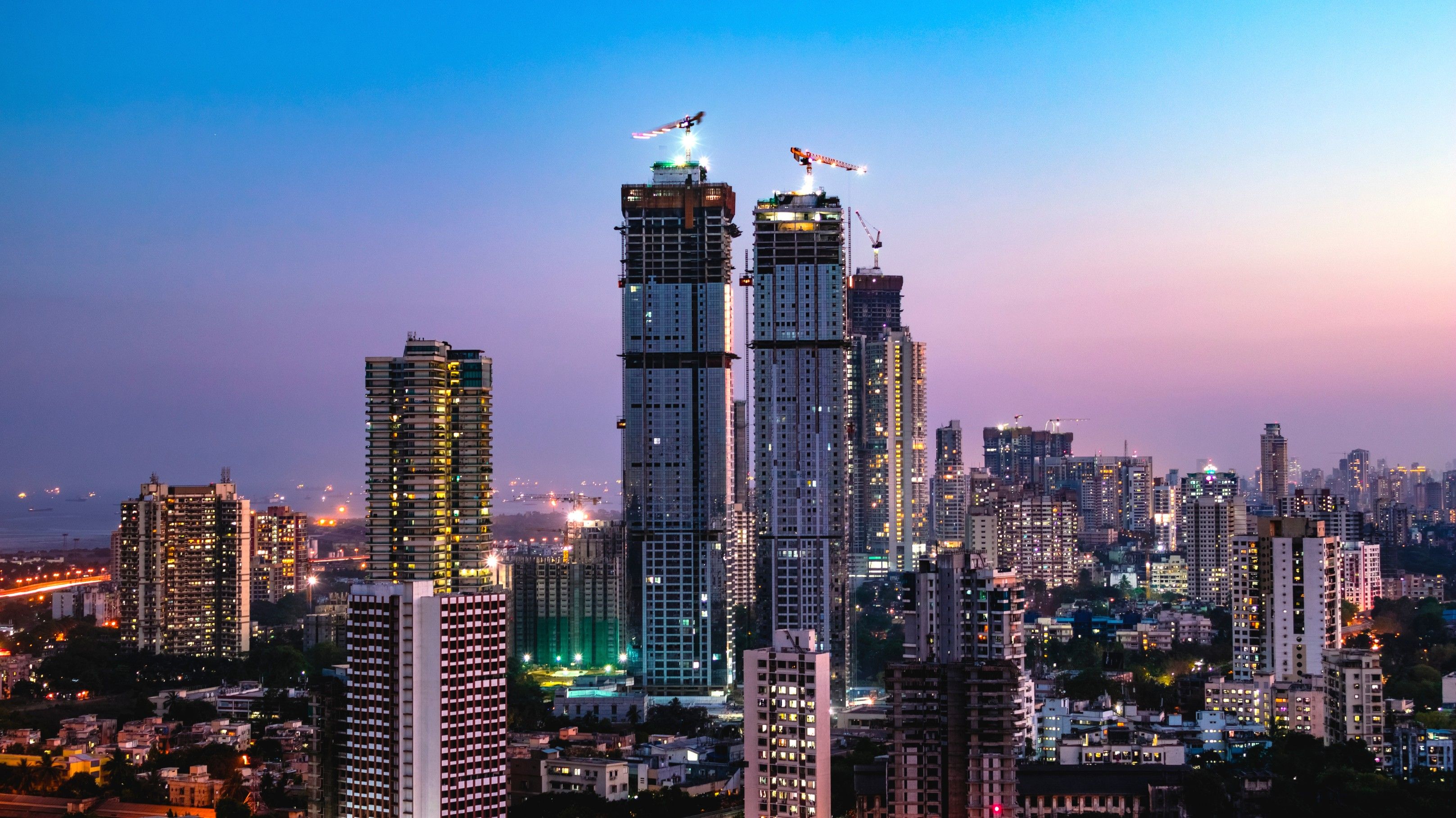
The Chief Minister of the Indian state of Maharashtra highlights the potential of future-oriented sectors like AI infrastructure to support the state's transition from traditional manufacturing to advanced industrial ecosystems. Image: Canva
As India positions itself among the world’s leading economies over the next two decades, global investors are increasingly looking beyond national ambition to sub-national execution.
Maharashtra, India’s largest state economy offers a compelling case study in how scale, governance, and long-term planning can translate vision into durable outcomes.
Maharashtra accounts for nearly 15 per cent of India’s gross domestic product (GDP) and exports and has attracted close to one-third of the country’s total foreign direct investment (FDI) since 2014.
This is not the result of episodic reform, but of sustained policy consistency, institutional capacity, and infrastructure development over time.
In the last financial year, the state attracted close to US$20 billion (S$25.68 billion) in FDI, followed by an additional US$ 5.3 billion in the first quarter of the current year, representing nearly 31 per cent of India’s total inflows.
Investment activity is concentrated in future-oriented sectors including artificial intelligence (AI) infrastructure, electric mobility, renewable energy, green materials, aerospace and defence, and semiconductors, reflecting Maharashtra’s transition from traditional manufacturing to advanced industrial ecosystems.
Our participation at the World Economic Forum (WEF) last year resulted in investment commitments exceeding US$186 billion. More important than the headline number, however, is implementation.
Nearly three-quarters of these commitments are already under execution, supported by a dedicated institutional mechanism that tracks progress, resolves bottlenecks, and ensures time-bound delivery. For global investors, predictability and follow-through matter as much as policy intent.
Maharashtra’s long-term development strategy is anchored in balance, between industry and sustainability, urban growth and regional development, and economic expansion and human development.

Industrial investments are deliberately structured to create dense micro, small and medium enterprise (MSME) supply networks, enabling technology diffusion, skill formation, and export integration.
Sustainability is embedded as a growth driver, with the state targeting a significant expansion of renewable energy and natural carbon sinks over the coming decades.
Infrastructure development extends beyond transport and logistics. Maharashtra today hosts nearly 60 per cent of India’s data centre capacity, providing a robust foundation for AI-enabled services and digital industries.
This has catalysed growth in global capability centres and high-value services, supported by a skilled workforce and responsive governance systems.
Technology is also reshaping agriculture, which employs a substantial share of the state’s population.
Through a dedicated agriculture AI framework, Maharashtra is deploying digital platforms, geospatial analytics, and traceability systems to connect farmers with markets, improve productivity, and integrate agricultural output into global supply chains.
As global economic geography evolves, competitive investment destinations will be defined by institutional reliability and execution capability.
As Maharashtra engages with global partners at the WEF this year, we do so with a clear proposition: an economy large enough to matter, governance strong enough to deliver, and ambition anchored in long-term sustainability.
This is the foundation on which Maharashtra aims to build a trillion-dollar economy by 2030 and contribute to India’s development journey in line with the exemplary vision set by India’s Prime Ministerour Hon. PM Shri. Narendra Modi.
The author is the Chief Minister of the Indian state of Maharashtra.