Yanina Girón Renteria, Official Principal, Peruvian Chamber of Artificial Intelligence
Oleh James Yau
Meet the Women in GovTech 2025.
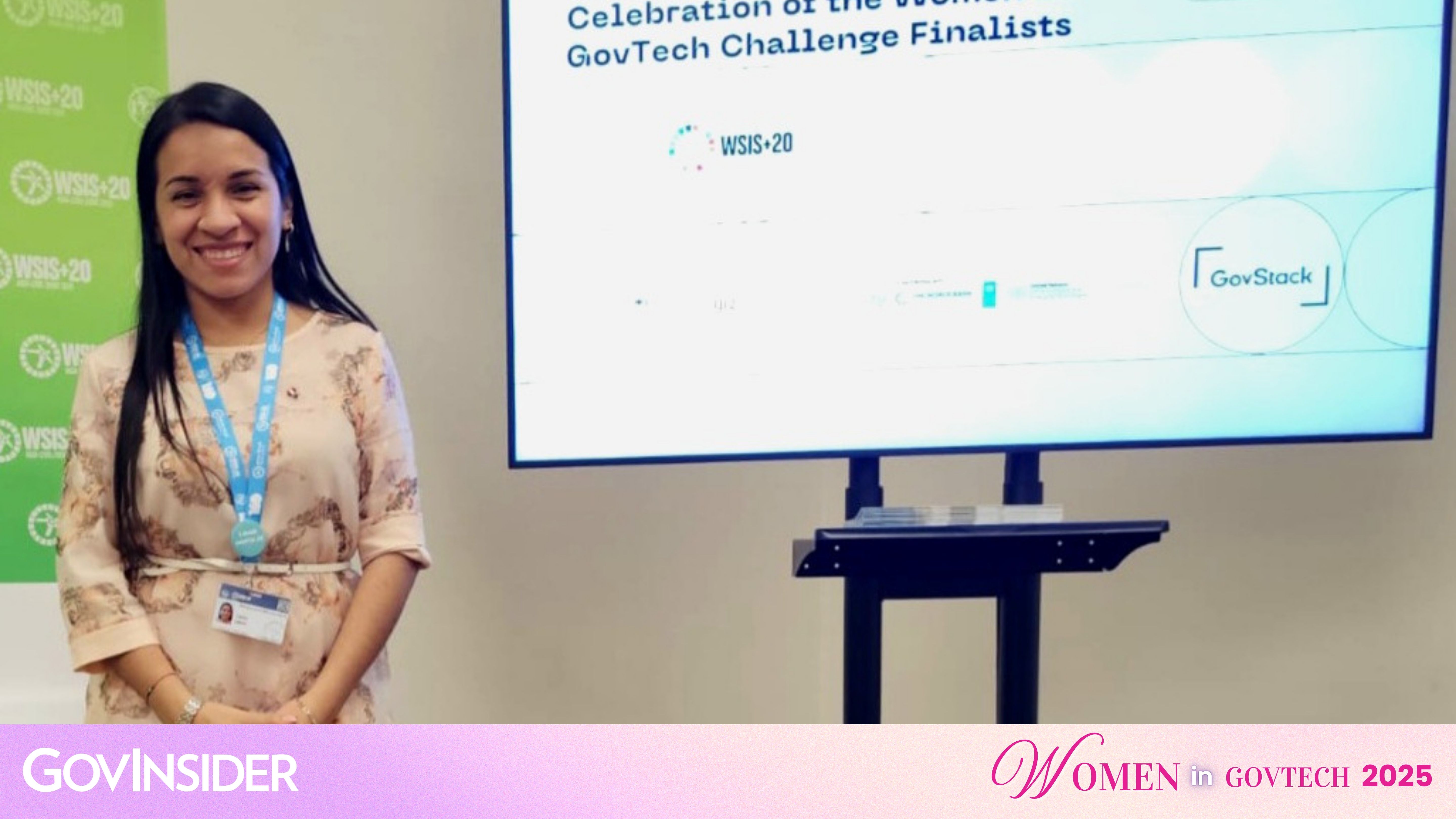
Yanina Girón Renteria, Official Principal, Peruvian Chamber of Artificial Intelligence, shares about her journey. Image: Yanina Girón Renteria
1) How do you use your role to ensure that technology and policy are truly inclusive?
As a digital lawyer in the public sector and through my venture, IA-NINA Tech, I advocate for using technology to reduce deep-seated gaps.
I helped draft Peru's AI Law No. 31814, ensuring every digital policy prioritises universal access, especially for women, people without technical training, and public servants needing support in their digital transition.
2) What’s a moment in your career when you saw firsthand how technology or a new policy changed a citizen’s life for the better?
I developed a cloud system for the main mining regulator, allowing lawyers to manage judicial cases faster and more organised.
This optimised work and increased public funds from fines. The key moment was seeing a public servant understand that automation would reduce delays affecting vulnerable people, confirming that well-applied technology humanises public service.
3) What was the most impactful project you worked on this year, and how did you measure its success in building trust and serving the needs of the public?
My participation in Women in GovTech. I worked with an extraordinary group to develop TaxBuddy, a winning project we presented in Geneva. Success meant international recognition and, more importantly, inspiring other women, especially those in vulnerable situations.
My personal journey is a testament. A mother since 18, I know stereotypes are barriers, but with support, goals are achievable.
My path evolved from wanting to be a lawyer to help my family, to providing international mentorships for women entering tech. This showed me my life's purpose was broader than I imagined.
4) What was one unexpected lesson you learned this year about designing for real people? This can be about a specific project or a broader lesson about your work.
My background in Law, Computer Science, and Nursing gives me a multidimensional view. The key lesson is that technology should enhance, not replace, empathy. The human component is irreplaceable.
Designing efficient tools isn't enough; we must understand users' emotions and fears. Many public servants feel insecure about AI, so human-centred design requires accompaniment, training, and deep listening.
5) We hear a lot about AI. What's a practical example of how AI can be used to make government services more inclusive and trustworthy?
AI can analyse data to detect exclusion patterns in public service access: who isn't reached, doesn't understand, or is left out. This lets us correct biases, prioritise vulnerable areas, and design fairer policies.
In justice, automating repetitive tasks (like in the AMAUTA Pro system) lets legal operators focus on complex case analysis, reducing errors and increasing public trust.
To subscribe to the GovInsider bulletin, click here.
6) How are you preparing for the next wave of change in the public sector? What new skill, approach, or technology are you most excited to explore in the coming year?
I'm specialising in workflow automation (N8N, Power Automate) through a Desafío LATAM scholarship. My goal is to apply this legally.
My vision goes beyond adopting tech; it's about responsibility, transparency, and a citizen-centric approach. I also participate in international networks to anticipate trends and adapt best practices for Peru.
7) What advice do you have for public sector innovators who want to build a career focused on serving all citizens?
Remember that implementation is just the first step. Continuous follow-up, adaptation, and user contact guarantee real success and sustainability.
Every process and decision impacts a person's life. Complement technical skills with soft skills - communication, leadership, resilience - the bridge for technology to have true social impact.
8) Who inspires you to build a more inclusive and trustworthy public sector?
My daughter, Camila, inspires me profoundly.
She grew up watching me and now wants to be a lawyer, understanding that gender or circumstance opens doors to multiple perspectives. Her gaze reminds me of the urgency to build a fairer digital future.
I'm also inspired by women driving quiet yet transformative change in academic, community, and public spaces, proving that will and genuine commitment matter most, not high-ranking positions.
My guiding mantra: "I didn't have a summa cum laude degree, but life awarded me a UN recognition. That was my real summa cum laude, earned through action and service."
9) If you had an unlimited budget, what would your dream project be?
I'd create a Latin American digital literacy network for women at all career stages: students, professionals, entrepreneurs. This mirrors my IA-NINA Tech community of over 5,000 members and the natural cycle: study, practice, entrepreneur.
It would promote female leadership and co-create impactful GovTech solutions, with platforms for women's first public talks, shared realities, and tech solutions with mentorship. Essential language training (English/French) would break barriers.
The motto: "Study, Learn, Entrepreneur," as an NGO.
10) Outside tech, what excites you the most?
Psychology linked to emotional intelligence. I'm fascinated by how people think and feel, as understanding humans is key to designing responsive policies and tech.
Exploring the relationship between artificial, human, and emotional intelligence is central to my work and vision for a people-centred tech future.