
As satellites become critical infrastructure, here’s what governments should note
At the inaugural Space Summit in Singapore, speakers highlight what needs to happen for governments to leverage the best of space for public good.
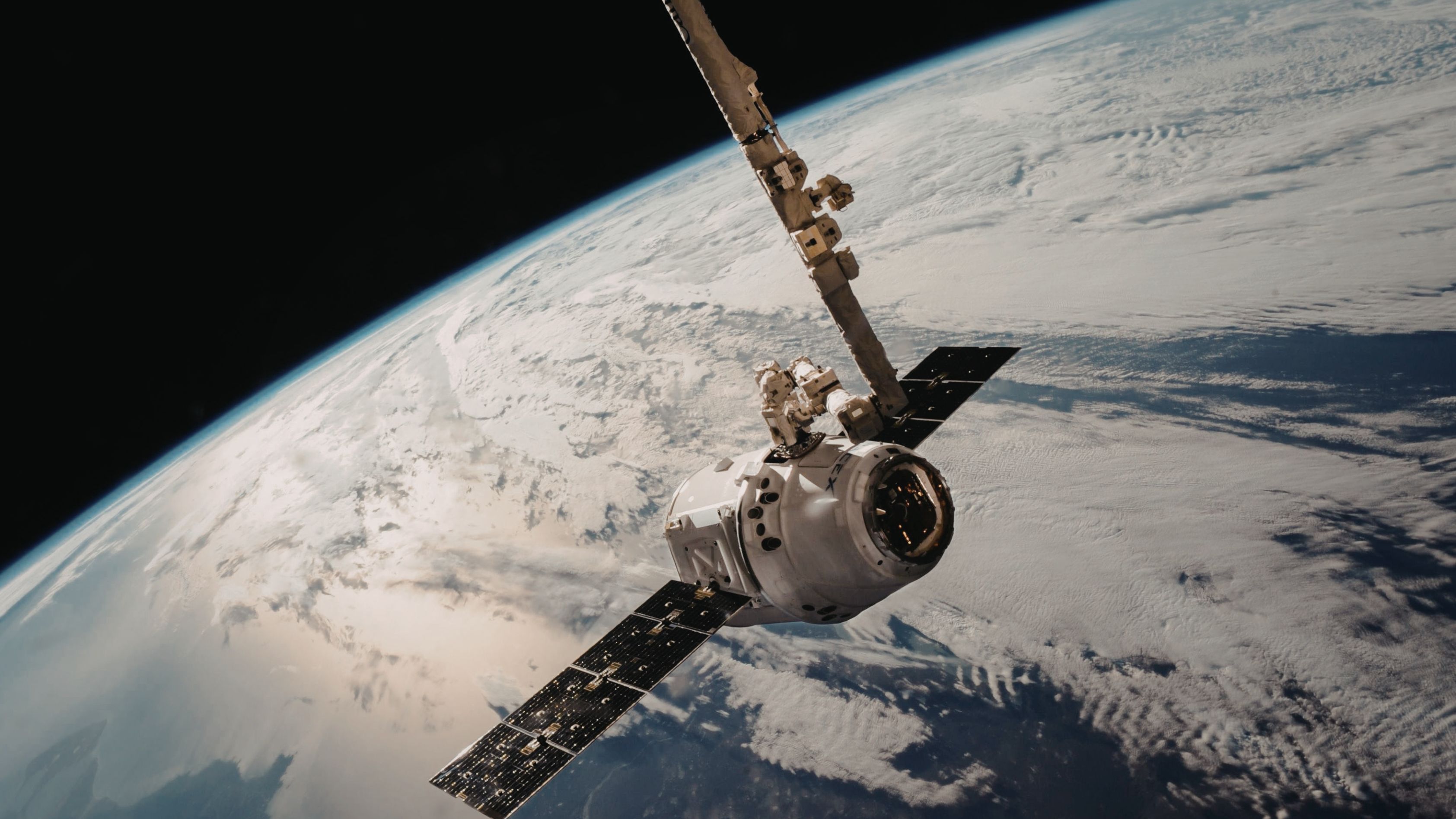
Space agencies are shifting focus from solo missions to cross-border alliances, whether embarking on joint missions, co-creating technologies, or strategically integrating their space economies. Image: Canva
In 1969, the world watched as the American flag was planted on the moon. Back then, the space frontier was all about national pride and the next race to the moon.
Present day, however, the discussions happening at the inaugural Space Summit organised by Singapore’s space office revealed a different atmosphere.
Space agencies are shifting focus from solo missions to cross-border alliances, whether embarking on joint missions, co-creating technologies, or strategically integrating their space economies.
The people leading these space agencies are getting closer, opening the sector to private players to seed local innovations and strengthen resilience, and working with non-space agencies to mainstream space for everyday governance.
This was the key insight drawn from the event organised by Experia Events, and launched in partnership with the Office for Space Technology & Industry (OSTIn) from February 2 to 3.
This teamwork is happening because space is no longer just for explorers or high-tech novelties. It is becoming a critical infrastructure for governments to enforce regulations, provide internet access, plan cities, manage disasters, and more.
As space technology forms the backbone of public services, here are three key things that governments need to do to use space to help their citizens.
1. Governments need to focus on what they do best
In 2020, the Indian government opened its space sector to the private sector, essentially relinquishing its monopoly in the sector.
Its Minister had recently called it the “greatest reform done in the last 11 years.”
Today, its government is focused on serving as an ecosystem enabler and regulator of the space ecosystem.
Rather than managing every stage from R&D to launch, the state now fuels private sector innovation via tech transfers, funding and design labs.
In his keynote address at the summit, the Indian National Space Promotion and Authorisation Centre (IN-SPACe)’s Chairman Dr Pawan Goenka noted that in the last five years, there has been 40 times increase in the local startups, to now over 350.
These startups are also increasingly moving into advanced space tech.
This has allowed the Indian Space Research Organisation (ISRO) - the only agency managing all of India’s space efforts before 2020 – to focus on higher-level R&D and providing the shared data and infrastructure for private companies to use.
In the “Heads of Space Agencies Plenary – Collaborative Pathways: National Space Programmes and Partnership Models” panel, both Dr Goenka and OSTIn’s Executive Director Jonathan Hung highlighted global partnerships as an imperative.
Given the high stakes and massive investment needed in space, collaboration is vital to create mutual benefits and is "mission critical" for defining international norms, they explained.
For both countries, the speakers highlighted the need to focus on developing their individual niches. For India, it is in advanced manufacturing, and for Singapore, it is in deeptech, AI and analytics.
Leveraging its reputation as a global dialogue facilitator, Singapore is also positioned to develop multilateral platforms like the Earth Observation (EO) initiative for local and overseas partners to come together to shape the future narrative of space, said Hung.
2. Resilience is being able to tap on the best of foreign tech and local data
In the “Satellites as National Critical Infrastructure: Driving Resilience and Growth” panel, speakers highlighted how countries can strengthen the resilience of space infrastructure.
Thaicom Public Company Limited’s CEO Patompob Suwansiri reflected on Thailand’s overreliance on tech imports, recommending a hybrid approach moving forward.
The hybrid approach proposed tapping into the best of foreign tech, while ensuring sovereignty through local data ownership and robust security capabilities.
This supports the next step of adapting technologies like artificial intelligence (AI) to specific local environments, he added.
Representing the private sector’s perspective, EO satellites provider Open Cosmos’ Chief Revenue Officer Tiago Rebelo agreed that incorporating local elements helps strengthen business resilience.
“We bring in the technology and capabilities, but act locally. We don’t believe in the concept of mega factories, where we manufacture all satellites in one place,” he explained.
He highlighted the multiplier impact of incorporating local systems and payloads into global systems.
For governments, this shifts the narrative from passive consumption of foreign tech to active integration. By integrating local elements, nations do more than just buying a product as they cultivate a thriving local ecosystem.
Along the same lines of interdependent tech systems, OSTIn’s Hung in the earlier panel highlighted technology co-creation as one of the basis for cross-border partnerships.
He highlighted that local innovations could be designed to tackle regional or even global challenges.
When asked about the sensitivities of partnering with China, Brazilian Space Agency’s President Dr Marco Antonio Chamon explained that Brazil takes an intentional approach to global partnerships.
Different countries might find alignment in either technological, social, and/or environmental needs, he said. Space agencies could then choose to partner around technology transfer, access to critical supplies, or align on global priorities like space sustainability.
“I think that even though we may have geographic, cultural and language differences among the countries, we can find this point of common interest to share," he noted.
The agency has had a long history of space activities since the 1960s. Reflecting on how partnerships have evolved, Dr Chamon noted a shift from isolated, bilateral or multilateral partnerships to larger-scale, multilateral cooperations around selected topics.
These topics ranged from spectrum management, debris mitigation, and overall space sustainability.

3. Space for policy shouldn’t be treated like a one-shot wonder
Satellites are only regarded as heroes for a few days when a natural disaster strikes, and quickly forgotten afterwards, said Thaicom’s Suwansiri.
“The challenge I see in Southeast Asia is how we can integrate satellite infrastructure into business continuity planning and the national communications,” he explained.
Suwansiri highlighted the “new leases of life” given to satellites through his company’s expansion into EO and data analytics solutions.
OSTIn’s Hung highlighted how government’s R&D incentives now prioritise solutions that tackle “real-world issues” like disaster response and water resource management.
At the summit, the Minister also announced plans to launch a national space agency (NSAS) on April 1. One of NSAS tasks is to support other agencies in tapping into satellite imagery and geospatial data analytics for their specific needs.
Finally, Open Cosmos’ Tiago Rebelo highlighted the next leap of space innovation in unifying data with connectivity to unlock the value of AI and analytics to solve global challenges.
While we have the “individual blocks” today, the challenge in the next decade is to “build a system of all systems” to unify these blocks, he shared.
This would in turn allow governments to quickly access these data flows for their respective uses.