
Dr Hien Pham, Senior Research Scientist, Data61, Commonwealth Scientific and Industrial Research Organisation (CSIRO), Australia
Meet the Women in GovTech 2025.
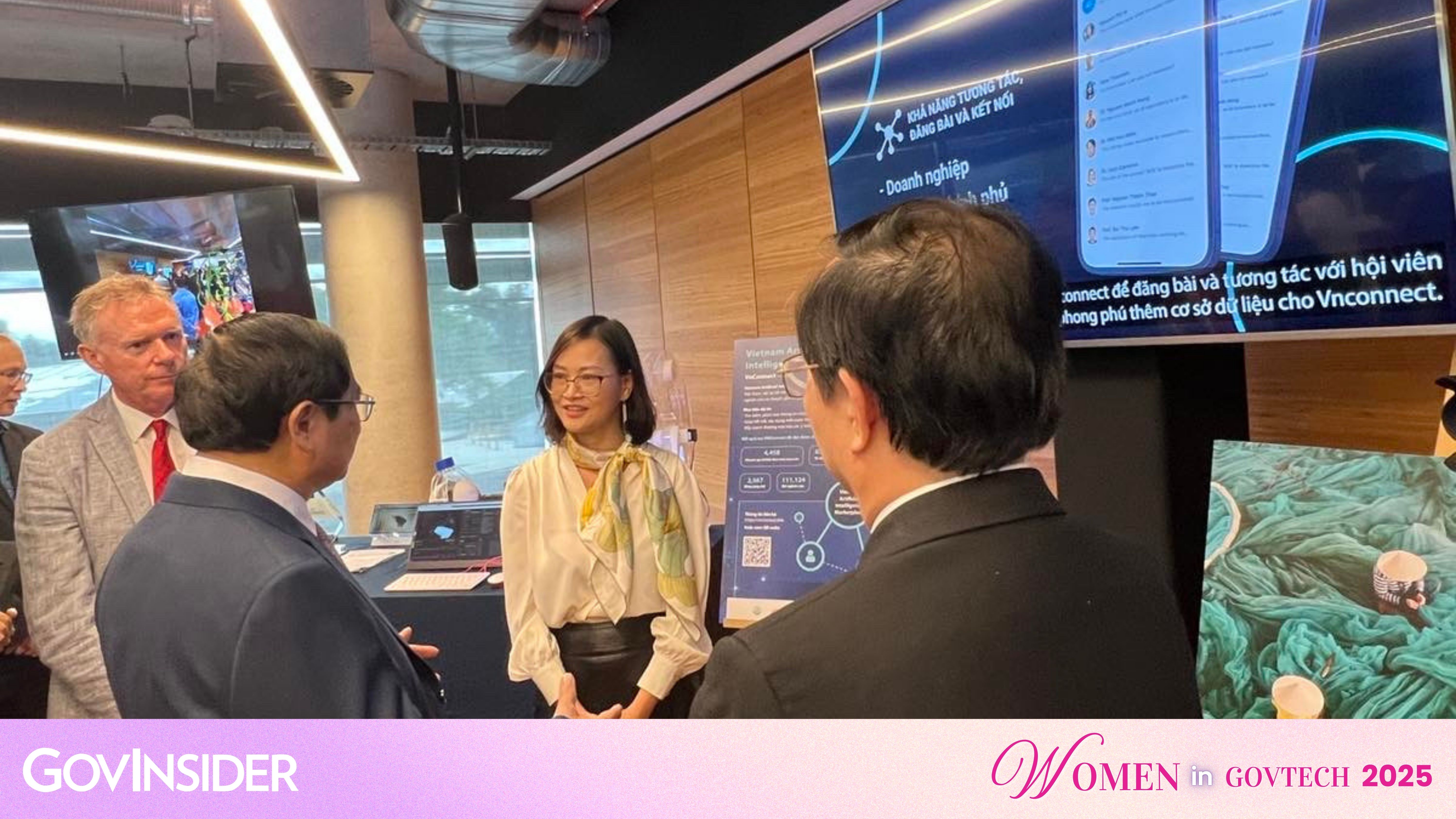
Dr Hien Pham, Senior Research Scientist, Data61, Commonwealth Scientific and Industrial Research Organisation (CSIRO), Australia, shares about her journey.
Data61is the digital innovation and data science arm of CSIRO, Australia's national science agency, and focused on transforming existing industries and creating new ones through advanced research in areas like artificial intelligence (AI), robotics, cybersecurity, and machine learning.
1) How do you use your role to ensure that technology and policy are truly inclusive?
As a research scientist at CSIRO’s Data61, I focus on designing tools that help decision makers see who benefits from digital technologies—and who might be unintentionally left out.
One example is the Responsible Innovation Impact Assessment Checklist, co-developed with Vietnam’s Ministry of Science and Technology.
It helps local policymakers in Vietnam evaluate how new approaches to innovation might affect bringing ideas to market, while also considering gender, social inclusion, and the unintended impacts on small producers or women-led enterprises.
Beyond research, I serve as Charter President of the Queensland Chapter of Vietnamese Australian Scholars & Experts Association ( VASEA,) where I mentor early-career researchers, especially women, and help create platforms that elevate their contributions.
For me, inclusiveness means designing technology and systems that reflect real human contexts—not treating equity as an afterthought.
2) What’s a moment in your career when you saw firsthand how technology or a new policy changed a citizen’s life for the better?
A powerful example was our Future of Vietnam’s Digital Economy project in 2019. We helped produce the country’s first evidence-based scenarios for Vietnam’s digital transformation to 2045, at a time when “digital transformation” was still an emerging concept.
That work informed thinking on science, technology and innovation and the digital economy. Today, Vietnam’s digital economy is projected to contribute 30–35% of GDP—well beyond what was envisioned a decade ago.
The impact became real to me during fieldwork in remote Ca Mau, where shrimp farmers—once disconnected from formal markets—were using digital traceability apps, online advisory tools, and e-payments to meet export standards and communicate directly with processors.
For the first time, they could see where their products went in the global supply chain and participate in it with confidence.
Few countries at similar income levels have achieved such deep digital adoption in rural aquaculture.
3) What was the most impactful project you worked on this year, and how did you measure its success in building trust and serving the needs of the public?
The most impactful project this year was our work in Vietnam to help introduce a new way of assessing how innovation initiatives can support sustainable development.
The Responsible Innovation Checklist helps ensure that proposed policies benefit not only the economy, but also women, people with disabilities, SMEs, and communities often overlooked.
Instead of focusing only on costs and procedures, the framework asks whether an approach might unintentionally exclude small firms, limit digital access, or create environmental risks or opportunities—making inclusion a core part of innovation design.
A major milestone was seeing the checklist applied in the real world demonstrating its value in shaping practical decisions.
For me, success was watching conversations shift from compliance to impact, creating a more transparent and forward-looking approach to innovation.
4) What was one unexpected lesson you learned this year about designing for real people? This can be about a specific project or a broader lesson about your work.
During our case study on aquaculture traceability, I met a female shrimp farmer in Ca Mau who showed me how new reporting steps meant staying up late entering data on her phone while her children slept.
She supported traceability, explaining that it “it helps us sell to the world”—but the extra steps added real pressure to her day.
For large exporters, the same process was a small adjustment. For her, it meant more time, more cost, and more worry about making a mistake.
That insight shaped how we contributed to the design of the Responsible Innovation Checklist: to ensure that when assessing an approach to innovation, we also see who might quietly carry the heaviest burden.
It taught me that inclusion starts with seeing the invisible work in people’s lives.
5) We hear a lot about AI. What's a practical example of how AI can be used to make government services more inclusive and trustworthy?
A strong example comes from Vietnam’s AI Marketplace (VNConnect). When our CSIRO team first delivered the minimal viable product (MVP), it contained profiles of 4,400 AI experts from more than 800 organisations.
After the project ended, partners in Vietnam continued expanding the platform, extending it to eight digital technologies and more than 8,000 experts.
AI algorithms automatically collect and update expert profiles, making talent visible regardless of gender, geography, or institutional background. This directly supports more inclusive decision-making:
- The platform is now used to select diverse reviewers for science and technology programs—reducing bias and improving transparency.
- FPT, Vietnam’s leading telecom group, uses the platform to find mentors for AI hackathons, opening opportunities for young and emerging talent
- Universities and regional agencies gain equal access to expert networks once limited to major cities.
- This taught me that AI earns public trust when it makes systems fairer and more transparent.
To subscribe to the GovInsider bulletin, click here.
6) How are you preparing for the next wave of change in the public sector? What new skill, approach, or technology are you most excited to explore in the coming year?
AI and automation will reshape many aspects of decision making, so I’m investing in two areas: AI-assisted modelling and human-centred skills like facilitation, ethics, and design thinking.
I’m especially interested in systems-based AI that helps decision-makers see trade-offs and distributional impacts—not just predictions.
I’m particularly excited about combining AI with systems thinking—tools that not only predict but also help organisations design future-ready strategies.
I often learn from conversations with my daughter about how her generation sees the world; they have a natural openness to technology but are deeply values-driven.
They remind me that the future of technology—regardless of the industry—must be both innovative and human.
7) What advice do you have for public sector innovators who want to build a career focused on serving all citizens?
Inclusiveness is central to meaningful innovation. Innovation that excludes is not innovation—it is inefficiency
My advice:
- Design with users, not around them—listen early and often
- Use evidence to reveal who may be unintentionally excluded
- Treat inclusiveness as a performance goal, not an afterthought.
8) Who inspires you to build a more inclusive and trustworthy public sector?
I’m inspired by Madam Nguyễn Thị Bình, a pioneering leader in Vietnam’s history. Her leadership showed how courage, empathy, and integrity can coexist in service to others.
She championed peace, education, and women’s empowerment long before these were global priorities.
Her example reminds me that inclusion is not just technical work—it is about ensuring every voice, especially the quiet ones, has a place in shaping the future.
9) If you had an unlimited budget, what would your dream project be?
A high-impact project I would pursue in Vietnam is a digital support platform for SMEs and rural communities.
Vietnam’s digital transformation is moving quickly, but many small enterprises, cooperatives, and rural households still struggle to access clear guidance, digital tools, and trusted information.
This platform would use AI-driven, human-centred services to help people navigate practical challenges such as:
- Simple digital tools for traceability and market access
- Personalised advisory support for SMEs and farmers
- Easy-to-use digital skills modules designed for women, youth, and ethnic minority groups
- Ashared evidence base that organisations can use to identify where additional support is needed.
The goal is not to build another large technology system, but to create a practical, everyday support service that makes digital transformation accessible to those who are currently at the margins.
10) Outside tech, what excites you the most?
People. I am fascinated by human creativity, resilience, and the stories that shape how communities adapt to change.
Whether through art, travel, or conversations with young people, I find energy in understanding how individuals imagine their futures—and how we can help them realise those futures.