
Everyone is betting on leapfrogging AI. The World Bank President doesn't believe it
The real leapfrog in the AI era is not at the infrastructure layer. It is at the governance layer.

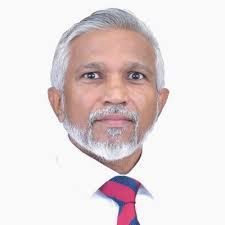
The AI leapfrog story feels good at a summit. It is less useful when you are writing the actual budget line, says former Minister of State for Environment, Climate Change and Technology in the Maldives Mohamed Shareef. Image: Canva
Last October, World Bank Group President Ajay Banga was asked whether developing countries could leapfrog into the AI era the way Africa leapfrogged into mobile money.
His answer: "I'm not certain that is completely clear to me."
That's the most honest thing a development institution leader has said about AI in years. And most governments across Asia Pacific are betting their digital futures on the very premise he just questioned.
Why the leapfrog story is comforting but dangerous
The mobile money leap was real. No legacy banking infrastructure meant no switching costs. You went straight to the phone.
AI is structurally different.
"Big AI needs computing power, lots of it. It needs electricity, lots of it," Banga said. The World Development Report 2026 put it plainly: AI could widen the gap between high- and lower-income countries precisely because of its requirements for compute, data, and skills.
Every government aiming for sovereign AI has roughly the same mantra: build their own model, leapfrog into AI leadership, be free of foreign dependence.
It's a compelling narrative, but a handful of American and Chinese tech firms control the AI infrastructure — from chips and large language models to cloud services and data centers.
Kazakhstan tried to build a supercomputer and the US export license for Nvidia chips got held up. Malaysia announced "sovereign AI infrastructure" with Huawei chips and retracted the statement under pressure.
This is the world public servants are actually operating in. Not the one the conference keynotes describe.
But there is still a leapfrog available. Just not the one everyone's chasing.
The real leapfrog in the AI era is not at the infrastructure layer. It is at the governance layer.
Here is what that means in practice.
Countries building DPI today build it without the technical debt that is currently crippling digital transformation in advanced economies.
No legacy identity systems to retire. No proprietary payment rails to unwrap. No decades-old interoperability problems inherited from the 1990s.
You get to make choices that are off the table for governments that already locked in.
Rwanda launched eKash in early 2025, an open-source national payment switch on Mojaloop, owned by the state, interoperable by design.
Their new digital identity system covers citizens, residents, refugees, and stateless persons.
Built from scratch. Built sovereign. The compute question is real.
But the governance architecture question is answerable right now, with what you have.
The same logic applies to AI governance. For most states, the smarter play is to find a niche in the supply chain where they can insert themselves — a choke point, some leverage, a comparative advantage, rather than trying to compete across the board.
That niche is not building a foundational model. It is building the governance architecture that determines how AI operates on your citizens' data, in your language, for your context.
The window is the governance calendar, not the technology calendar
The Global Digital Compact's implementation roadmap started this year. The third Global DPI Summit convenes in 2026.
The UN's Independent International Scientific Panel on AI is launching now. These are the rooms where the rules get written.
The leapfrog that is actually available to Asia Pacific governments is this: you can arrive at these governance processes without the institutional baggage that larger economies carry.
You have no domestic AI industry to protect. No incumbent platforms to appease. No regulatory frameworks already embedded in political economy.
You can take positions that are architecturally coherent because you haven't already compromised them.
That is a genuine structural advantage. Most governments in our region are not using it because they are focused on the technology race they cannot win instead of the governance race they can influence.
The World Bank president's uncertainty deserves to be taken seriously. The leapfrog story feels good at a summit. It is less useful when you are writing the actual budget line.
The question for public servants in Asia Pacific is not whether your country can out-compute the hyperscalers. It is whether you will show up to shape the rules before someone else writes them for you.
Read also:
Why Asian governments are measuring the wrong things, Jan 26, 2026
-----------------------------------------------------
Mohamed Shareef is a former Minister of State for Environment, Climate Change and Technology in the Maldives (2021-2023). He previously served as Permanent Secretary of Science and Technology Ministry (2019-2021) and the Chief Information Officer at the National Centre for Information Technology (2009-2014) and led the development of the country's national digital public infrastructure. He also served in the academia including as a researcher at the United Nations University. He currently serves as Senior Advisor for Digital Transformation at Nexia Maldives.