
Inside Indonesia’s plan to achieve decarbonisation without deindustrialising
At the International Sustainability Forum 2025, Indonesian ministers announced their commitment to forge its own path instead of merely replicating global models to build a competitive and environmentally responsible future.
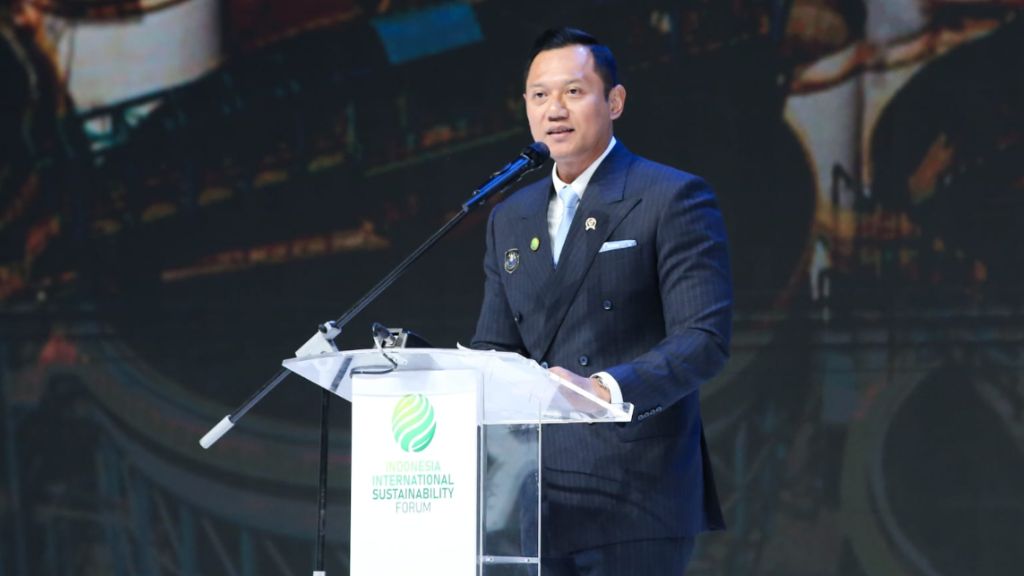
Indonesia’s Coordinating Minister for Infrastructure and Regional Development, Agus Harimurti Yudhoyono, emphasised the importance of maintaining a balance between growth and sustainability. Image: IISF 2025
Indonesia wants to chart its own unique path to achieve growth and sustainability, focusing on strengthening its food, water and energy security, as well as human capital.
In his opening address at the Indonesia International Sustainability Forum 2025 in Jakarta on October 10, Coordinating Minister for Infrastructure and Regional Development, Agus Harimurti Yudhoyono, stressed that economic growth and sustainability are not opposing forces.
“Climate and economic development must move forward together, not at the expense of one another,” he said.
Speaking to thousands of delegates from 37 countries, Yudhoyono underlined the importance of every country to chart its own sustainability path based on its distinct, local context.
He challenged the notion that developing countries need to follow best practices adopted by their developed counterparts.
“For Indonesia, sustainability must begin from the most fundamental foundations: food, water, and energy,” he added.
In the food sector, he emphasised that feeding more than 280 million people is not merely a social duty but a test of sovereignty. Through irrigation revitalisation and supply chain modernisation, the government seeks to safeguard agricultural productivity for long-term resilience.
Access to clean water presents the next major challenge. Although infrastructure has been built, Yudhoyono stressed the importance of ensuring that services are genuinely accessible to citizens.
“By 2045, all urban areas must have universal access to clean water through piped networks,” he explained, adding that achieving this would require significant investment, coordination across agencies and robust digital systems to monitor delivery.
Energy serves as the final and central pillar of Indonesia’s green transformation. Under the Electricity Supply Business Plan (RUPTL) 2025–2034, the government targets an additional 69.5 gigawatts of power capacity with 76 per cent coming from renewable sources.
“The roadmap is clear. What remains is the test of discipline: can implementation keep pace with ambition?” he challenged.
Decarbonisation without deindustrialisation
Yudhoyono highlighted that Indonesia’s green transition is not about slowing down industrialisation, but about balancing it with decarbonisation efforts.
This sustainability agenda is closely tied to the country’s industrial downstreaming policy, which has positioned Indonesia as the world’s leading producer of raw and refined nickel.
Industrial downstreaming is the process of transforming raw materials into higher-value products through processing, refining, and manufacturing.
For Indonesia, the next step is to make our industries more sustainable, he remarked.
These sustainability efforts include improving energy efficiency, adopting carbon capture and storage (CCS) technologies, and digitalising industrial processes to ensure that growth does not add to emission burdens.
Transport electrification has also become a top priority. Indonesia has sold more than 120,000 electric vehicles, accounting for around 10 per cent of the domestic market.
“However, the real breakthrough will come when electrification is scaled across logistics, freight transport, and public mobility,” Yudhoyono added.
To subscribe to the GovInsider bulletin, click here.
Investment for green transformation
In a subsequent keynote address, Minister for Investment and Downstreaming, Rosan Roeslani, elaborated on the opportunities Indonesia can leverage to advance its sustainability vision.
-1761214957729.jpg)
Indonesia’s renewable energy potential, he noted, reaches 3,700 gigawatts, but only around 15.1 gigawatts have been installed or less than one per cent.
The government targets that 76 per cent of additional power capacity in the next decade will come from renewable sources, including nuclear energy and storage systems.
“To achieve this, we are encouraging the private sector to take the lead,” he said.
Beyond energy, Roeslani identified carbon capture and storage (CCS) as an emerging strategic export. With storage potential of up to 577 gigatonnes of CO₂, Indonesia could position itself as Asia’s CCS hub.
The government is also advancing waste-to-energy projects across 33 cities, starting with Jakarta, Bandung, Surabaya, Yogyakarta, and Bali. The first phase is set to commence in November 2025 through a public tender process.
“This programme will have a positive impact not only on electricity supply but also on public health and the environment,” he added.
Human capital and regulatory reform
Both ministers emphasised that policy without execution remains merely an aspiration.
For Minister Yudhoyono, the key to success lies in human capital. The government is aligning education and certification systems with the needs of the green economy - producing engineers, planners, and green finance specialists ready to work in the field.
“The green transition is not driven by slogans, but by competence,” he said.
Licensing reform is another crucial step. Minister Roeslani announced that all investment permits and licenses can now be issued directly by the Ministry of Investment, following coordination with 18 other ministries.
“We aim to enhance legal certainty by simplifying procedures and cutting red tapes, making investment licensing easier, faster, and more transparent,” he explained, noting that his ministry targets US$650 billion (S$844 billion) in sustainability investments over the next two decades.
In closing, Roeslani stressed the importance of forging new partnerships, particularly in cross-border cooperation founded on mutual respect to ensure a shared future.