
Meet JARVIS: SMRT’s AI platform introduces predictive intelligence to enhance train reliability and operating efficiency
By Oracle
The intelligent analytics platform is currently in its first phase and has been unifying data from across multiple systems since January 2026.
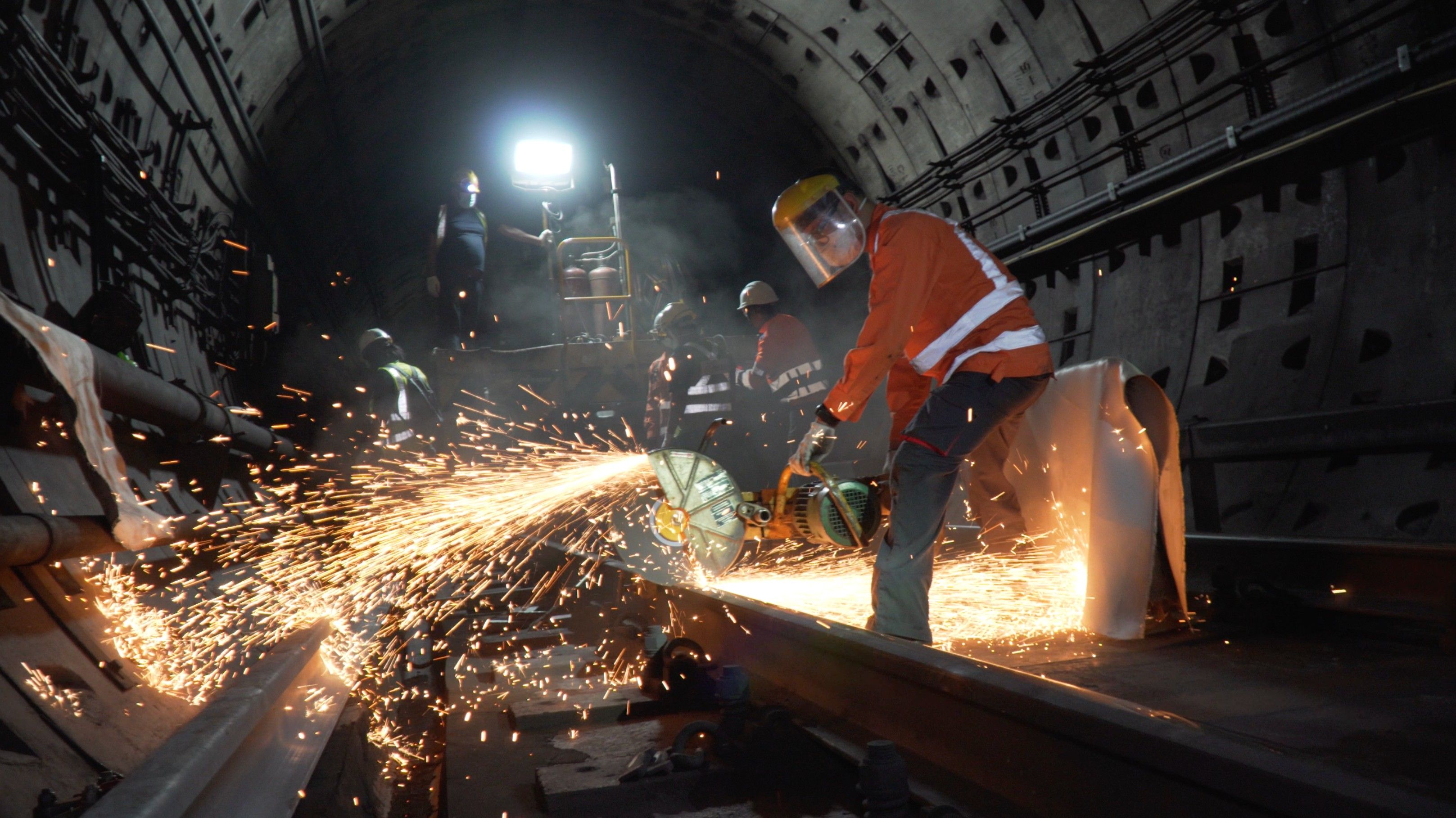
Developed by STRIDES Technologies, JARVIS would enable SMRT to strengthen maintenance systems with precise geo-location data. Image: SMRT
Singapore’s rail network is among the most heavily used systems globally per capita, supporting over two million passenger journeys each day.
Public transport services provider, SMRT, unveiled the progress of its artificial intelligence (AI) platform JARVIS, at the Oracle AI World Tour Singapore on April 14.
Speaking at the event’s keynote, SMRT’s Group CEO, Ngien Hoon Ping highlighted how the operator has been leveraging technology to improve its operations.
“With JARVIS, we harness SMRT’s data to generate valuable insights, powered by STRIDES Technologies’ domain expertise and Oracle’s industry-leading AI and cloud database capabilities,” he said.
JARVIS has been developed by SMRT’s engineering and technology innovation arm, STRIDES Technologies, to enhance safety, strengthen maintenance systems, and deliver more reliable train rides.
It does so by unifying and integrating data previously siloed across multiple standalone systems. Predictive algorithms are developed for anomaly detections and faults.
For SMRT, the challenge has never been a lack of data, but rather the complexity of its systems. The operator manages a complex “system of systems" involving rolling stock, signalling and power systems.
Ngien shared that his engineers have close to 40 years of operational and engineering data in various formats, from text and graphs to photos and flow charts.
With JARVIS acting as the bridge between this historical data and real-time intervention, Ngien added that it also served to uplift the needed skills in an AI market.
“We see strong potential to advance predictive maintenance, deepen engineering insights, and foster a culture of innovation within our engineering teams,” said Ngien.
JARVIS: Just a rather very intelligent system
One of the most innovative features of JARVIS is its natural-language interface.
Leveraging generative AI (GenAI) and vector search, maintenance teams can interact with the system via a chatbot to gain rapid troubleshooting insights.
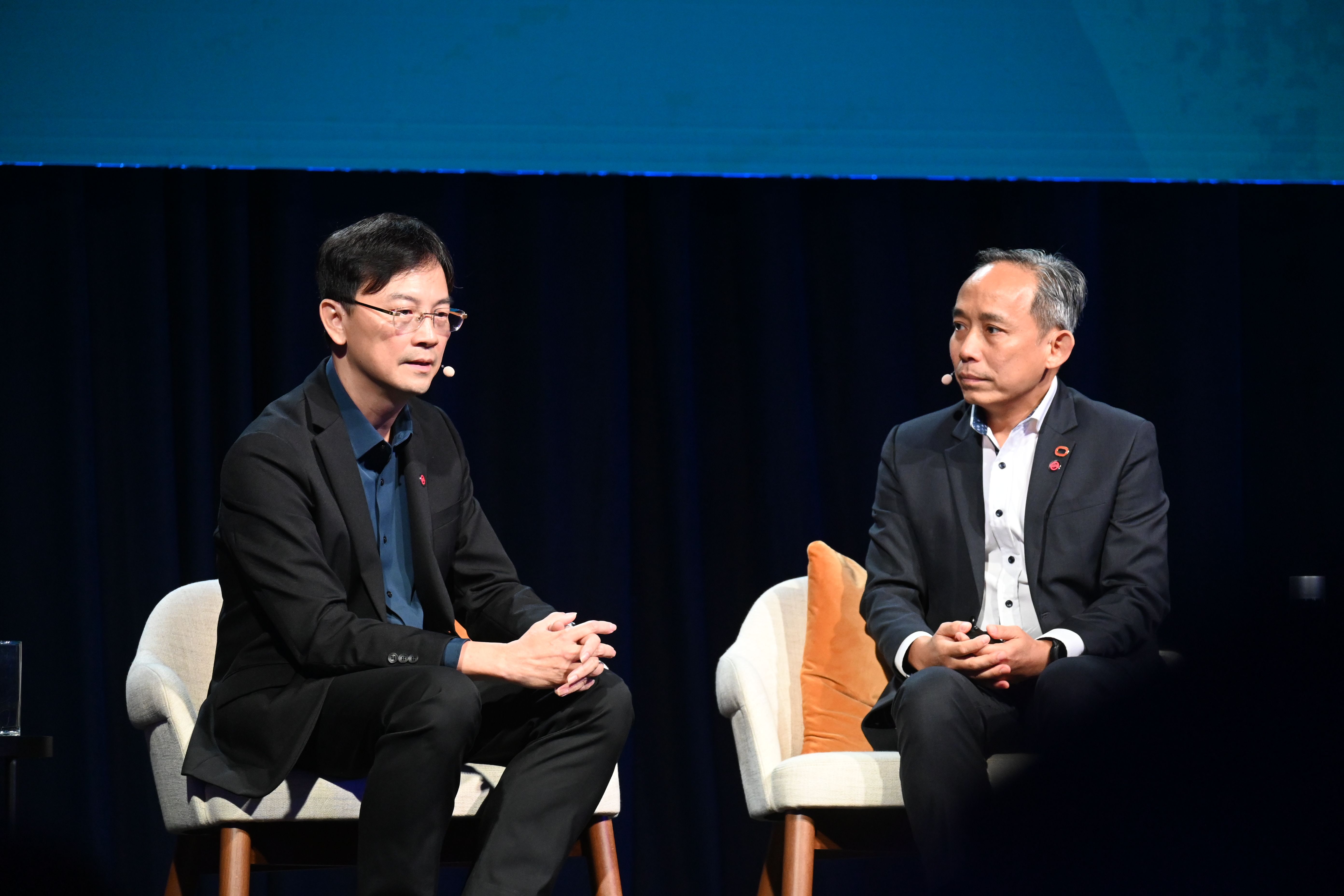
Ngien highlighted JARVIS’ ability to convert graphical information into precise geo-location data.
"Suppose you are aware of a certain fault that has been occurring. You need to translate that to exactly which trackside equipment is acting up," Ngien explained.
"That’s where we can geo-tag [faults] and it allows my engineers to be a lot more focused... They [can] go directly to that equipment in the same night to deal with it."
This targeted approach is critical for Singapore’s rail network, where maintenance teams are limited to a narrow three-hour window each night to perform essential repairs.
JARVIS has been built using Oracle Cloud Infrastructure (OCI) Enterprise AI and Oracle Autonomous AI Database.
Speaking alongside Ngien, Oracle’s Senior Vice President and Regional Managing Director, ASEAN & SAGE, Chin Ying Loong, noted how the Oracle AI Customer Excellence Center supported the development, testing, and validation of JARVIS by providing cloud and AI infrastructure.
“Running on OCI, JARVIS demonstrates how Oracle can help bring AI to where enterprise data resides to improve efficiency and operational responsiveness.
“Supported by the Oracle AI Customer Excellence Center in Singapore, the collaboration with SMRT helps create new possibilities for rail operators worldwide to deliver more consistent and dependable services for commuters,” said Chin.
The national AI mandate
The update to JARVIS comes amidst a broader national push to establish Singapore as an AI leader.
Singapore’s Senior Minister of State for Trade and Industry and Culture, Community and Youth, Low Yen Ling, also spoke at the event highlighting the government's strategic vision.
Minister Low noted that the government has launched a suite of national AI missions to drive transformation in four key sectors: advanced manufacturing, connectivity, finance, and healthcare.
To coordinate these efforts, Prime Minister Lawrence Wong recently established the AI Council.
"We call it AI missions because we want to make sure that whatever you do is really to solve real world problem statements," Minister Low explained.
"The AI Council will coordinate Singapore's AI efforts at the national level, enabling the whole of Singapore to quickly and at scale to harness AI as a strategic advantage."
Minister Low specifically cited the JARVIS project as a prime example of public-private collaboration delivering tangible benefits to citizens.
Another recurring theme throughout the event was that AI adoption is not about replacing human expertise but augmenting it.
Minister Low emphasised that Singapore aims to train 100,000 AI bilingual professionals who are proficient in both their specific functional domains and AI technology.