
Semarang City uses AI-powered mobile X-ray for TB screening
The Semarang City Government, Central Java, Indonesia, is using the portable X-ray machine to improve the detection and treatment of tuberculosis cases.

With TB transmission posing a serious threat to Indonesia, the Semarang City Government is implementing an active case finding strategy to improve detection. Image: Canva
Tuberculosis (TB) remains a serious threat in Indonesia with the country having 1,090,000 cases and 125,000 deaths per year, second only to India in terms of number according to the World Health Organisation (WHO)’s Global TB Report 2024 .
With TB treatment being one of the priorities of the national agenda, Semarang City Government is implementing an active case finding (ACF) strategy aimed at improving detection and conducting early screening for target groups.
Semarang City Health Department’s Head of the Infectious Disease Control Working Group (P2ML), Anggun Wandastuti, says to GovInsider that this proactive approach is expected to reduce transmission rates and provide treatment to those who have not yet received it.
"With ACF, we hope to identify hidden TB patients. When they are treated promptly, the risk of transmission to others becomes minimal," says Wandastuti.
Unlike passive case finding - where patients visit healthcare facilities on their own due to symptoms - ACF involves systematic screening activities at the community level or among high-risk groups, such as household contacts of TB patients, she adds.
To subscribe to the GovInsider bulletin, click here.
AI-powered portable X-ray
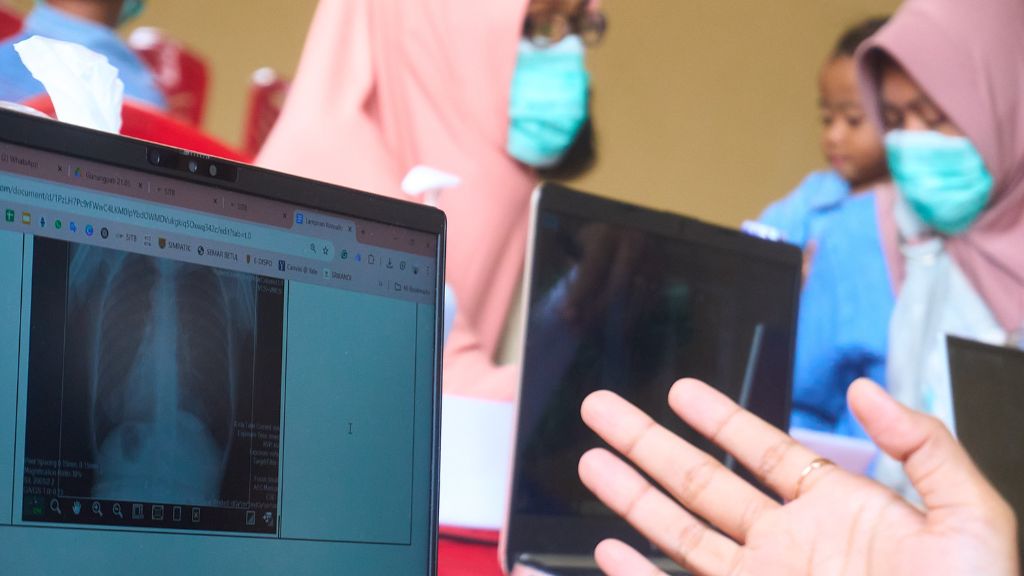
According to her, the ACF programme uses portable X-ray devices integrated with artificial intelligence (AI).
Unlike static X-rays in hospitals, these portable devices are much more compact, emit minimal radiation, and can be used anywhere - even in ordinary rooms with a minimum safe distance of two metres.
The devices are funded by the Government of the United Arab Emirates (UAE).
The results are immediately available in digital format, eliminating the need for printing. They can also be accessed directly through the Tuberculosis Information System (SITB), a national TB monitoring system.
"In the past (2024), we had to rent a special radiation-shielded vehicle, and the process of reading X-ray results was entirely dependent on the interpretation of a radiologist. With AI, results can be obtained much faster," she says.
However, radiologists will be available if healthcare workers require further consultation.
Since March 2025, Windastuti and her team have conducted 30 mobile screenings across 16 districts in Semarang City. By May 2025, out of the 2,700 people they had examined, approximately one per cent or 27 individuals tested positive for TB.
These TB-positive patients immediately receive six months of treatment and monitoring by the local healthcare facilities, Puskesmas.
Strict monitoring is crucial to ensure patients adhere to their medication.
"If patients do not adhere to their medication - claiming they already feel healthy - the team will continue to monitor and ensure they complete their treatment. This is crucial to prevent drug resistance, which makes TB treatment more difficult," she notes.
Preventing TB transmission
In addition to identifying active cases, the ACF programme also focuses on prevention.
Individuals whose X-ray results are negative for TB or who are asymptomatic but have a history of close contact with TB patients will be recommended for TB preventive therapy.
This is important, according to Wandastuti, because TB infection can be dormant and may become active at any time if the body's condition deteriorates.
Additional tests like the Mantoux test will also be conducted to detect infection.
This is because the target group for ACF screening is diverse, including close contacts of TB patients, diabetes patients, HIV patients, active smokers, and those with nutritional issues.
If the X-ray results show other abnormalities such as organ swelling, the patient will be immediately referred for further treatment at the hospital.
"Active smokers, for example, have a higher risk of exposure to TB," she adds.
Overcoming budget challenges
One of the main challenges of the ACF programme is the limited coverage of National Health Insurance (JKN).
The insurance currently only covers examinations for patients who have already shown symptoms of illness or have been confirmed to have TB.
Wandastuti proposes that preventive therapy should also be covered by JKN and allow asymptomatic close contacts of TB patients to be screened.
Fortunately, TB preventive therapy is now funded by the central government through the 2025 state budget, as Semarang City is one of 25 regions in 8 provinces in Indonesia designated by the Ministry of Health to implement the ACF programme.
"If household contacts requiring X-ray examinations are identified but cannot be referred through JKN, we hope this device can be directly utilised by the community," she says.
In the future, Wandastuti hopes that every local government can have its own portable X-ray device.
She notes that such portable X-ray devices are expensive, with each unit estimated to cost IDR3–4 billion (S$237,000-314,000).
A resident of Semarang City, Nasiyatin, has expressed gratitude to the Semarang City Government for initiating the ACF programme. She is relieved by the quick X-ray results confirming she was not infected with TB.
“I was curious if there was an issue with my lungs, as I’ve been coughing and experiencing chest itching for the past three days. The X-ray results confirmed it was not TB.
“This screening is free, and you can register simply with your ID card,” says Nasiyatin.