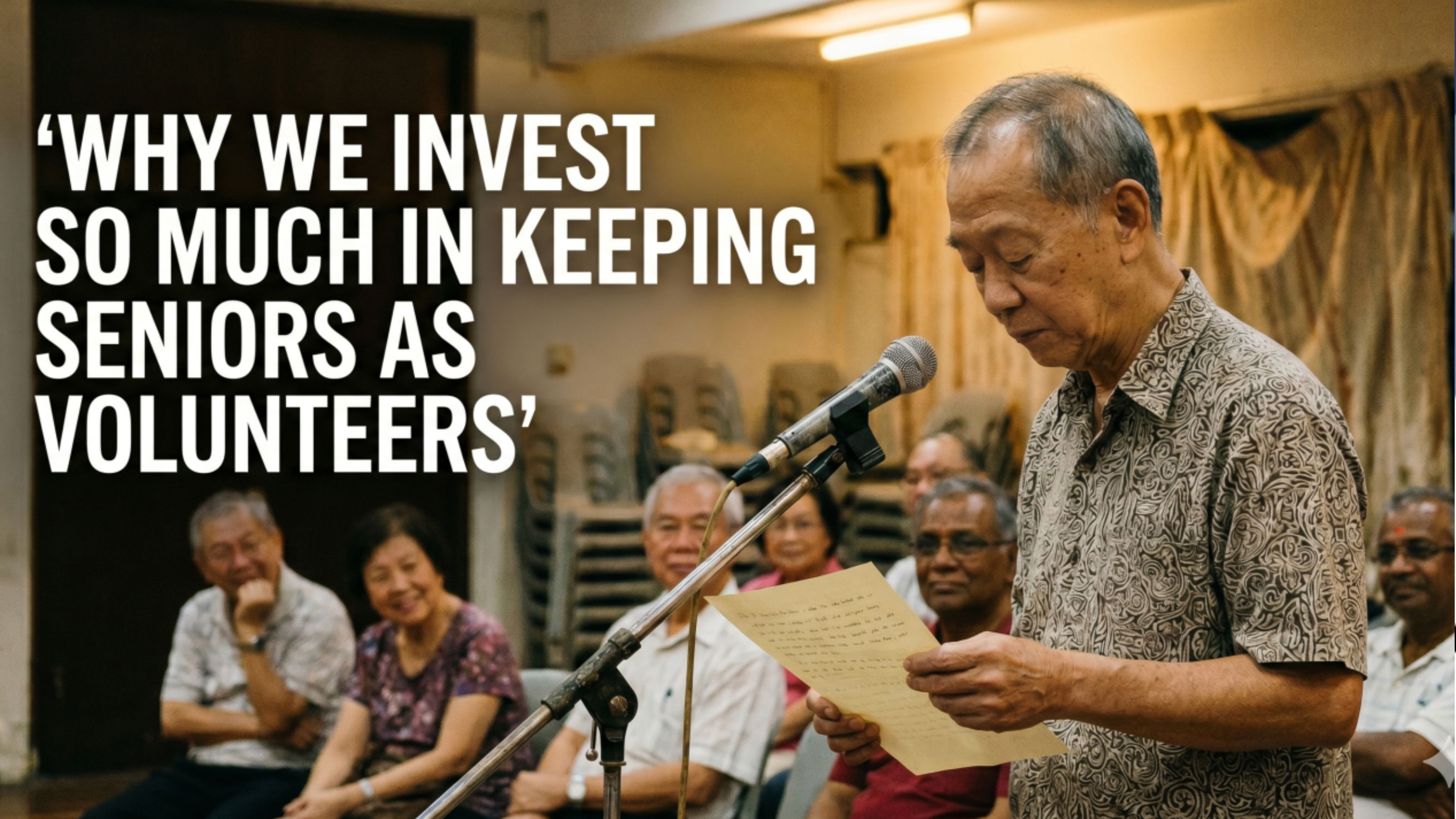
Why we invest so much in keeping seniors as volunteers
By Adrian Tan
Community designed seniors' contributions are one of the most powerful health interventions available to an ageing society.
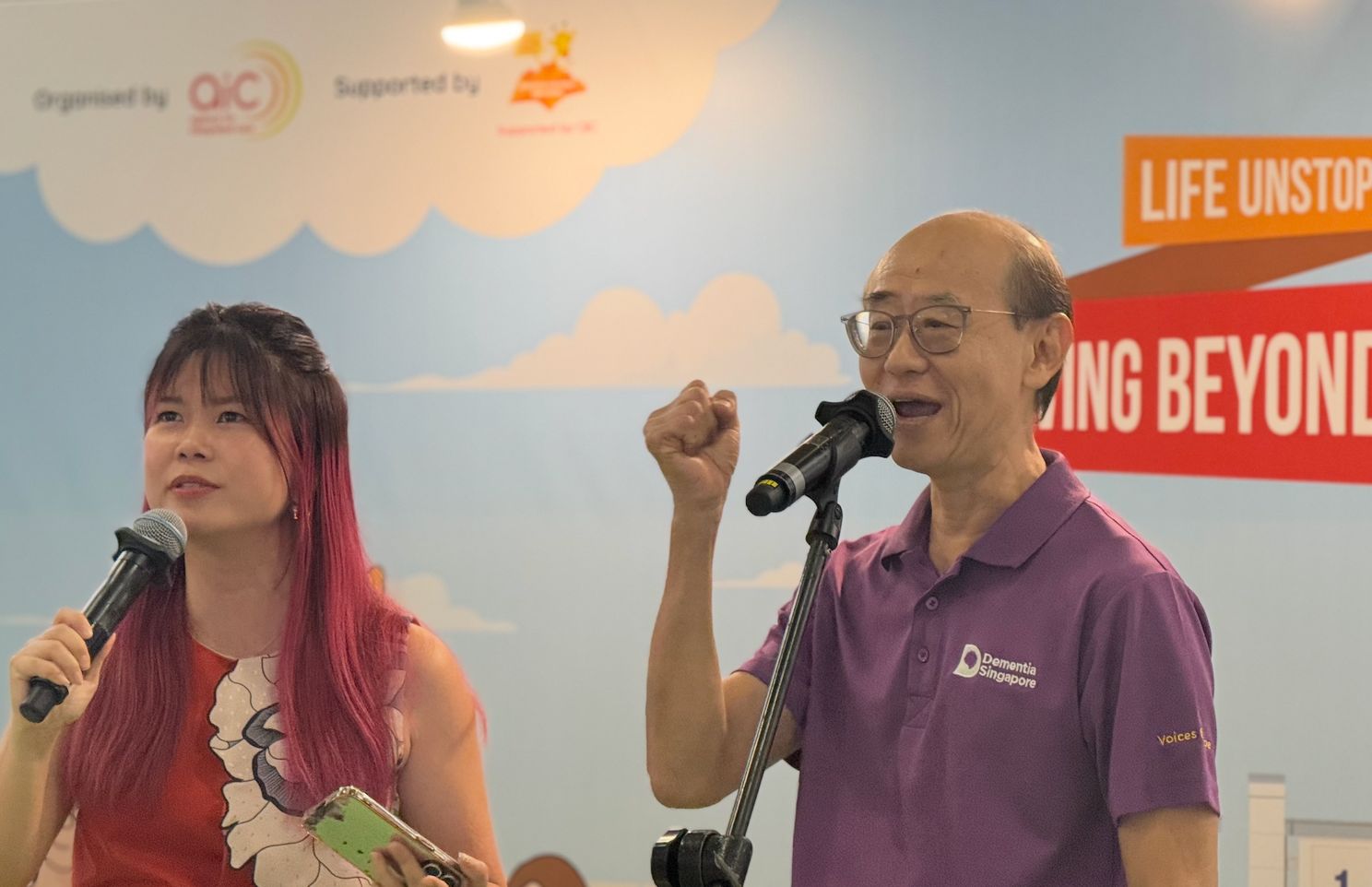
Seniors' volunteering architecture tend to be built around the organisation's needs, not the volunteer's growth. SG Enterprise's Adrian Tan calls for a more person-centred approach to developing such programmes. Image: Adrian Tan
A man living with dementia wrote a poem about his own condition and shared it at a public event.
His name is Tony. He came to SG Assist as a GeronTech Ambassador — a senior volunteer trained
to guide other seniors on assistive technology.
When I heard him read that poem — written in his own words about what it means to live with dementia, I thought about what happens when a person is given the conditions to contribute, and what that does to them.
That is the question at the heart of why SG Assist, an organisation that exists to support caregivers and seniors, invests so much time and resource in keeping seniors engaged as volunteers, micro-job participants, and community contributors.
It is not incidental to our caregiving mission. It is the same mission, seen from a different angle.
The evidence is not new. We are just finally acting on it.
The Singapore Longitudinal Ageing Study found that volunteering retirees showed significantly better cognitive performance scores, fewer depressive symptoms, better mental well-being and life satisfaction than non-volunteering retirees — and this held regardless of physical health status, both at baseline and at two-year follow-up.
It is Singapore data, from Singapore seniors, spanning years of observation.
The Harvard Study of Adult Development — 85 years in the making — arrives at the same conclusion from a different direction.
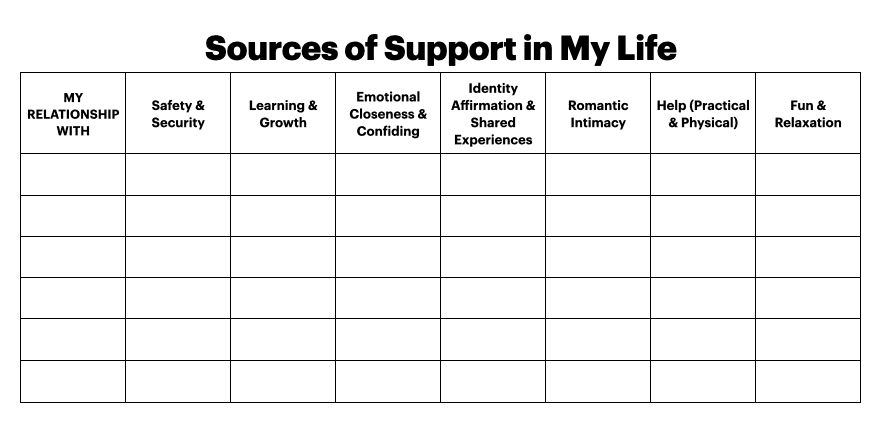
The single strongest predictor of long-term health, cognitive resilience, and longevity is not wealth, diet, or exercise. It is the quality of warm, trusted relationships.
And it is not the number of relationships that matters. It is how safe and genuinely connected a person feels within them.
Volunteering, when designed well, delivers both: cognitive engagement and social connection. Not as a side effect. As its core mechanism.
But not all volunteering is equal — and this is where we have had to be honest with ourselves.
What we observed around the impact of senior volunteerism
Singapore has many senior volunteering programmes.
But most volunteering architecture is built around the organisation's needs, not the volunteer's growth, as per our observations from our very own Silver Sparks (a community of seniors/volunteers/caregivers that we've built) research and the observations of our team and partners at Singapore University of Social Sciences (SUSS).
Seniors are recruited, trained once, deployed, and thanked at an annual appreciation dinner. That model produces one-off helpers. It does not produce people like Tony.
What produces Tony is a progression: from one-off helper to regular volunteer to peer supporter to ambassador and trainer. Each step is driven by a different internal need.
The one-off helper needs to feel heard. The regular volunteer needs to feel respected in daily operations, not just at annual events.
The peer supporter needs to see the impact they are making. The ambassador needs to feel connected to something larger than themselves.
These are not complicated insights.
But they require an organisation to treat senior volunteers as people with an evolving inner life, not as a resource to be deployed and maintained.
That shift — from transactional to relational, from matching help to building capacity — is one of the most important things SG Assist has learned.
Our Care Agents and GeronTech Ambassadors come from every background: homemakers, caregivers, retired professionals, people living with dementia.
Their prior role or current condition did not determine what they could contribute. What determined it was whether someone created the space.
We have had Care Agents who began as exhausted sandwich-generation caregivers and found, through the work, a community that understood them completely.
We have had GeronTech Ambassadors who knew nothing about technology when they started, and who three years later were designing their own assistive tools using 3D printing and leading tours they created themselves.
And we have Tony, who wrote a poem.
On robots and what they cannot replace
Singapore is investing heavily in technologies and robots for eldercare.
Some of this investment is justified — for people with advanced dementia whose access to human connection is genuinely limited, or as a bridge back to human engagement, robots can play a meaningful role.
At SG Assist, we work in gerontechnology precisely because we believe in the right technology at the right time for the right person.
But the Harvard evidence pushes back on something important: a robot can reduce physical aloneness.
It cannot generate the mutual reliance, emotional reciprocity, and felt security that the research identifies as the active health ingredient.
The distinction between objective isolation and subjective loneliness — between being physically alone and feeling genuinely unseen — is the distinction that matters.
And it is a distinction that no robot, however well-designed, currently bridges.
When Tony reads his poem to a room of people who understand what he is living with, something happens that a companion robot sitting in the corner of a care home cannot replicate.
He is heard. He is witnessed. He matters — not as a recipient of care, but as a contributor to something.
That is what we are trying to build at scale.
The evidence says this contribution is one of the most powerful health interventions available to an ageing society. Warm, trusted, reciprocal human connection. Community designed around contribution, not just consumption.
The goal is not to keep seniors busy. It is to keep them genuinely connected — to each other, to purpose, and to a community that still needs what they have to give.
The article was originally published on Adrian Tan's LinkedIn here, and edited.
-----------------------------------------------
The author is the co-founder of SG Assist, a Singapore-based social enterprise focusing on creating positive social impact through technology. He leads the enterprise's strategy, innovation, and community partnerships to build solutions that empower caregivers, seniors, and persons with disabilities to live with dignity, connection, and confidence.