Damayanti Elisabeth, Data Scientist, Jakarta Smart City, Indonesia
Oleh Mochamad Azhar
Meet the Women in GovTech 2025.
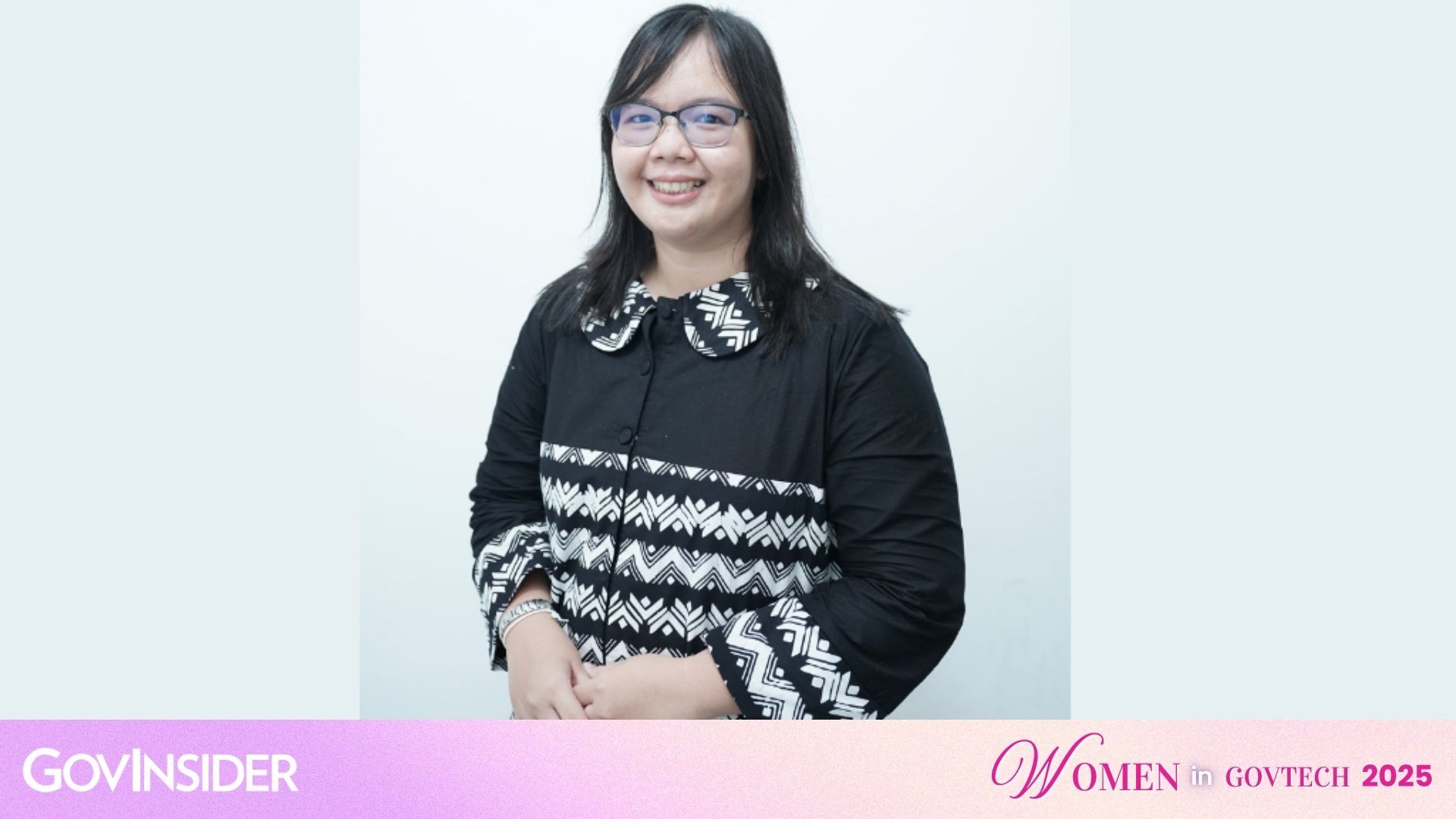
Damayanti Elisabeth, Data Scientist, Jakarta Smart City, Indonesia, shares her story. Image: Jakarta Smart City
1. How do you use your role to ensure that technology and policy are truly inclusive?
I ensure inclusivity through three key steps: ensuring fair data representation, designing services that can be easily used by diverse groups of residents, and translating analysis into consistent evidence-based policies.
First, I ensure that the data represents all residents through normalisation, cleansing, and techniques such as string similarity to handle incomplete or inconsistently written reports.
This approach helps capture the many variations in citizens’ voices, including groups that are usually “unseen” in the data.
Second, I design systems and dashboards that are easy to understand for both the public and policymakers.
The use of transparent indicators, concise visualisations, and cross-source data integration – such as air quality, congestion, and weather – ensures services remain responsive and relevant for users with different levels of digital ability.
Third, I translate insights into policy recommendations. My recommendations are always based on data rather than assumptions.
Automations such as monitoring the Service Level Agreement (SLA), report similarity detection, and service quality monitoring ensure all reports are handled equally.
Good documentation and knowledge management help maintain consistent standards across all regions.
With inclusive data, transparent processes, and consistent policies, technology can become a tool that communities across all layers of society can rely on.
2. What’s a moment in your career when you saw firsthand how technology or a new policy changed a citizen’s life for the better?
One of the most memorable moments for me was when we developed automated similarity detection for citizen complaints. Before this system existed, many similar reports were handled separately, slowing down response times.
With text-analysis-based similarity methods, similar reports can be grouped automatically, speeding up the identification of priority issues, improving assignment accuracy, and shortening service units’ response times.
Another important moment was when we analysed JAKI’s telemetry data to support the app redesign process.
From usage data of millions of users, we understood community needs and identified friction points within the service. These findings were used to rebuild the user experience to make it more inclusive.
I also contributed to drafting the Jakarta Smart City Masterplan, which unifies data, technology, governance, and policy into a long-term strategic direction.
This approach ensures digital transformation does not simply introduce new features, but creates services that are sustainable, fair, and accessible to all citizens.
Through these experiences, I’ve learned that technology truly improves citizens’ lives only when it is developed based on their needs and an understanding of real on-the-ground dynamics.
3. What was the most impactful project you worked on this year, and how did you measure its success in building trust and serving the needs of the public?
This year, I worked on several strategic projects aiming to improve accuracy and service quality in the public sector.
First, through CRM Repeated Report Analysis, I developed pattern-mapping and complaint detection algorithms to help address recurring issues. As a result, the response process has become faster, more accurate, and more consistent.
Second, I conducted a Traffic Flow Data Analysis using real-time data to identify congestion points and provide more adaptive, evidence-based traffic management recommendations.
Lastly, I contributed to the development of the Citizen 360 Dashboard, which integrates various population and welfare-related datasets. This dashboard supports social assistance evaluations and helps identify vulnerable residents.
These projects strengthen public trust through services that are more responsive, transparent, and well-targeted.
4. What was one unexpected lesson you learned this year about designing for real people?
I’ve learned that data quality and well-designed processes matter far more for success than sophisticated technology alone.
Work ranging from CRM analysis to Citizen 360 highlights the importance of understanding citizens’ behavioural patterns and the dynamics of public service delivery.
I’ve also learned that data transparency and clear workflows build trust, facilitate decision-making, and improve accountability.
In addition, these projects taught me the importance of cross-unit collaboration, strong communication, and a shared understanding of the public goals we aim to achieve.
To subscribe to the GovInsider bulletin, click here.
5. We hear a lot about AI. What's a practical example of how AI can be used to make government services more inclusive and trustworthy?
AI helps governments understand citizens’ needs more comprehensively by analysing data, allowing vulnerable groups or frequently overlooked areas to be identified more quickly.
AI also speeds up processes that previously took a long time, such as issue classification or grouping similar problems. This improves the precision of field follow-up actions and enhances citizens’ experience when using public services.
In addition, AI strengthens transparency and accountability because decisions are based on objective, traceable, and explainable analysis.
Dashboards supported by AI-driven analytics help governments convey information more clearly to the public.
With stronger understanding and insights, AI can enhance inclusivity and build more robust public trust.
6. How are you preparing for the next wave of change in the public sector? What new skills, approaches, or technology are you most excited to explore in the coming year?
I prepare myself by strengthening my analytical skills while deepening my understanding of how residents interact with government services.
I focus heavily on improving data quality, refining processes, and enhancing my ability to read behavioural patterns through analytics.
Next year, I look forward to technologies that can support more intelligent and large-scale automated analysis, especially in managing public service data and integrating cross-sector datasets.
I also want to deepen my skills in building more adaptive knowledge management systems.
Beyond technical aspects, I continuously develop my communication skills and cross-unit collaboration abilities. Change requires the capacity to bridge technical and policy perspectives.
By combining analytical abilities, contextual understanding, and strong communication, I hope to contribute more towards ensuring every innovation remains relevant to citizens.
7. What advice do you have for public sector innovators who want to build a career focused on serving all citizens?
The key to a career in public service lies in the ability to understand citizens’ real problems and the willingness to work with empathy.
Technology becomes meaningful only when it addresses society’s needs rather than simply offering new features.
Build a strong foundation in analytical skills, understand how bureaucracy operates, and have the persistence to improve processes gradually. Innovation in the public sector does not always come in the form of large breakthroughs.
Many significant changes emerge from strengthening data, improving SOPs, and consistently developing evidence-based policies.
I also encourage innovators not to work alone. Cross-unit collaboration, clear communication, and the ability to bridge technical and policy perspectives are crucial for ensuring that ideas can be implemented effectively.
8. Who inspires you to build a more inclusive and trustworthy public sector?
My greatest inspiration comes from Jakarta itself – with its highly complex dynamics and diverse population.
Every piece of data and every report remind me that public-service innovation must begin with a deep understanding of the city’s realities and its citizens’ challenges.
This environment motivates me to continue developing inclusive solutions so that everyone receives fair and reliable services.
9. If you had an unlimited budget, what would your dream project be?
I would create an Integrated Public Service Intelligence Platform – a unified system that combines all public-service data, city conditions, citizen mobility, welfare indicators, and community feedback into one ecosystem.
This platform would present a comprehensive profile of residents’ service interactions, detect early signs of social vulnerability, identify environmental issues before they escalate, and predict potential declines in service quality based on historical and real-time data.
I also envision AI-driven policy simulations to project impacts before policies are implemented, along with a public-facing version that allows residents to monitor services transparently and in an easy-to-understand manner.
10. Outside tech, what excites you the most?
I’m deeply interested in culture and history, as both offer a deeper perspective on how societies shape their identities, how cities evolve, and how values are passed from one generation to the next.
These perspectives help me see public services as part of a longer societal journey and make me more attuned to designing solutions that are relevant, respectful of diversity, and grounded in the lived context of communities.