Ng Lai Yee, CEO, Temus, Singapore
Oleh Amit Roy Choudhury
Meet the Women in GovTech 2025.
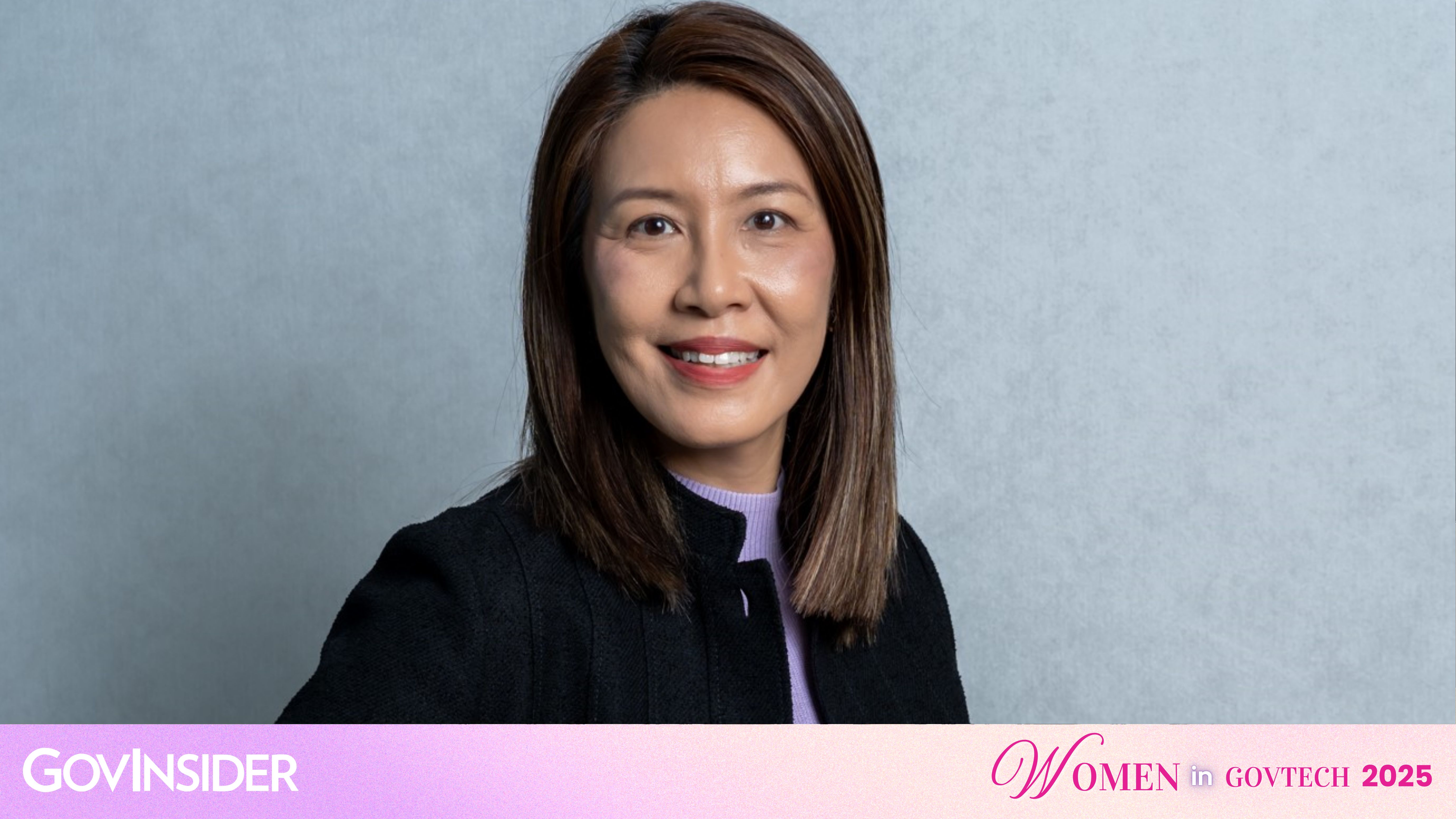
Ng Lai Yee, CEO of Temus, Singapore, shares her journey. Image: Temus.
1) How do you use your role to ensure that technology and policy are truly inclusive?
Great technology needs the right policies to support it. Good policies need the right technology to be effective.
I lead Temus, a Singapore-based digital transformation consultancy established by Temasek.
I also sit on committees like the Economic Strategy Review Committee on Technology and Innovation and SGTech, where we bridge policy and technology.
These platforms help ensure we're building tech that actually reaches people, not just impresses in demos.
True inclusion also requires boldness—people willing to challenge the norm and move forward even when the path isn't clear.
What I've learned is that true inclusion requires boldness—people willing to challenge the norm and take steps forward even when the path is not clear.
At Temus, we're putting this into practice by building artificial intelligence (AI) fluency across our entire workforce, not just technical roles.
Our T-shaped community has grown to involve more than one-fifth of employees in five months.
We also recognise the importance of broadening opportunities for women in tech, hence partnering with the Infocomm Media Development Authority of Singapore (IMDA) on the Women in Tech Relaunch programme and creating entry points for diverse talent through our Step It Up programme.
2) What's a moment in your career when you saw firsthand how technology or a new policy changed a citizen's life for the better?
Almost two decades ago, when I was a young associate at a consulting firm, I worked on a transformation project for our tax agency client.
Back then, people had to submit paper tax return forms every April 15th, and I recall the long queues outside their office.
With this project, I witnessed the agency’s shift from manual forms to e-filing, and eventually to no-filing for many citizens.
The paradigm shift that struck me was this insight that “no service is good service".
Tax authorities realised people did not want to interact with them on a daily basis.
By coupling the right policy changes with technology and getting agreement from taxpayers, they moved from physical boxes for form submission to many people not having to file at all.
That showed me how technology and policy together, with people willing to challenge how things have always been done, can genuinely improve citizens' lives, and it’s been a guiding light for me since then.
3) What was the most impactful project you worked on this year, and how did you measure its success?
Two projects stand out for me this year.
What connects these projects is that they're both about building solid digital foundations that will go on to serve the public.
The first is working with a local university on a national adult educator registry, launching their account registration and membership management to build a foundation for professionalising adult education in Singapore.
This system makes it easier for educators to register and for institutions to manage their workforce, removing friction from a sector that's critical to lifelong learning.
The second is our work with the Ministry of Education, reimagining the Special Education journey for over 8,000 students across 26 schools.
We redesigned a seamless user journey for students, parents, educators, and administrators, and developed a roadmap for three key solutions: a parent engagement platform, an admissions platform, and a central data repository.
I found this impactful as our work was effectively creating digital pathways for students and families who've traditionally had fewer tools to navigate an already complex system.
4) What was one unexpected lesson you learned this year about designing for real people?
One project taught me that you can't solve real-world problems with just technology, no matter how sophisticated it is – and that's our HealthKaki POC.
HealthKaki is a generative AI (GenAI)-powered digital health companion we developed to address a gap in Singapore's healthcare system, under the HealthierSG programme.
After people visit their GP, they often leave without ongoing support or personalised guidance on how to take proactive steps to lead healthier lifestyles.
HealthKaki helps to provide personalised health plans that are customisable (for example, planning a vegetarian diet, physical activities that are geolocated).
A chatbot helps to answer questions from residents, and this is built to be embedded into the HealthierSG resident journey and GP workflow.
To build this effectively, we realised early on that we couldn't do this alone.
It became a collaboration with the Ministry of Health, Health Promotion Board, AWS, and Synapxe - bringing together different expertise across
Singapore's public health ecosystem.
It was a true ecosystem play, not just a tech project. And when you truly start with the people you're serving and work backwards, you end up with completely different solutions.
5) What's a practical example of how AI can be used to make government services more inclusive and trustworthy?
The critical realisation is that there's no one-size-fits-all. One system doesn't work for everyone anymore.
But here's what matters most: making AI trustworthy. Citizens need to understand how decisions are made and trust that their data is protected. This isn't just about building impressive technology; it's about building trust into the very fabric of how we develop and deploy AI.
That's why Temus is both a signatory of the AI Verify Foundation and why we've partnered with Resaro, an independent AI assurance provider.
This partnership is about embedding assurance into the entire AI development lifecycle, not auditing after the fact, but building governance and testing from the start.
6) How are you preparing for the next wave of change? What new skill, approach, or technology are you most excited to explore?
We're working to become an AI-native organisation, and that means moving beyond treating AI as something for the technical professionals.
At Temus, we are focused on building horizontal AI fluency across all roles and sectors, not just among data scientists and engineers.
We ensure that we are building the capability for people across different roles – from our finance team to our consultants – to collaborate with AI in ways that amplify their expertise.
At the same time, we have shifted to squad-based approaches focused on MVP delivery and outcomes.
To subscribe to the GovInsider bulletin, click here.
Our teams are experimenting with agentic AI to implement systems that can assist through the entire software lifecycle, from concept through deployment.
7) What advice do you have for public sector innovators who want to build a career focused on serving all citizens?
Stay close to the ground.
The best insights I've gained always come from watching how systems actually work in people's lives and spotting connections that others miss.
Impact is not always about deploying the most advanced technology, nor is it always from the top down.
Often, it's about understanding existing systems and policies well enough to know where a small shift unlocks something bigger. Singapore's size forces us to be strategic – we leverage assets and expertise from across our ecosystem rather than building everything ourselves.
This is why platforms like the Economic Strategy Review Committee on Technology and Innovation matter.
They help to develop a fuller picture of how technology, policy, and business reality intersect. You learn what constraints exist, what's actually possible, and where real opportunities lie.
The public sector innovators making lasting change share something: They see across boundaries, understand how systems connect, and mobilise different groups toward shared goals. That's the skill to develop.
8) Who inspires you to build a more inclusive and trustworthy public sector?
I've always been inspired by Doraemon – the blue robotic cat from the future who comes back to help Nobita, an elementary school student in the series, navigate everyday challenges.
What struck me about Doraemon wasn't the futuristic gadgets he pulled from his pocket. It was how he used them.
He had access to incredibly advanced technology, but he deployed it to solve very human, very ordinary problems – like helping a kid do better at school, build confidence, navigate friendships.
The technology was sophisticated, but the problems it solved were deeply personal and real.
That's exactly what public sector innovation should be. With access to powerful tools, the question is not "what can this technology do"?
It's "what problem are we solving for someone"?
That's what Doraemon taught me – how the best technology gets out of people's way and lets them live better lives.
9) If you had an unlimited budget, what would your dream project be?
A dream project with an unlimited budget would be to create a Singapore Sovereign AI Commons - a national AI platform that keeps factual public information free from foreign or commercial control.
The core idea: Separate fact from entertainment.
The Sovereign AI Commons would be locally governed, hosting infrastructure and datasets within Singapore to maintain sovereignty and transparency.
It would strictly separate an "Information Channel" for fact-based, auditable answers without advertising or profit motives from an "Entertainment Channel" for creative content, clearly labelled and safeguarded.
This creates a strong foundation to address misinformation risks. We can use AI to provide a comparison between countries and provide transparency, further increasing community trust in the information.
We should first start the project with Singapore-specific information, including tax, pensions, health, and law – things that are well defined, within the purview of government, and known to be trustworthy.
It can gradually expand the information scope and encourage industry and community involvement – for example, for finance or insurance.
This addresses misinformation at its root.
Citizens get trustworthy information that would not be interfered by commercial interests or foreign actors. Governance would be multi-stakeholder, combining government, industry, academia, and civil society input.
The platform would emphasise local languages and cultural relevance, ensuring AI answers reflect Singaporean values and identity while empowering citizens as active participants rather than passive consumers.
It's a model other countries could adopt, helping to protect the public right to quality information while strengthening national digital sovereignty.
10) Outside tech, what excites you the most?
Outside of tech, what excites me most is people – my family, my closest friends, and the everyday moments of connection that make life feel meaningful.
The love, laughter and support shared with the people I care about are what truly fuel my energy and passion to live life to the fullest.
Friendship and family remind me that life is not just about achievements, but about who I get to share the journey with – from simple routines to big milestones.
Knowing that there are people I can celebrate with, learn from, and lean on keeps me grounded, hopeful, and constantly inspired to show up as a better human every day.