Indonesia aims to build AI sovereignty through the AI Talent Factory
Oleh Mochamad Azhar
Through close collaboration with universities, the AI Talent Factory serves as a platform to strengthen national AI self-reliance, says Ministry of Communication and Digital’s Head of Digital Talent Development Centre (PPTD), Said Mirza Pahlevi.
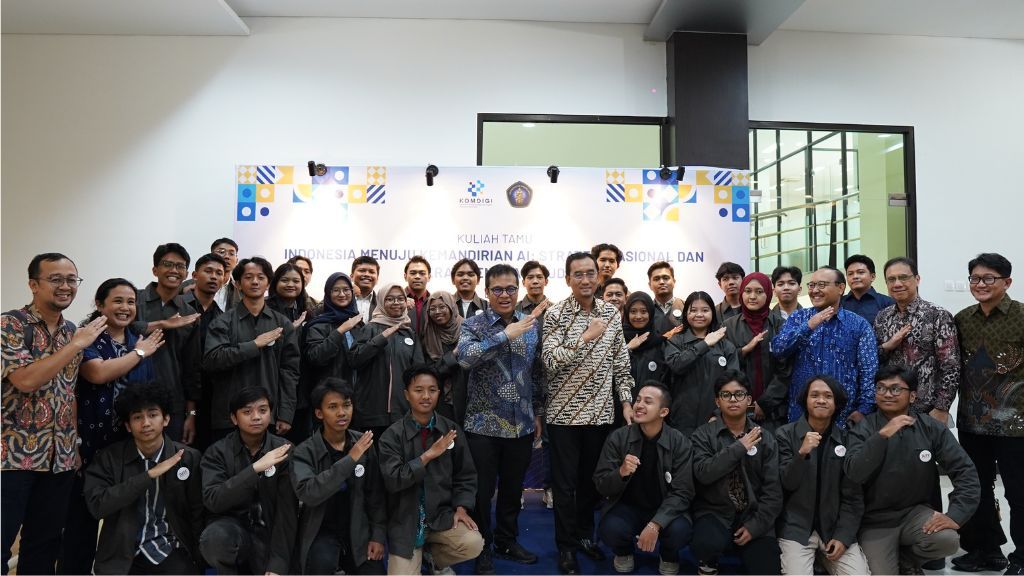
The AI Talent Factory (AITF) is a programme under the Digital Talent Development Centre (PPTD) at Indonesia’s Ministry of Communication and Digital Affairs, designed to build a stronger pipeline of AI practitioners nationwide. Image: Ministry of Communication and Digital.
As Indonesia ramps up its use of artificial intelligence (AI), it is facing an apparent paradox.
While its population ranks among the world’s largest AI users, the country remains limited in its ability to create, customise, and control AI technologies.
To address this capacity challenge, the Ministry of Communication and Digital’s Digital Talent Development Centre has launched the AI Talent Factory (AITF), an initiative designed to support AI practitioners through close collaboration with universities.
“AITF focuses on preparing selected talents to solve national problems using practical AI technologies,” says Ministry of Communication and Digital’s Head of Digital Talent Development Centre (PPTD), Said Mirza Pahlevi, to GovInsider.
AITF places students directly into real-world environments, providing them with hands-on experience as AI engineers.
In its first batch with Brawijaya University, participants were confronted with use cases tied to two government policies: eradicating online gambling content and developing digital talent pools.
Instead of relying on off-the-shelf AI models such as GPT-4 or Gemini Pro, the students built solutions using open-source foundation models, followed by continued pre-training and fine-tuning.
“They had to collect their own data, clean it, perform deduplication, then move into model engineering and evaluation,” says Pahlevi.
The results were tangible. The model developed by Brawijaya University students achieved a high level of accuracy and was immediately adopted by the government.
“Out of hundreds of domains identified based on their text and images contained in their URLs, around 90 per cent were affiliated with online gambling,” says Pahlevi, adding that the training data would be used as the basis for the Ministry to carry out takedowns.
Looking ahead, the same model will be expanded to address problems in other ministries before eventually being introduced to industry.
For now, “we want the government to be the first to benefit.”
To subscribe to the GovInsider bulletin, click here.
Developing a national AI talent ecosystem
For Pahlevi, the real strength of AITF lies in its ecosystem-wide impact.
Students gain advanced AI engineering experience, while lecturers are encouraged to update their competencies, and institutions would begin investing in infrastructure.
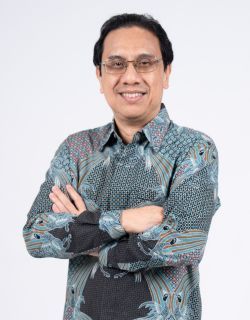
“We want universities to become more aware of how far AI technology has progressed, so that lecturers start learning. Institutions begin thinking about GPUs, and research moves towards large language models and vision-language models,” he adds.
This impact is already becoming evident.
Universitas Brawijaya is now running the second batch of the AITF and converting it into a dedicated course.
In 2026, AITF will be expanding to other universities such as Sepuluh November Institute of Technology and Gadjah Mada University, with different use cases including child protection in the digital space and adaptive AI-based learning.
That said, Pahlevi stresses that this is not a project handed over entirely to universities. The government and universities work together based on shared ownership and joint funding.
“We provide GPUs, and universities must also provide them. We have to work together to build the ecosystem,” he says.
Under AITF, the government also collaborates with the Indonesian diaspora and international partners, with mentors coming from Google DeepMind and University of Tokyo (linked up by the Japan International Cooperation Agency (JICA)).
Laying the foundation: AI developers for all
The Ministry projects that Indonesia will need 12 million digital talents by 2030, while formal education institutions are expected to supply only 9.3 million.
This leaves a gap of around three million digital talents that must be filled through various training schemes.
This gap is even more pronounced in the AI sector. In its national AI roadmap white paper, the government has set a target of producing 100,000 AI talents per year across different levels: AI users, AI developers, AI practitioners, and AI specialists.
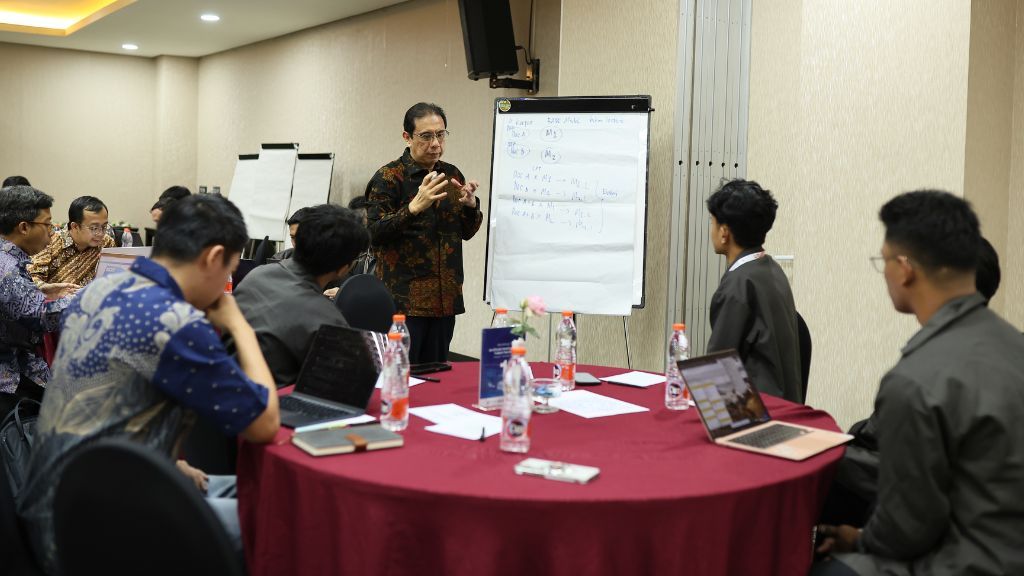
“This target is extremely challenging. That is why the strategy cannot be conventional,” says Pahlevi.
PPTD recognises that AITF alone is not sufficient and that a broader foundation is required. This is where the Learning Journey, delivered through the Digital Talent Scholarship platform, becomes critical, he notes.
According to him, the Learning Journey is a self-paced online learning platform accessible to the public. The learning path is structured in tiers – basic, intermediate, and advanced – allowing participants to choose levels according to their needs.
This year, PPTD is targeting 30,000 participants for the Learning Journey programme.
Online learning was adopted to achieve scale, given the vast geographic coverage required and to avoid widening the AI skill divide, he says.
To maintain learning quality, Pahlevi says that the materials are designed as structured digital textbooks, combining text, interactive videos, evaluations, and live sessions with experts.
For advanced-level participants, assessments are equipped with camera-based proctoring and cheating detection.
A vendor-agnostic approach
According to him, the learning journey adopts a vendor-agnostic approach, equipping participants with general AI knowledge that is not dependent on any specific technology provider.
“All foundational components are developed and managed directly by the government. Only after participants complete certain stages are they allowed to branch out to partners,” he notes.
This approach is essential to ensure Indonesian AI talents possess global, cross-platform knowledge, rather than being proficient in just a single ecosystem.
Once this foundation has been established, participants can access partner learning pathways, whether from Google, Microsoft, or other global tech companies, to obtain industry certifications as additional incentives.
Pahlevi highlights the importance of policy support and national infrastructure in strengthening Indonesia’s AI sovereignty and overcoming investment challenges in developing domestic AI models.
“Human resources and infrastructure must progress hand in hand. At PPTD, we focus on the human capital side,” he says.