Indonesia targets a fully interoperable national digital health system
Oleh Mochamad Azhar
Indonesia’s Health Minister Budi Gunadi Sadikin shared how the country was building a digital health ecosystem through data interoperability, AI, genomics, and free health checks for its 280 million citizens.
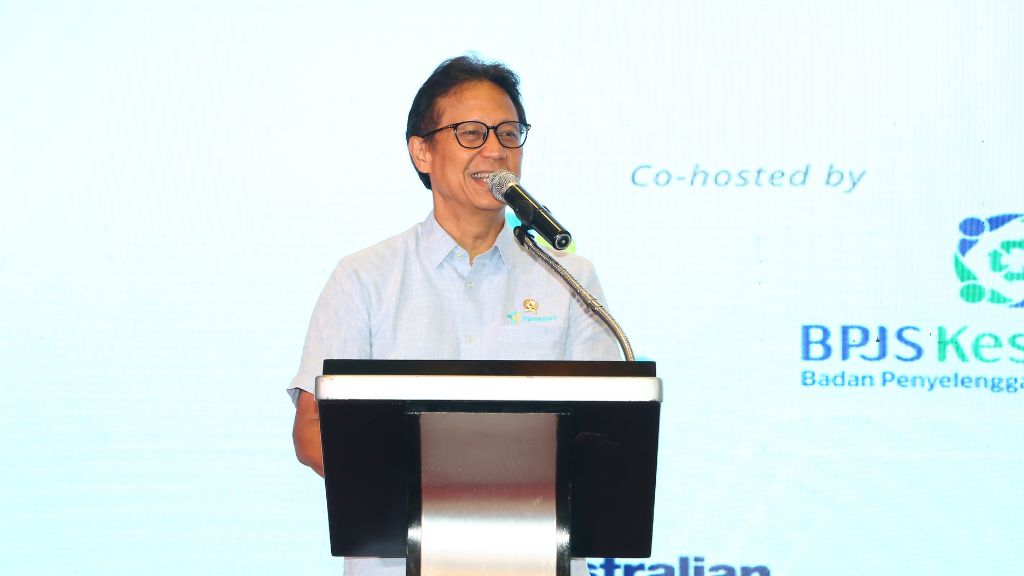
Indonesia's Health Minister Minister Budi Gunadi Sadikin is seeking to advance national digital health transformation through data interoperability and AI. Image:
When Budi Gunadi Sadikin was appointed Indonesia’s Minister of Health at the end of 2020, his primary focus was managing the fallout from the Covid-19 pandemic.
As the pandemic began to subside, he started thinking about a much larger challenge: building a healthcare system capable of serving 280 million people that were spread across more than 7,000 islands.
At that time, he reflected to his then-advisor that as a healthcare user, he would want services that are easy to access, high quality, and cheap.
"Without digitalisation, that is impossible,” said Sadikin, referring to the vision.
That vision later led to the formation of a digital health team tasked with transforming Indonesia’s national healthcare system.
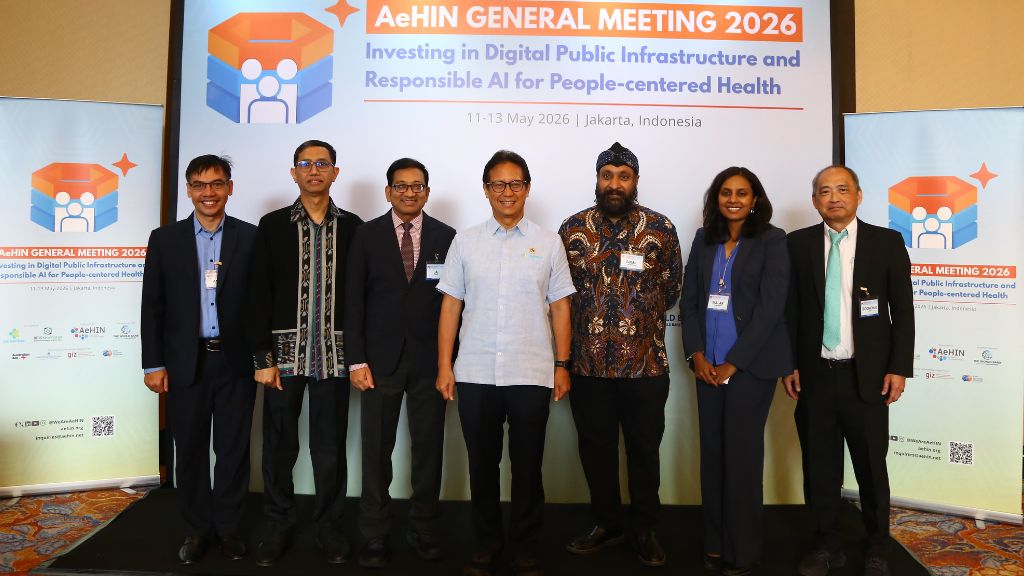
At the Asia eHealth Information Network (AeHIN)’s General Meeting 2026 in Jakarta, May 11, Sadikin shared about his experience leading Indonesia’s healthcare transformation with hundreds of participants during his opening remarks.
AeHIN is a network of digital health advocates from South and Southeast Asia.
According to Sadikin, the foundation of Indonesia’s healthcare transformation lies in integrated data systems.
The first layer was basic population data containing identity information such as names, addresses, and dates of birth.
The second layer was clinical data, ranging from health screening results and computed tomography (CT) scans to medical records and laboratory results.
The third layer comprised Indonesia’s genomic data.
“If all of these data are integrated, we can do many things such as machine learning (ML) and artificial intelligence (AI) for healthcare as well as precision medicine,” he added.
Addressing fragmented healthcare data
Sadikin’s background as a banker often leads him to compare the healthcare with the financial sector.
In his view, global healthcare systems still lag far behind in terms of data interoperability when compared with the financial sector.
He noted that in banking, people could use the same credit card in different countries without worrying about incompatible systems.
Banks followed the same standards for communication, security, and data exchange across regions and borders.
By contrast, healthcare patients still had to carry medical documents manually from one hospital to another.
“Many industries have gone in that direction [data interoperability], while healthcare has not. I do not understand why nobody started thinking about this 30 years ago,” he said.
Indonesia, on its part, has begun implementing national interoperability standards for healthcare to unify healthcare data formats across thousands of medical facilities.
Through the SATUSEHAT platform, healthcare data from hospitals, laboratories, and other medical facilities are now directly integrated into the national database, but an opt-out mechanism is available.
This means data is automatically included unless patients choose to withdraw from the system.
Sadikin highlighted that trust was the key to successful transformation. “People already trust the financial sector managing their data every day. Healthcare systems must be able to build the same level of trust.”
Leveraging AI, genomics and surgical robots
Although the process of integrating healthcare data has not been easy, the government continued pursuing its ambition to build an AI and genomics-based healthcare system.
One major step has been establishing a national healthcare AI committee focused on governance, security, validation, and ethics in the use of AI in healthcare.
Indonesia is also working with international organisation HealthAI to study safe and trustworthy AI governance frameworks.
Beyond AI, Indonesia has been accelerating genomics development through the Biomedical and Genome Science Initiative (BGSi).
“With genomic data, doctors can provide more precise and safer treatments while supporting precision medicine tailored to patients’ genetic characteristics,” Sadikin added.
Indonesia previously used to conduct only few hundred genome sequencing procedures annually; now the country’s capacity has now increased to tens of thousands every year.
The government aimed to reach 100,000 genome sequences per year by 2027.
At the same time, Indonesia has also begun introducing surgical robots such as the da Vinci Surgical System.
According to Sadikin, technology was not merely a modern surgical tool.
Surgical robots allow operation data to be recorded in detail which helps train AI systems, and subsequently improve surgical quality across regions.
He also called for data gathered from medical devices, MRI scans, CT scans and robotic surgery systems to be sent to a national cloud infrastructure, so that Indonesia can maintain full control over its healthcare data.
Execution remains the biggest challenge
Currently, the government is implementing the mandatory Free Health Check (CKG) programme targeting Indonesia’s entire population of 280 million people.
In 2025, the programme reached 70 million people and is expected to cover 130 million this year, Sadikin noted.
“Health screening results such as blood pressure, blood sugar, and cholesterol levels will directly enter the national health data system to support preventive and data-driven healthcare policies,” he said.
Despite his optimism about the future of Indonesia’s digital healthcare system, Sadikin acknowledged that the greatest challenge remained in implementation.
Indonesia still faces fundamental issues such as uneven digital infrastructure, fragmented legacy systems, limited internet and electricity access in remote regions.
He cited his visit to Miangas Island, one of Indonesia’s outermost islands located closer to the Philippines than to North Sulawesi.
Internet connectivity has begun improving through Starlink, but electricity was still unavailable around the clock.
Sadikin reminded the audience that none of these strategies would matter without the ability to execute them quickly.
“Stop planning and start executing,” he said.