Is AI the next layer of digital public infrastructure?
Oleh Si Ying Thian
Speakers from AI Singapore and NHG Health at GovInsider’s recent AIxGov event shared that open-source community contribution, modular architecture, and agile funding structure can help sustain AI as a public good.
-1778648755025.jpg)
Two practitioners rarely heard in the same conversation – one developing the public AI infrastructure and the other one depending on it – shared what it takes to build and sustain AI as a public good at the AIxGov event on May 5. Image: GovInsider
Nobody expects drivers to build their own roads, or train operators to lay their own rail tracks. The infrastructure was public, and the economic activity grew on top of it.
The same logic now applies to digital services and artificial intelligence (AI).
But what does it take to build and then sustain AI as a public good?
This question was at the heart of a fireside chat held at GovInsider’s AIxGov event on May 5, where two practitioners rarely heard in the same conversation – one developing the public AI infrastructure and the other one depending on it – were brought together.
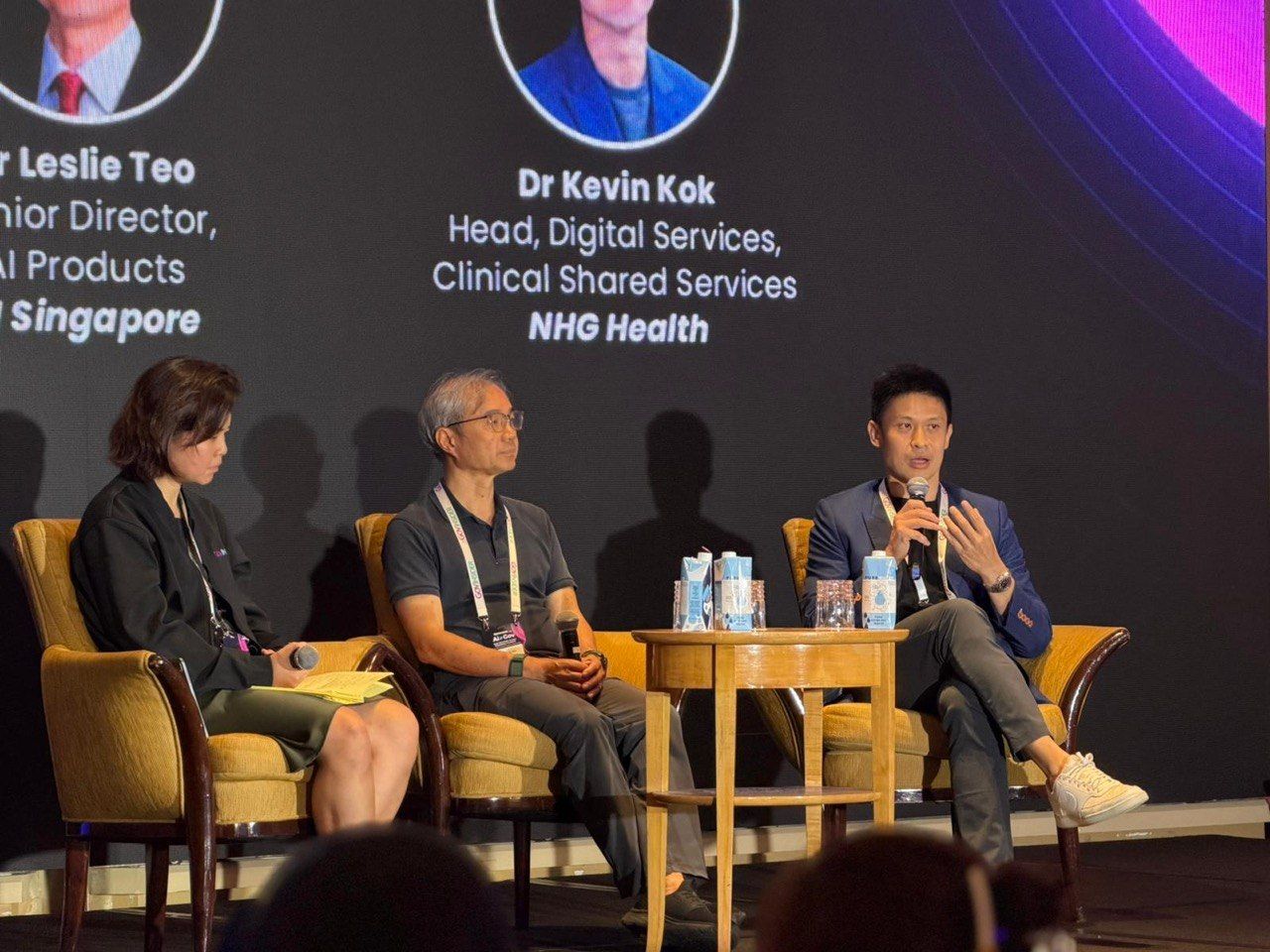
NHG Health’s Head of Digital Services, Dr Kevin Kok, illustrated the value of AI as a public good, sharing his team’s experience in developing a voice bot for patients.
During the development stage, the team ran into a problem that not even the world's most powerful AI models could solve, which was that patients didn’t speak in clean, model-friendly sentences.
Elderly callers would mix English with Mandarin, switch to dialects, and sometimes slip into Singlish.
“A lot of these models were trained within a Western context, and they do not have a specific understanding of the linguistics and vernacular of the local language,” he said.
Building a bot from scratch entailed paying for trillions of tokens, massive GPU clusters and hundreds of hours of training, all of which was too costly for a public healthcare cluster to afford.
Fortunately, this was where AI Singapore’s SEA-LION filled in the gap.
The family of open-source large language models (LLMs) built for Southeast Asian languages was intended to be a shared foundation for public agencies, developers and healthcare teams like Dr Kok's to build on without funding the development themselves.
For the NHG Health team, this meant being able to get straight to fine-tuning the voice bot to fit the healthcare context.
“SEA-LION has helped us enhance our capabilities,” Dr Kok noted. “If not, we would have had to develop it ourselves and that would have required a lot of resources.”
The infrastructure nobody built
SEA-LION was not an end-user product, like an app or a chatbot, according to AI Singapore's Senior Director of AI Products, Leslie Teo.
He broke down SEA-LION into three components: data, benchmarks, and a base model.
Taken together, they form a layer of public infrastructure.
While the English corpus has 35 trillion tokens of training data, Southeast Asian languages combined have less than one trillion, he noted.
For years, developers in the region have been measuring AI performance against English language benchmarks because they were the only ones that existed, he said.
The public infrastructure to do so wasn’t built then, so this was where public funding came in.
“In the old days, governments built ports, railways and airports. And then people built commercial activity on top,” he said, framing SEA-LION as the virtual equivalent.
Now, the heavy lifting has been done. “The hope is that we make it easy for anyone to use it,” he said.
National AI capabilities, beyond the model
A model isn’t a capability, but an artifact, said Teo. While anyone can build an AI model, capabilities that sit around it were the key to success.
He defined three important capabilities for every nation: the ability to evaluate AI models and how data is used, to finetune the model to make it purposeful for specific use cases, and to build local capabilities to be resilient.
Today, AI access might look cheap at US$100 (S$127) because it’s subsidised. But when prices jump to US$5,000 or access was restricted, dependence on external models could become a strategic risk, Teo noted.
In the healthcare context, Dr Kok cautioned that trust in the system was easily lost if there was a data gets breach or the AI runs wild.
Creating trust in AI systems entailed creating guardrails, understanding how it was fit for purpose, and ensuring local AI capability for sovereignty and compliance, he said.
“Being smart about your own capabilities and knowing what you really want to invest in is not actually saying that you don't want to use other things,” said Teo, recognising that Singapore has equally benefited from frontier and open-source models.
For most nations, the takeaway was that while you don’t need to out-compete to build a bigger AI model, you need to understand your data, adapt to its own context, and ensure that the infrastructure your public services depend on cannot be switched off by a someone else’s commercial decision.
Sustaining public goods
The speakers pointed out that open-source community contribution, modular architecture, and agile funding structure help to sustain AI as a public good.
The same way that Linux and Android grew beyond a single funder’s investment, open-source models like SEA-LION could be sustained by a community of engineers and developers who contribute because they see the value.
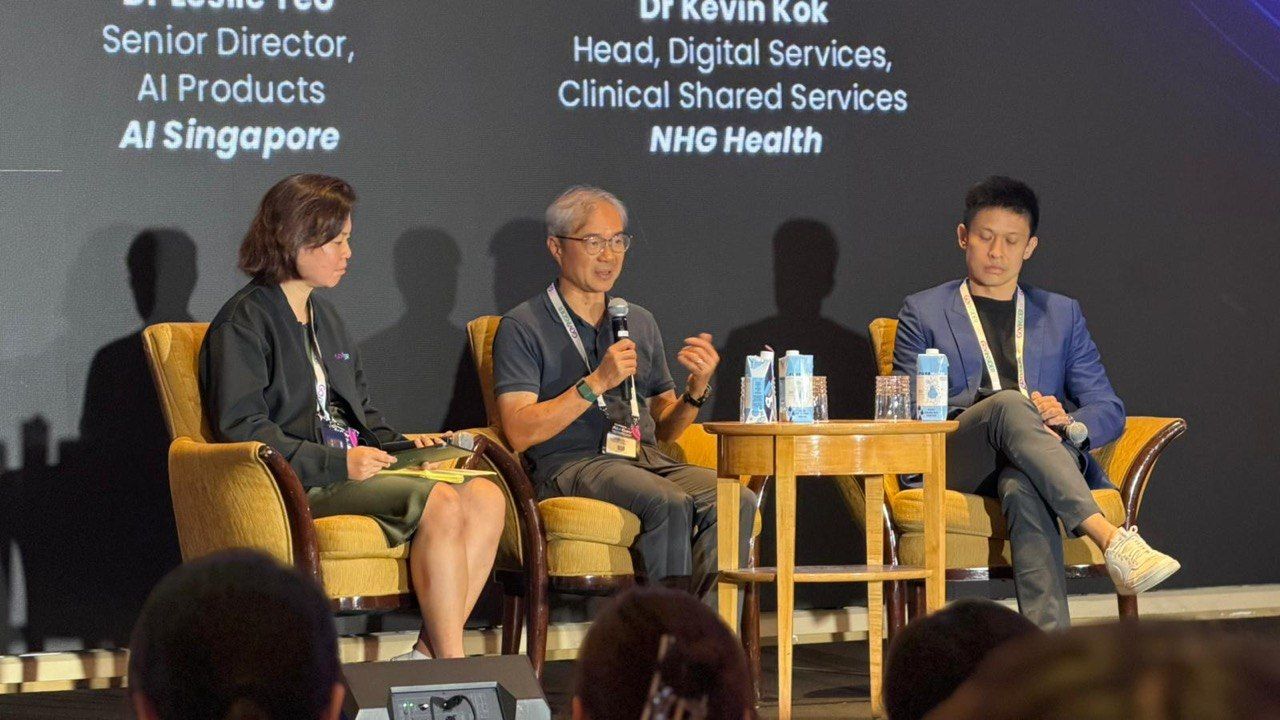
“I like to think that if you can find people who use it and then contribute back to the community, it’s one way to sustain this,” Teo said.
With the tech moving faster than budgets, Dr Kok called for a shift from waterfall to an agile block funding model.
While the former evaluated year-by-year impact, the latter was centred around more flexible budget allocations to allow teams to iterate with AI.
“But as you move towards AI and emerging tech, things become modular and scalable, so we really need to change our approach in terms of funding and planning for operating expenses (OpEx),” he said.
Teams should have some flexibility to swap out models when the landscape changed and for different purposes, he added.
Public AI infrastructure like SEA-LION was not the finish line, but an open-source foundation that continued to be fine-tuned by other developers like Dr Kok’s team, then adding to what the next developer inherited.