Singapore’s HTX focuses on people-centred transformation
Oleh Sol Gonzalez
HTX’s Joseph Tan shares how strong leadership, a transformation team in partnership with the people on the ground, and behavioural change are key to driving successful organisational change to tackle tomorrow’s challenges.
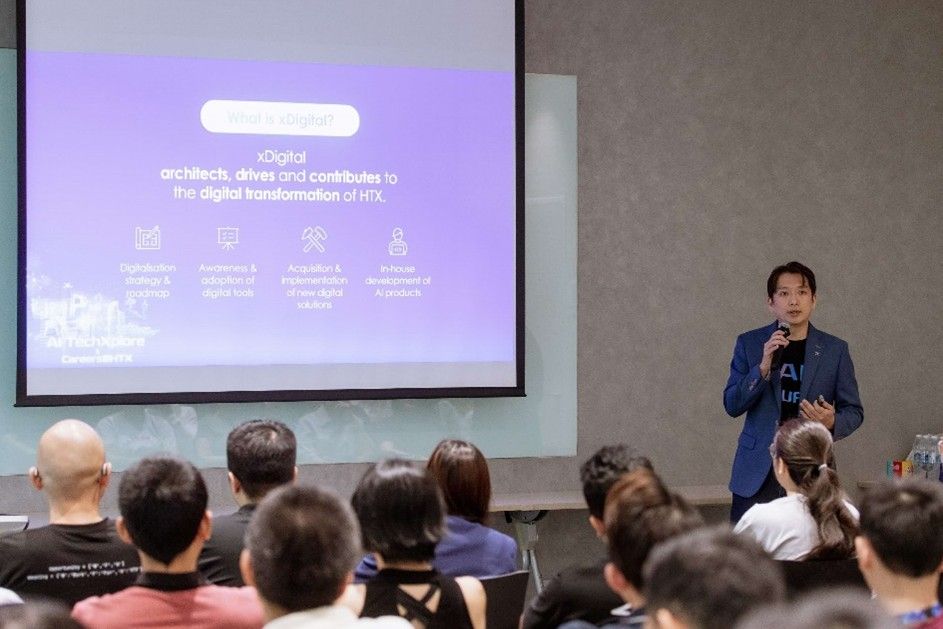
Joseph Tan shares how HTX and xDigital's approach to people-centred transformation has empowered the Home Team to become more future-ready. Image: HTX.
For an agency like the Home Team Science & Technology Agency (HTX) that specialises in cutting-edge innovations for public safety, one expects that tech stands at the centre of its every operation, process, and change.
However, when it comes to digital transformation, HTX Deputy Chief Information Officer and Director of xDigital Joseph Tan says “the biggest changes [within the organisation] were not just technological in nature, but cultural and structural”.
A case in point is the Home Team x AI (HTxAI) movement, which was launched in June 2024 by HTX Chief Executive Chan Tsan, to transform HTX into an artificial intelligence (AI)-first agency in order to support an AI-enabled Home Team.
The HTxAI movement is driven by HTX Chief AI Officer and Assistant Chief Executive (Digital & Enterprise) Ang Chee Wee, who has championed using AI to empower Home Team officers.
With such strong leadership support, xDigital has been able to play its critical role within HTX as the transformation team to “fight against fatigue of change” and guide efforts to develop meaningful solutions.
Tan emphasises that the connection between the transformation team and officers is an essential part of the grounding efforts to convert tech solutions to meaningful products that have a real impact.
“Ultimately, success depends on the people. Everything we do involves the staff on the ground at some point in time.”
HTX won the Digital Agency of the Year and received both special mentions for AI-Ready Award and the Transformative Agency of the Year Award at the Festival of Innovation (FOI) Awards 2026 organised by GovInsider in March this year.
People-centred transformation
Tan shares that xDigital engages people in various stages of the transformation process, from strategy and planning to product development and implementation.
“When we’re building AI products, we conduct extensive design thinking workshops and focus group discussions to uncover the blockers around people, process and technology.
“When we need them to embrace new ways of doing things, we do outreach through mailers, physical meetups and even bring the news directly to their own department meetings,” says Tan.
Just recently, his xDigital team showcased the internal digital & AI tools at the annual HTX Convention, where the agency showcases new and upcoming initiatives.
“We want to make it impossible to not know about the solutions we bring that will help enhance their day-to-day work.”
Tan highlights the importance of building connection between the transformation team and staff to help them embrace new ways of doing their work. One of the ways HTX has done this is by embarking on “Experience-based transformation”, where change is considered from the perspective of someone doing the task, rather than from a single system, department, or process.
“We appointed more senior leaders to lead this and own it, focused on different personas, and trace their experience through a day in their life.
“From this, we will embark on the necessary changes to improve the overall experience, even if it means cutting across multiple systems and processes,” he says.
While this approach requires strong leadership support and ground engagement to get started, Tan highlights that the outcomes of directly engaging with users are worth the effort.
He shared that one common pitfall of transformation teams in many organisations is that they engage mainly with appointed representatives from different departments, which creates “a layer of proxy which sometimes dilutes the actual interface where the solution meets the problem.”
“Nothing beats having the solution implementer engage directly with the users and see first-hand how his solution might be used. The right answer is not to cut [the middleman] out, but to strike a better balance,” explains Tan.
AI-readiness
HTX also received a special mention for AI-Readiness at GovInsider's FOI 2026.
To power sovereign AI use cases, HTX launched NGINE (Next Generation Infrastructure) in August 2025. NGINE is HTX’s first enterprise-grade AI infrastructure that allows the agency to deploy AI at scale.
“It is powered by the NVIDIA B200 DGX SuperPOD, and gives our engineers on‑demand access to accelerated computing capability for large language model training and inference.”
“This is done at speed, at scale, and within a highly secure environment necessary for classified data,” explains Tan.
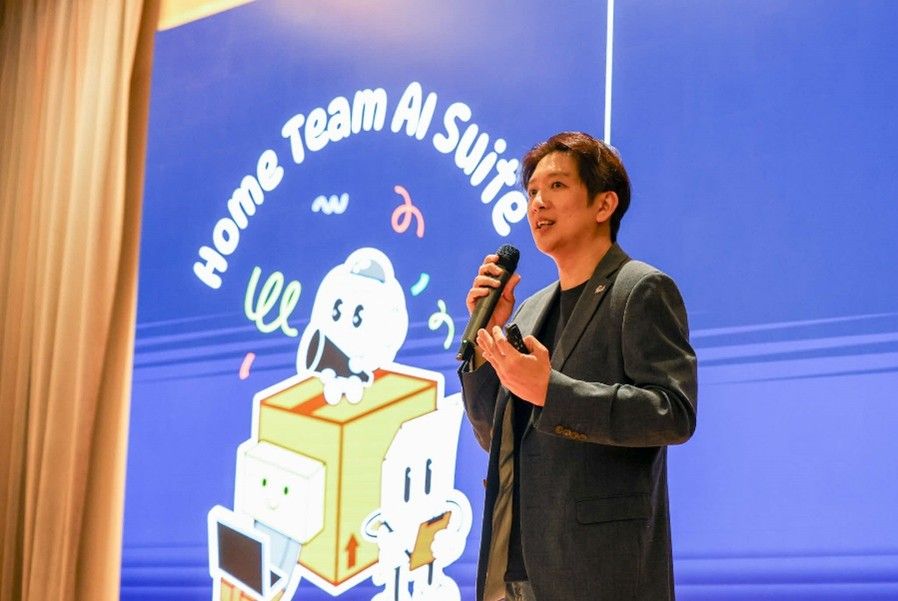
The result is that NGINE is now the bedrock for all of HTX’s divisions to rapidly prototype, iterate, and scale AI solutions for public safety.
With xDigital’s job to safely deploy transformative tools into real operations, Tan’s team has benefitted from shortened development cycles and the improved security around AI products that xDigital builds.
Tan notes that HTX contextualises its products to the Home Team, making them readily available for all Home Team officers to use while meeting data security and AI governance requirements, and embodying the “AI-ready” mentality.
Two AI products deployed in NGINE are Paperwork and Teammate, with the first helping with document generation and validation tasks, while the second is Home Team’s in-house ChatGPT-like solution that is capable of handling more secure information. It is both a conversational AI platform that helps with brainstorming and document drafting, as well as a platform for all Home Team officers to build chatbots.
Phoenix, the Home Team-specific suite of AI models developed by HTX’s Q Team, is also trained and deployed within NGINE, and usable by all Home Team officers within Teammate, shares Tan.
Upskilling and confidence-building
In terms of internal capability building, there is emphasis around four As: AI, automation, application, and analytics, shares Tan.
Since HTX has ready-to-use AI tools for people, it was important to ensure the staff is skilled and comfortable to use AI in their day-to-day work, notes Tan.
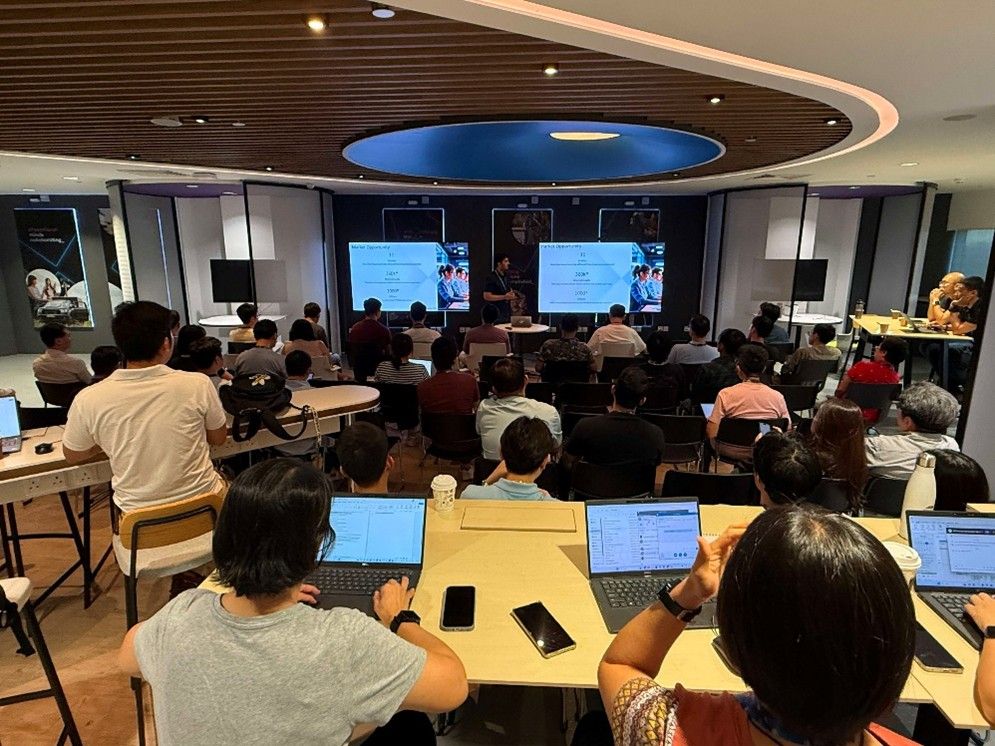
As such, HTX offers different tiers of courses from basic to advanced so that staff in all levels of digital experience can access and learn with confidence.
“One thing we’re doing very deliberately is to track the usage of the digital and AI tools we roll out. It is not the sole indicator of success, but gives us a good proxy of whether people are warming up to adopting the AI tools,” he says.
Besides basic training, HTX is also exploring how to empower staff to manage AI agents in the future, which requires a different mindset shift than simply using AI tools, shares Tan.
The next generation of AI-natives will enter a very different work environment where AI is their coworker.
As part of its mission to empower the Home Team with science and technology, HTX will keep working to ensure that the Home Team is ready for that future.