Singapore’s NUH is transforming medication counselling with the AI-powered MedBot
By Cindy Peh
MedBot was one of the first projects in the hospital to achieve secure data flow between on-prem data centre and cloud environment, laying the groundwork for future digital projects, says its Clinical Lead Goh Sok Hiang.
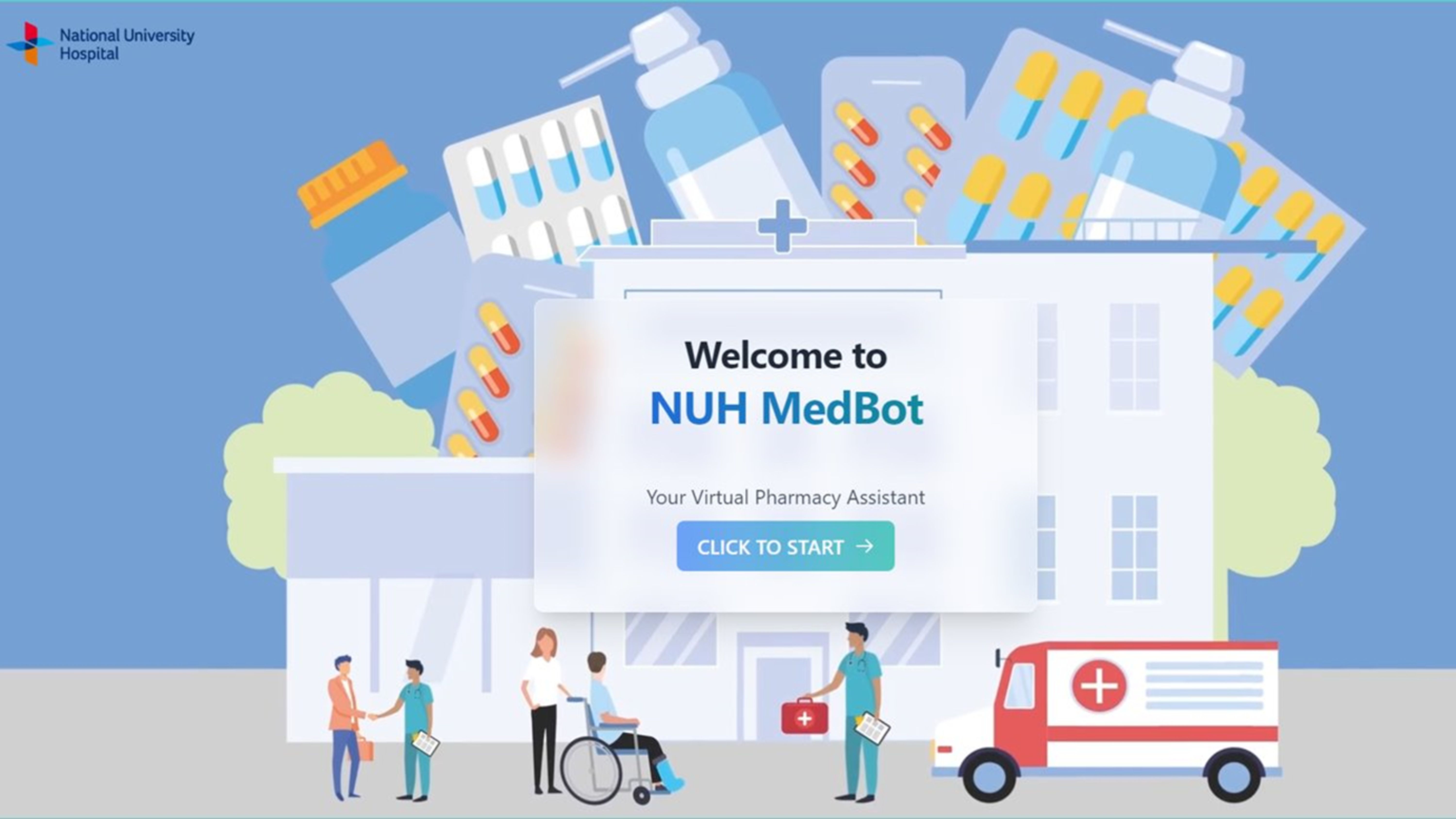
MedBot delivers standardised, verified medication information to patients, alleviating workflow pressures and pharmacy wait times. Image: NUH
Each day, hospital pharmacists spend considerable time on routine medication counselling – guiding patients through standard information of each drug they are prescribed, such as drug purpose, dosage, storage, and potential side effects.
At Singapore’s National University Hospital (NUH), pharmacists were spending three to 20 minutes per patient on counselling.
With some 2,500 prescriptions dispensed daily across NUH’s outpatient and satellite pharmacies, these sessions were contributing to longer waiting times and operational bottlenecks.
It also means that a significant amount of clinical expertise was directed toward delivering standardised information rather than more complex patient care.
Leveraging AI in medication counselling
Enter MedBot, a generative artificial intelligence (GenAI)-powered virtual pharmacy assistant designed to provide patients with medication information before prescription collection.
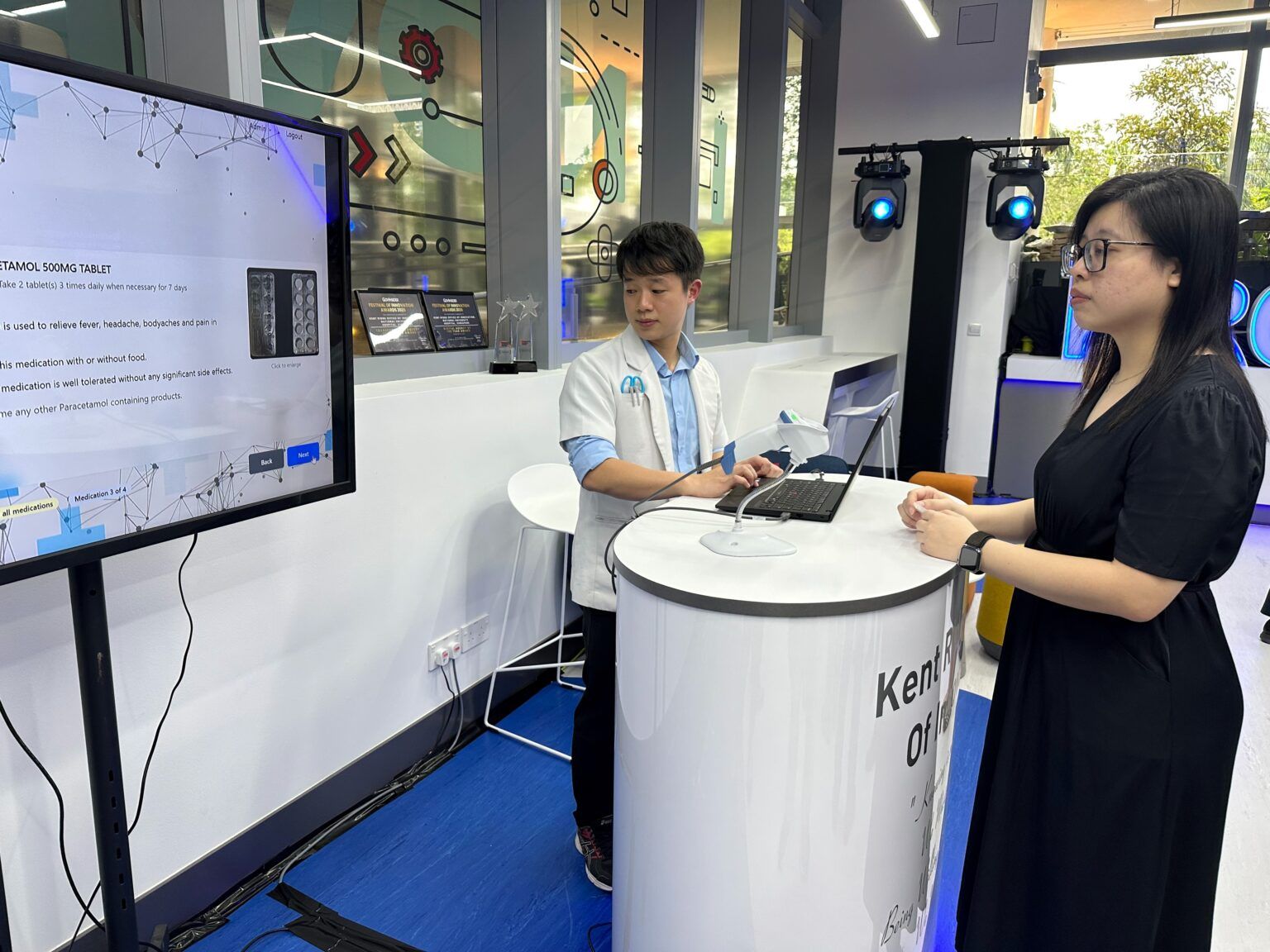
Built on the Healthcare Commercial Cloud (HCC), MedBot is integrated with the hospital’s electronic medical records and the medication database on H-Cloud Data Centre.
It currently offers AI-generated counselling content for 66 selected medications.
NUH’s Principal Clinical Pharmacist and Clinical Lead for MedBot, Goh Sok Hiang, explains that patients suitable for MedBot counselling are identified by pharmacy typists when taking medication orders.
These patients are then briefed on MedBot usage and directed to use MedBot via dedicated kiosks at the dispensing counter.
At the moment, these kiosks are available at the Kent Ridge Wing Pharmacy and the satellite pharmacy at the National University Centre for Oral Health, Singapore.
AI governance a top priority
A multidisciplinary team at NUH drives the development of MedBot.
While Goh oversees the clinical strategy, senior pharmacist Wong Hong Yun steers the patient-facing experience, and Kent Ridge Office of Innovation, NUH’s data scientist Jack Lim leads the technical build.
The team took a “deliberate, phased approach,” starting with just 10 carefully selected medications to minimise risk while validating the system’s accuracy and safety, says Lim.
Safety guardrails include allergy acknowledgement checks before use, pharmacist review panels, and clear escalation pathways.
The list expanded to 66 medications only after strict safety milestones were met.
“Every piece of AI-generated counselling content goes through a human-in-the-loop process — our pharmacists review and validate all content before it enters the database. This was non-negotiable,” he adds.
“The system delivers from this pre-approved database, not from live AI generation, giving us 100 per cent information consistency and eliminating hallucination risk entirely.”
Nonetheless, the team recognises that while this practice prioritises safety, it may limit the full potential of AI.
“As we mature, we are looking at transitioning safely into a human-over-the-loop concept — where AI operates with greater autonomy, but humans maintain oversight and control without being a bottleneck in the process.
The key is making that transition without increasing risk and ensuring things remain in control as we scale,” Lim notes.
Enabling seamless data flows and workflow integration
Besides governance, establishing secure data flow between NUH’s on-premises data centre and cloud environment was a critical challenge, as patient medication data needs to move between these systems in real-time to deliver personalised counselling.
Lim points out that MedBot was one of the first projects at NUH to achieve such data transfer, laying the groundwork for future digital projects.
Equally important was integrating MedBot within existing pharmacy workflows seamlessly.
The team worked closely with frontline pharmacy staff to introduce MedBot as a dedicated lane at dispensing counters without disrupting existing operations.
Growing patient trust and adoption
There were concerns that patients might not trust or feel comfortable receiving medication advice from an AI system.
Strong emphasis was hence placed on MedBot’s interface design and communication clarity, while ensuring pharmacists remained available to support patients if needed.
Over eight months, the team surveyed close to 1,300 patients on MedBot to refine the system.
Goh notes that patient feedback has been generally positive, with 98.7 per cent of respondents finding MedBot easy to use; and 98.9 per cent agreeing that information provided by MedBot clear and easy to understand.
Ninety six per cent felt comfortable proceeding with medications after using the system.
Patient suggestions have also guided system improvements, such as making medication dosage instructions easier to see, and increasing font size for better readability.
Delivering efficiency gains and scaling impact
Since its launch in July 2025, MedBot has enabled savings of 28 man-hours monthly and annual savings of about S$15,400.
In addition to efficiency gains, the system has improved consistency in medication counselling, ensuring that all patients receive standardised, accurate information while reducing waiting times.
NUH now plans to scale MedBot to other pharmacies, prioritising those that frequently dispense simple and low-risk medications where MedBot’s counselling capabilities would be the most impactful, says Goh.
Further enhancements to MedBot are also underway, including an interactive chatbot function that allows patients to ask MedBot questions about their medications.
Pharmacists have also suggested a mobile version of MedBot so counselling can be conducted away from the pharmacy counters.
The article was originally published in Hospital Management Asia here, and edited.
----------------------------------
Cindy Peh is the Content and Community Manager at Hospital Management Asia, which showcases trends and best practices in healthcare management via in-person and digital events, as well as an online publication.