This Singapore university wants to prove what works for ageing well after collecting a decade of data
Oleh Si Ying Thian
Combining longitudinal data with cross-sector partnerships, SMU’s Longevity Societies and Economies Institute (LSEI) wants to transform how the public sector designs, tests and assesses its future ageing policies.
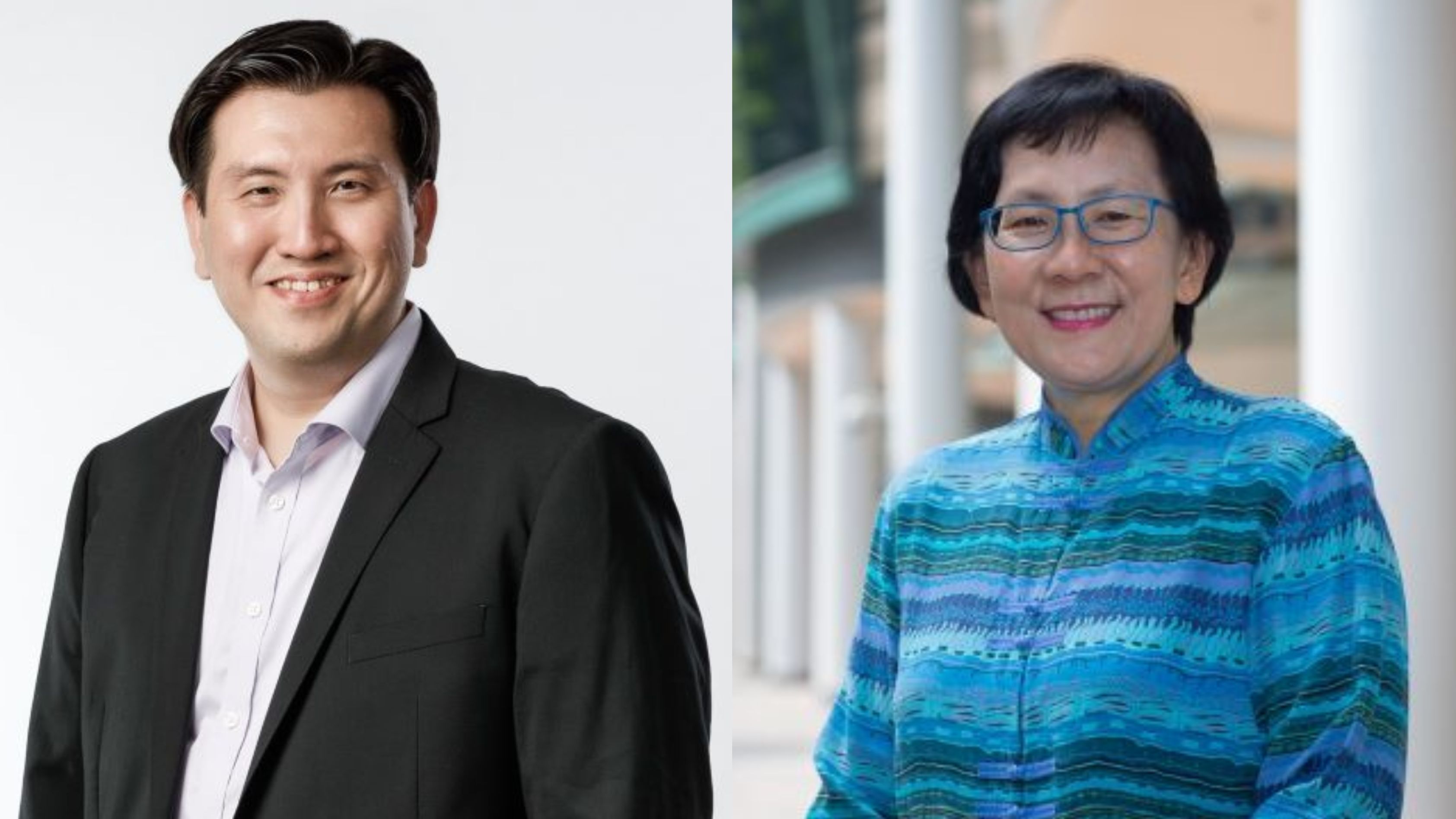
Dr Cheong Wei Yang and Prof Paulin Straughan are the interim co-directors of the Longevity Societies and Economics Institute (LSEI), under the Singapore Management University (SMU). Image: SMU
Most of the time when we ask how healthy an older person is, we tend to think of blood tests and health checkups.
For the ageing institute at the Singapore Management University (SMU), they asked “how do you feel?”
Surveying more than 10,000 Singaporeans aged 50 and above for about 10 years, the Singapore Life Panel conducted by SMU’s Centre for Research on Successful Ageing (ROSA) tracked how these older persons perceive their holistic wellbeing over time.
Now, the decade of data has a bigger job.
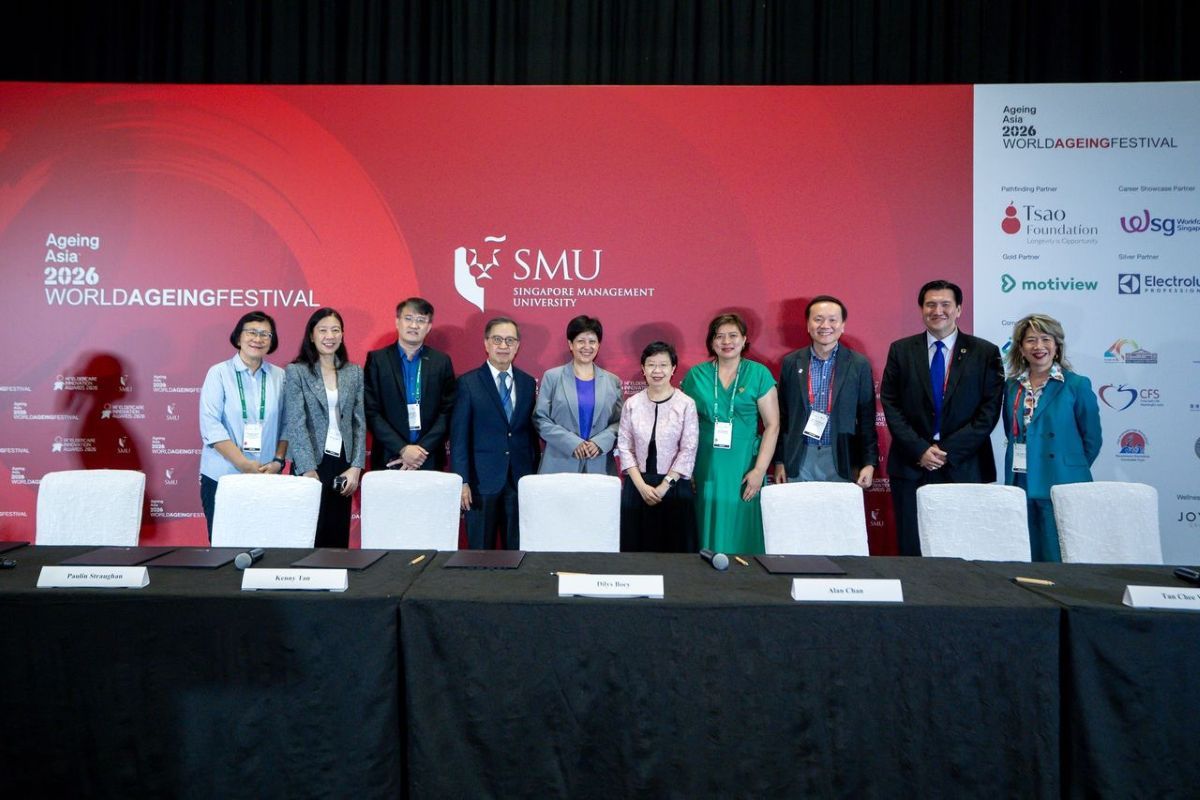
Earlier in April, SMU launched its Longevity Societies and Economics Institute (LSEI) to do something much harder: Proving which interventions, from the Healthier SG to active ageing centres, work and for whom.
This is SMU’s second ageing institute, following ROSA established in 2020.
Recognising that longevity goes beyond physical health, LSEI wants to leverage the university’s multidisciplinary expertise to translate research into actionable insights and partnerships with government agencies, private sector players and community organisations.
During the launch event, LSEI also announced partnerships with five stakeholders, including the Agency for Integrated Care (AIC), Workforce Singapore (WSG), Lions Befrienders, Singlife, and St Luke’s ElderCare.
Ten years of data most institutes don't have
What sets out the newly-launched LSEI apart from other ageing research hubs is its decade of continuous insight.
Instead of only obsering the static snapshots of ageing, the panel tracked how different variables shift for the exact same older persons over a period of time.
Traditionally, policymakers tend to track more clinical metrics like blood sugar or eye health. These metrics are also limited to the physical health of older persons.
The panel, however, tracks their perceptions on their own mental resilience, financial security, and social safety nets.
“Perception is sometimes as important – if not more important – than the actual clinical intervention itself,” says SMU’s Vice Provost (Strategic Research Partnerships) and LSEI’s Interim Co-Director, Dr Cheong Wei Yang, to GovInsider.
As Singapore looks to design more population health-level interventions, these subjective perceptions matter as they determine an older person’s willingness to step out of their home and engage with preventative health services.
Having spent 20 years in the public sector across the finance, healthcare and research ministries, Dr Cheong adds that the real power for policymakers happens when this perception data is layered on top of the Ministry of Health’s TRUST platform.
TRUST is Singapore's national data sharing platform for health-related research.
By marrying what citizens feel with objective data, the spectrum of data provides public agencies with a comprehensive baseline to assess how national policy rollouts impact a citizen’s everyday life.
Treating an uneven rollout as a research advantage
National initiatives like Healthier SG and even the expansion of active ageing centres are rolled out across different precincts at varying speeds.
-1781835759272.jpg)
Dr Cheong calls it “natural experiments” across the country, which LSEI sees as an opportunity to measure their effectiveness, and then personalise them for different types of older persons.
He notes that LSEI was highly strategic in choosing its first five partners, anchoring its initial partnerships in the community care and preventive health sectors.
This allows them to evaluate the impact of localised “experiments” with innovative grassroot partners like Lions Befrienders and St Luke’s ElderCare, and gather non-traditional insights on how these impact a community’s overall quality of life over time.
“With the pioneer generation we tend to plan the activities more closely, but as the young seniors [individuals in their 50s to early 60s] step up and get older, we have to be more mindful of their need for that agency,” adds ROSA’s Director and LSEI’s Interim Co-Director, Professor Paulin Straughan.
She shares the example of Project Silverlight where older persons actively seek out interpersonal connections and agency to plan their own programmes.
Public agencies can then use these localised insights to calibrate and scale their interventions.
Avoiding the trap of being ‘just a research arm’
Academic institutes tend to run the risk of doing research that gets stowed in the deepends of the libraries.
But both LSEI’s directors stress LSEI’s role as a proactive, tripartite collaborator that bridges the gaps between policymakers, corporates and community partners.
The impact pathways are created through the established partnerships, data access and research funding, says Dr Cheong.
“We have designed the institute to create new policies, products and services, and modalities of care on the ground,” he adds.
Broader systemic design also requires moving past academic silos, highlighting the institute’s multidisciplinary expertise to be able to present policymakers with a unified, actionable picture.
“By leveraging our diverse expertise, we can assist these partners in their innovation journeys, serving as the evidence foundation,” says Prof Straughan.
She also emphasises that this paradigm shift must be grounded in hard data rather than simple advocacy.
Equipped with a decade of longitudinal insights and a network of cross-sector partners, LSEI is ensuring that Singapore’s next wave of longevity policies is not only data-driven but also user-centred.
Also read: What it means to weave empowerment into Singapore’s active ageing strategy, Feb 4, 2026