A maturity path for agentic AI in public e-procurement
Agentic AI is reaching public procurement through routine software updates, often before anyone has decided how much authority it should have. A simple maturity path helps agencies keep accountability in step with capability.
-1790745704148.jpg)
Agentic AI is moving into the enterprise resource planning (ERP) and e-procurement systems governments already use to buy goods and services. Image: Canva
Picture a procurement officer starting her week. Before she opens her inbox, the system has ranked suppliers for a recurring contract, flagged an unusual invoice and drafted a sourcing event for next quarter.
She did not ask for any of it.
The question she should be asking is not whether this is useful, but who decides, and who answers for it?
Agentic artificial intelligence (AI), meaning software that can plan and carry out tasks rather than only answer questions, is moving into the enterprise resource planning (ERP) and e-procurement systems governments already use to buy goods and services.
In procurement, it rarely arrives as a new project with its own business case. It arrives as a feature in a routine software release, switched on inside a system the agency has run for years.
That is what makes it easy to miss.
My work is in public sector procurement system modernisation, including data conversion and integrated testing ahead of go-live.
Governance is behind the feature list

Guidance is catching up.
In January 2026, Singapore’s Infocomm Media Development Authority (IMDA) released a Model AI Governance Framework for Agentic AI, which stresses that people remain accountable and recommends clear checkpoints where a human must approve an agent’s action.
Recent GovInsider’s columns have pushed the conversation further, arguing for permission registries for AI agents and more precise definitions of “human review”.
Both ideas work best when an agency knows it is deploying an agent.
In procurement, that assumption often fails.
Capability can grow release-by-release while procurement rules, delegations of authority and audit practices remain written for a world where only people act.
Procurement is where taxpayer money meets public trust. Fairness to suppliers, transparency in awards and accountability for outcomes are core duties, so the gap matters more here.
A four-stage maturity path
A useful first step is to name how much autonomy each tool actually has.
Stage one: Assist. The AI summarises documents, drafts specifications and answers questions. People do everything else.
Stage two: Advise. The AI scores suppliers, flags anomalies and recommends options. A person makes and records every decision.
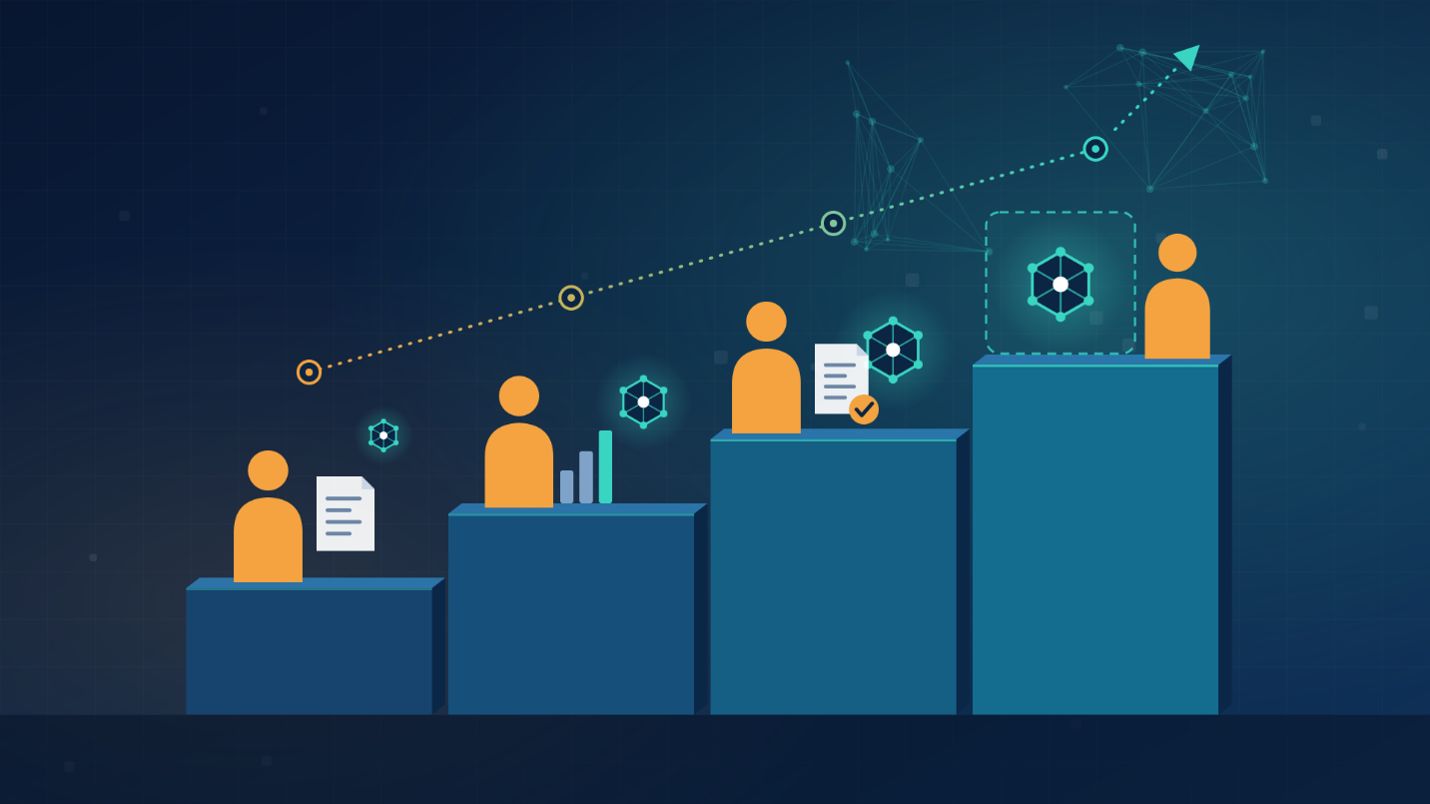
Stage three: Act with approval. The AI prepares actions, such as a draft purchase order or a supplier shortlist, and queues them for a named person to approve.
Stage four: Act within limits. For routine, low-value and easily reversed tasks, the AI acts on its own within set boundaries, and people review samples and exceptions.
Maturity is not a race to stage four. Many procurement decisions should never go there.
Maturity means your governance sits at the same stage as your technology. An agency whose tools operate at stage three while its policies assume stage one is not advanced. It is exposed.
What implementation teaches
Three lessons carry straight over to agentic AI.
First, the data is the risk. Duplicate records, outdated codes and unclear ownership do not disappear when AI arrives.
They get amplified, because AI acts on them faster and at greater scale than any person could.
IDC expects that in 2026, 40 per cent of national governments in Asia/Pacific outside Japan will put a tenth of their IT budget into data architecture and governance to close the gaps holding back agentic AI.
Second, history is not neutral. Supplier scoring learns from past awards and performance ratings. If those records reflect years of favouring incumbents or larger firms, the AI can reproduce that pattern and present it as objective. Small, new and local suppliers are often the first to lose out.
Third, systems drift. During testing, we found a sourcing evaluation template that quietly reverted to an older scoring structure when used.
It was caught because people were looking.
With AI, vendor updates and new data can shift behaviour without anyone touching a setting, so one-time acceptance testing is not enough.
Three moves to start next week
1. Map what is already live.
Ask your IT team and vendors for a plain list of every feature in your procurement system that scores, ranks, flags, drafts or triggers an action, and place each one on the maturity path.
Many agencies will find they are further along than they realised, without anyone having made that choice.
2. Set checkpoints by risk, and make them real.
Tie approval gates to the value of the spend, the effect on the supplier market and how easily a decision can be reversed.
A routine catalogue reorder and a multi-year contract award should not share the same rule.
For each gate, name the approver, what they must be able to see, such as the reasons and data behind a recommendation, and what they are empowered to stop.
3. Agree a shared verification rhythm.
Have procurement, audit and IT jointly review a sample of AI-influenced decisions on a set schedule. Look at outcomes, not just error logs: who won, who was flagged, who was never shortlisted.
Publish a summary so suppliers and the public can see that oversight is real.
Accountability stays human
Software will increasingly do the first pass of procurement work: sorting bids, spotting risks, preparing orders. That can free public servants for the judgement calls that matter most.
But responsibility for spending public money well and fairly cannot be handed to a system.
If you do one thing tomorrow, ask for that list of what your procurement system can already do on its own.
The buyer is no longer only human. The accountability still is.
The author writes in a personal capacity and his writing does not reflect the views of his employer or GovInsider.
-------------------------------------------------
The author is an Applications Analyst and Independent Researcher focused on AI governance in public sector enterprise resource planning (ERP) procurement.
He works on public sector procurement system modernisation and researches agentic AI maturity, bias auditing and continuous verification of automated procurement decisions.
He holds a Master of Science in Computer Science from Indiana University Bloomington and is based in Little Rock, Arkansas, USA.