
Acquiring digital skills matter more than tech solutions to reduce women’s poverty
Digital technologies are commonly framed as drivers of economic growth; however, for millions of women, poverty and economic insecurity persist.
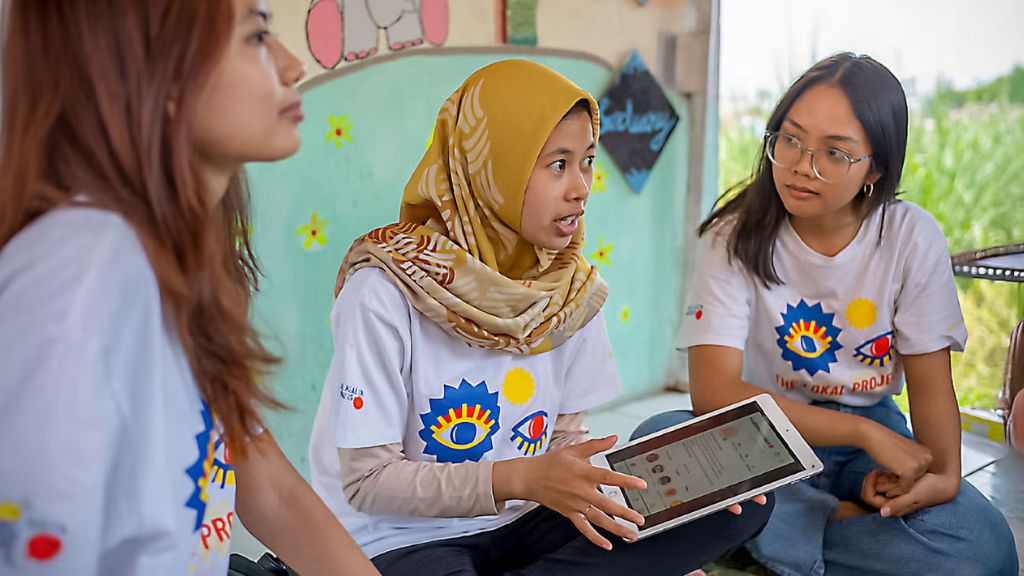
Digital initiatives that focus on knowledge-based skills are needed by women to expand their livelihood opportunities. Image: UN Women
It has been more than 25 years since the Beijing Platform for Action identified poverty and economic inequality among the 12 critical areas of concern affecting women globally and this gap remains, underscoring the enduring structural nature of these challenges.
This persistent discrepancy raises a question: Under what conditions does women’s participation in digital transformation drive poverty reduction, rather than reinforce existing inequalities?
Although studies show that promoting women’s financial independence as a core component of economic empowerment, it is a complex and multifaceted process shaped by interconnected micro- and macro-level factors.
New research suggests that digital technologies offer renewed hope.
According to the 2018-2019 UN Women Annual Report, information and communication technologies (ICTs) are regarded by the Platform for Action as creating opportunities for women to improve their living conditions, to contribute to knowledge sharing, networking, and other activities.
Equal access
The authors of this study point to knowledge as the key answer.
Women must have equal educational opportunities to fully participate in economic activities. In fact, UN Women data shows that women face a significant digital skills gap, being 25 per cent less likely than men to have the necessary knowledge and skills to use technology effectively.
Knowledge dissemination through digital technologies has the potential to overcome geographical, social, cultural, and hierarchical barriers for economic empowerment.
That said, effective interventions must go beyond access and actively promote women’s independence, self-esteem, and confidence.
Linked to this idea is the notion that the opportunities for access matter more than technical or physical access alone. Achieving sustainable impact requires a shift toward transformational empowerment that centres change with women rather than for them.
The liberal feminist approach proposed by Vehvilainen and Brunila (2007) argues that this can be achieved by increasing women’s participation in ICT education and professions.

The importance of digital competencies
In Indonesia’s West Java Province, the flagship initiative Jabar Istimewa Digital Academy, indentifies women as one of its primary target beneficiary groups.
In 2024, Jabar Digital Service (a delivery unit under the West Java Provincial Office of Communication and Informatics) conducted a survey among women across the province to assess their digital training needs. The survey involved 284 female participants, predominantly of working age.
The findings reveal that 89 per cent of respondents expressed the need to learn digital competencies.

The motivation for women taking part in digital training clusters around three main drivers: enhancing professional skills, pursuing personal development and individual interests, and preparing for future careers in the digital sector.
Among the various training options, digital marketing emerged as the most in-demand area.
Interestingly, most respondents expressed a preference for online classes over onsite training for participating in digital skills programmes.
These findings underscore how digital initiatives, particularly in knowledge-based skills and flexible learning modalities, are needed by women to expand their livelihood opportunities.
These findings also align with the Indonesian context, where a significant proportion of micro, small, and medium enterprise (MSME) owners are women, and their primary constraint in the digital era lies in digital marketing capabilities, as shown in study by Kumra and Kumar, 2025 and Sultan and Sultan, 2020.
Also, MSMEs contribute substantially to Indonesia’s GDP, with women playing a critical role in sustaining this sector.
However, the extent to which sufficient attention is given to the structural barriers women face in gaining access, confidence, and decision-making power remains an open question.
To sum up, addressing these barriers is essential to enabling women’s full participation in digital economic activities, where they are equipped not only with access to technology, but also with the knowledge, confidence, and agency to use it meaningfully.
---------------------------------------
Dyana is a lecturer at Padjadjaran University, an Indonesian public university. She was previously the Tribe Lead of Citizen Engagement and Services at Jabar Digital Service, a GovTech delivery unit under the West Java Provincial Office of Communication and Informatics.