
Advancing AI-powered healthcare without losing the human touch
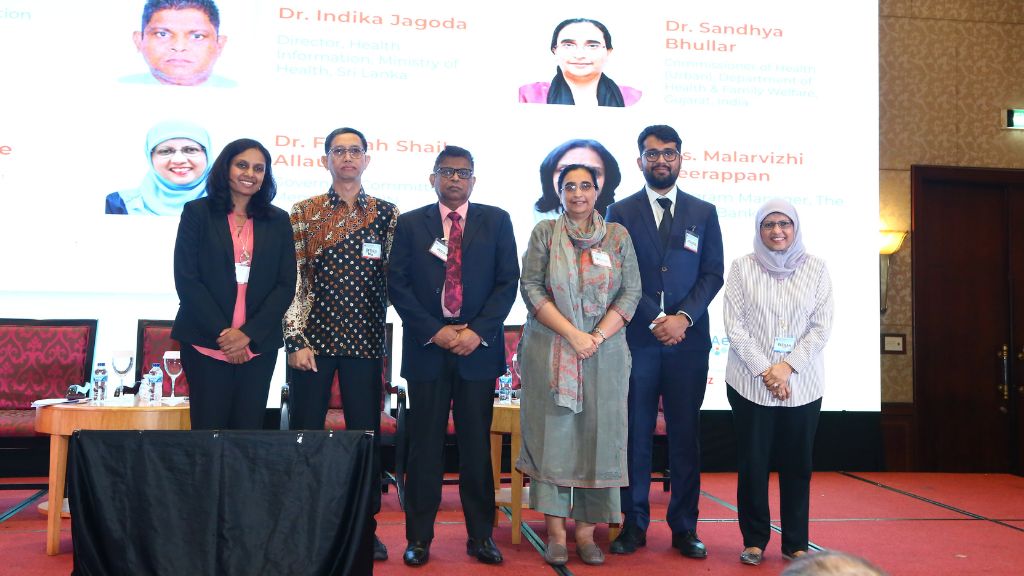
Speakers at Asia eHealth Information Network (AeHIN) highlight that healthcare workers now face a new challenge to not only provide accurate clinical explanations but also help patients understand the limitations of AI.

The future of healthcare lies in blending the predictive power and precision of AI with a human-centred approach to care. Image: Canva
Healthcare leaders across Asia see artificial intelligence (AI) not as a replacement for healthcare workers, but as a tool to reduce administrative burdens and allow doctors and nurses to focus more on patient care.
That was the key takeaway from the Health Outcomes with AI keynote and panel sessions at the Asia eHealth Information Network (AeHIN) General Meeting 2026, held in Jakarta, Indonesia, on May 12.
In a keynote, AeHIN’s Governing Committee member, Dr Fazilah Shaik Allaudin, opened the discussion with a clear message: the future of healthcare is not about AI replacing healthcare workers, but about augmented intelligence that enhances human judgement.
“So, the future belongs to ethical, symbiotic collaboration, where precision meets empathy,” she said.
According to Dr Allaudin, healthcare professionals who responsibly integrate AI into their pathways will eventually replace those who do not.
In the panel, India’s Commissioner of Health for Gujarat, Dr Sandhya Bullar, said that healthcare workers now need to understand AI because patients are already using it to search for preliminary diagnoses, medication recommendations, and personalised diet plans before visiting hospitals.
“Patient now comes as ‘clinical’ with their AI devices, and they get into altercations with the doctors at the hospitals. So how to answer that?” she said.
She added that this has become a new challenge for healthcare workers who must not only learn about AI, but also provide accurate clinical explanations while helping patients understand the limitations of AI.
Increase healthcare efficiency
Sri Lanka’s Ministry of Health’s Director of Health Information, Dr Indika Jagoda, explained how AI was helping doctors and healthcare workers spend less time on repetitive tasks and more time on medical intervention.
He shared how hospitals in Sri Lanka have started using AI-enabled MRI machines to speed up radiology workflows.
Previously, a single MRI process could take between 40 and 50 minutes. Now, AI systems can automatically detect when a patient moves during scanning and instantly retakes images without restarting the entire process.
“It has dramatically reduced our time for MRI. So that means we can do more MRI,” Dr Jagoda said.
According to him, radiologists are not threatened by the implementation of AI in their work.
Instead, the technology reduces repetitive work, allowing healthcare workers to focus more on intervention rather than interpretation.
Similarly, Dr Bullar explained that AI has significantly improved efficiency in healthcare claims processing. Verification processes that previously took days can now be completed within hours.
She shared how AI has helped India’s national health insurance programme, Pradhan Mantri Jan Arogya Yojana (PMJAY), with the technology being used for fraud detection and pre-authorisation of healthcare services.
However, she stressed that efficiency should not come at the expense of public healthcare systems.
There is a real risk that public healthcare — which proved essential during crises such as the Covid-19 pandemic — could gradually be sidelined.
“AI definitely helps, but AI should not sort of take our health systems entirely towards private-led healthcare, particularly when it leads to an increase in costs,” she said.
Dr Bullar added that one of the biggest challenges is ensuring governments retain oversight, auditing, and validation capabilities over AI-driven decisions.
AI depends on human-made data
While AI can improve efficiency, panelists agreed that the technology still heavily depends on the quality of data prepared by humans.
Indonesia’s BPJS Kesehatan (Social Security Agency for Health)’s IT Director, Setiaji, highlighted that AI in healthcare will not work effectively without strong and interoperable data foundations.
As many countries are still at an early stage of building standards and validating datasets, he argued that AI adoption should not be rushed.
“The important thing was about how we focus on interoperability and standardisation of health data, starting from the use of ICD-10 codes to standardised drug references,” he said.
The next step involved weaving together healthcare data, drug-response genetics, and nutritional genomics to create treatments tailored to each patient’s biology, moving away from a one-size-fits-all model.
According to Setiaji, Indonesia’s challenge as an archipelagic nation is ensuring equal access to healthcare services. That is why AI systems must be designed inclusively to reach underserved populations.
“AI doesn’t automatically create equity,” he said. “We need to make sure all the datasets we use to train the models also include elderly people, disabled people, and underserved populations.”
Another challenge, he added, is ensuring that AI systems can function in areas with limited internet connectivity.
According to him, Indonesia is currently training AI models that can operate offline to support healthcare delivery in remote regions.
Qure.ai’s Asia-Pacific Business Lead, Atharva Mangesh Surve, added that AI should not only benefit major hospitals or advanced urban centres, but also support areas with shortages of specialists and limited healthcare resources.
“AI is very powerful to bridge the gap. It has been able to help nurse practitioners tell them that this is something that is critical and this must be escalated further.”
Surve also stressed that every healthcare AI implementation must be validated using local datasets and continuously monitored over time.
Closing the discussion, Dr Jagoda reminded the audience that the success of healthcare services is not determined by how advanced the AI being used is, but by how effectively it can solve problems within the healthcare system.