
Arusyak Martirosyan, Head of UX & Digital Service Delivery, Information Systems Agency of Armenia
By James Yau
Meet the Women in GovTech 2025.
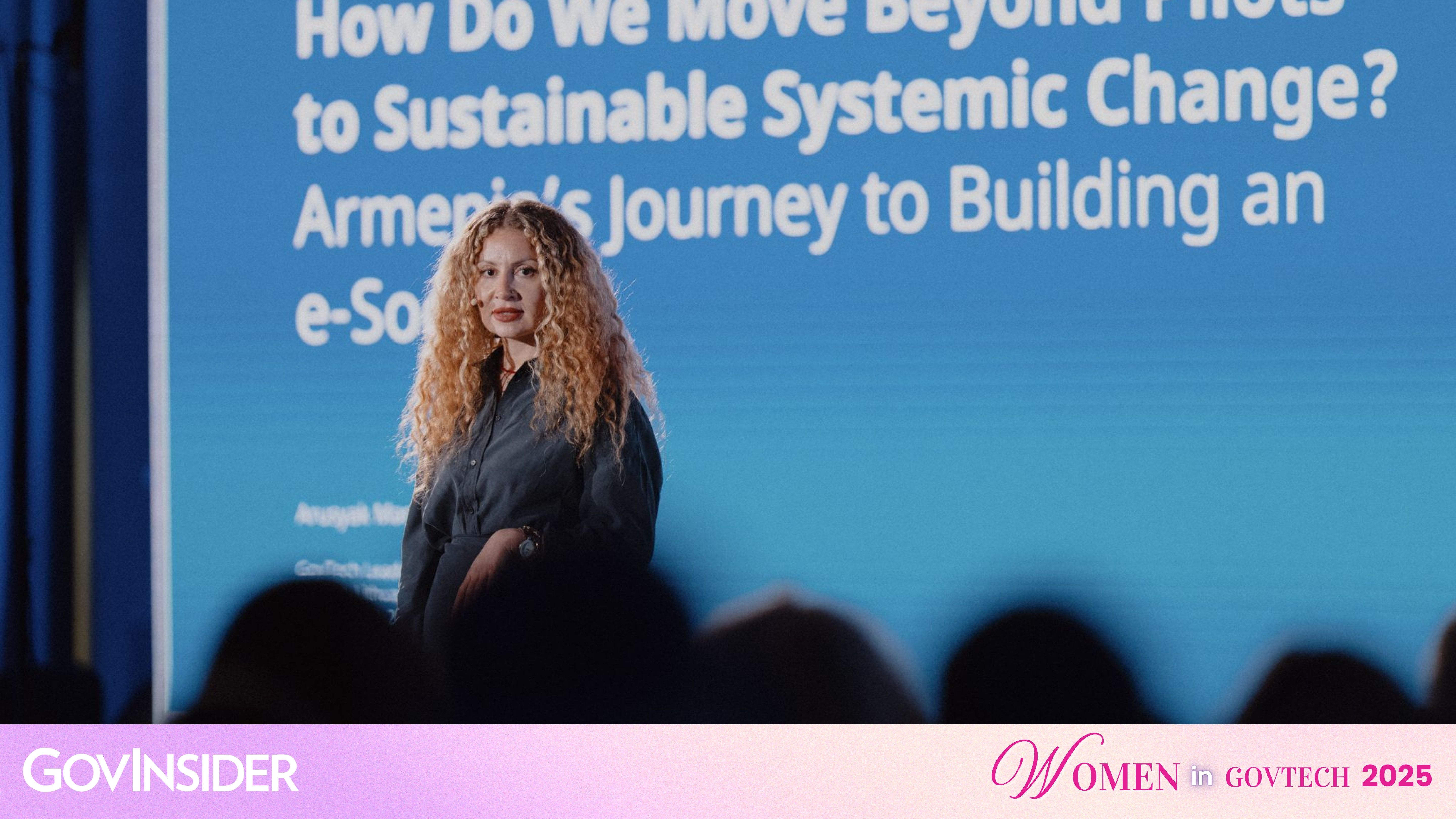
Arusyak Martirosyan, Head of UX & Digital Service Delivery, Information Systems Agency of Armenia, shares about her journey. Image: Arusyak Martirosyan
1) How do you use your role to ensure that technology and policy are truly inclusive?
In Armenia, we are not just digitising services - we are building an e-society where every interaction with the government feels intuitive, respectful, and human. As Head of UX and Service Delivery at ISAA, my role is to make sure that digitalisation is not driven by technology for its own sake, but by a user-centric approach that starts with real people, their life moments, and the challenges they face.
A core part of this work is designing around Life Events - such as childbirth, buying a car, or preparing for school - so that services reflect the way people actually experience their lives, rather than the way government institutions are structured. This shift has reframed digital transformation in Armenia: instead of asking citizens to navigate complex systems, we redesign the system around the citizen.
To ensure consistency and inclusion, we created Armenia’s UX and Service Delivery Standards, including the accessibility framework embedded in our national design system, Henaket. These standards guide teams across government in using plain language, predictable patterns, and accessible design that supports users with different abilities and levels of digital literacy.
My responsibility is to ensure that no digital service is successful unless every citizen can use it with confidence and dignity. That is how trust is built, one interaction at a time.
2) What’s a moment in your career when you saw firsthand how technology or a new policy changed a citizen’s life for the better?
While working on the Buying and Selling a Car Life Event, we received feedback from a man who had been trying to sell his car for months but simply couldn’t. Due to serious health issues, he was unable to leave his home, and the process required in-person visits. What seemed like a routine administrative task became an insurmountable barrier to his independence.
When the end-to-end online service became available, he completed the entire process in just a few minutes - without leaving his house. He later told us how relieved and genuinely excited he felt, not just because he sold his car, but because for the first time, a government service adapted to his reality, instead of expecting him to adapt to the system.
This moment stayed with me. It reaffirmed that digitalisation is about restoring dignity, enabling autonomy, and ensuring no one is left behind. Trust is built when citizens feel seen, respected, and supported - even in the simplest transactions.
3) What was the most impactful project you worked on this year, and how did you measure its success in building trust and serving the needs of the public?
This year, the most impactful work has been advancing Armenia’s Life Events Digitalisation Program as a whole - from selling a car to starting a business - and integrating these journeys into Hartak.am, Armenia’s unified public services gateway.
A key milestone was the Entrepreneurship Life Event, where registering a business in Armenia is now fully online, far more transparent, and significantly easier than before. Together with other Life Events like Buying a Car and Childbirth, it shows citizens that complex bureaucratic processes can be redesigned around their needs, not around institutional silos.
We measure success through three lenses:
• Reduced process complexity (fewer steps, fewer documents, fewer offices)
• User experience metrics (task completion rates, error reduction, satisfaction scores)
• Trust indicators (citizens’ perception of clarity, transparency, and fairness)
The real success is when citizens choose the digital service again and recommend it to others. That voluntary trust is the metric that matters most.
4) What was one unexpected lesson you learned this year about designing for real people? This can be about a specific project or a broader lesson about your work.
I learned that even the most thorough research will never capture every reality. No matter how carefully you map the most common scenarios, there will always be people whose circumstances, health, background, or life situations don’t fit the “standard” flow.
Covering the majority is an important first step - but true inclusiveness begins when you intentionally look for the exceptions. Identifying overlooked personas, edge cases, and specific barriers is what allows digital services to move from being efficient to being genuinely humane, adaptable, and fair.
5) We hear a lot about AI. What's a practical example of how AI can be used to make government services more inclusive and trustworthy?
AI can help governments shift from reactive services to anticipatory, supportive interactions.
One practical example we are trying to adopt is using AI-driven prompts to guide citizens through complex processes - not just explaining what to do, but predicting mistakes, recommending next steps, and proactively warning about missing documents.
To subscribe to the GovInsider bulletin, click here.
6) How are you preparing for the next wave of change in the public sector? What new skill, approach, or technology are you most excited to explore in the coming year?
A major step in our preparation has been the recent adoption of a legislative package on cybersecurity and public data, which sets a new digital architecture based on secure data repositories and responsible data use. It strengthens the protection of critical information and reduces exposure to cyber risks.
In parallel, I’m focused on making sure that stronger security and smarter systems remain easy to use, transparent, and trusted by citizens.
7) What advice do you have for public sector innovators who want to build a career focused on serving all citizens?
Don’t be afraid to ask the “stupid” or uncomfortable questions - especially if you are new to the field. Entering public service with fresh eyes is an advantage: you are not yet shaped by existing ways of working, and you can see possibilities others may overlook.
Processes, standards, and laws are essential, but they should guide progress, not become its limits. At the core, the role of the state - and of every public institution - is to serve society and protect people’s rights. When that principle becomes your compass, innovation stops being about technology and starts being about responsibility.
And finally: stay close to the people you are serving. Curiosity, empathy, and discipline matter more than any tool or trend.
8) Who inspires you to build a more inclusive and trustworthy public sector?
I am inspired by the ordinary citizens who show us, through their struggles and successes, what good design should look like. Their honesty keeps our work grounded. Their stories keep it urgent.
9) If you had an unlimited budget, what would your dream project be?
A fully integrated, life-event-based ecosystem where every major transition - birth, education, employment, property, health, family, migration - is delivered through seamless, anticipatory, user-centered journeys, supported by strong data governance and a unified national wallet.
A system where citizens never have to ask, “Where do I start?”
10) Outside tech, what excites you the most?
Spending time in nature and observing how everything is connected. It’s a constant reminder that no system exists in isolation - people, communities, and environments influence each other in ways we often overlook.
That perspective stays with me, and it shapes how I think about public service: as something that should work in harmony with real lives, not against them.