
ASEAN’s strategic leap toward 6G integrated sensing and communication
Digital telecommunications policy strategist Muhammad Purwa Manggala shares more about the potential of 6G ISAC technology for Southeast Asia’s public sector in shifting from passive connectivity to predictive and real-time service delivery.

ISAC 6G technology has transformative potential for the public sector, enabling context-aware and predictive devices, and facilitating real-time service delivery. Image: Canva
Across the globe, integrated sensing and communication (ISAC) has developed from a research topic to national agenda.
ISAC enables devices and networks to sense their physical environment while transmitting data, allowing radio signals to not only transmit data but also sense objects, movements, and surroundings.
This fusion of communication and high-precision sensing is also central to the International Telecommunication Union’s (ITU) vision for 6G.
For example, China has deployed experimental 6G satellites focused on earth sensing and passive communication. The US Next G Alliance has embedded ISAC in its 6G industrial strategy and innovation roadmap. In Europe, the Hexa-X initiative lists ISAC among the top five transformative capabilities, with implications across mobility, energy, and defence sectors.
ASEAN must follow suit, not just through ambition, but with clear regulation and planning.
To subscribe to the GovInsider bulletin click here.
Catalyst for public sector transformation
6G’s ISAC technology holds transformative potential for the public sector to shift from passive connectivity to a new paradigm of context-aware, predictive, and real-time service delivery.
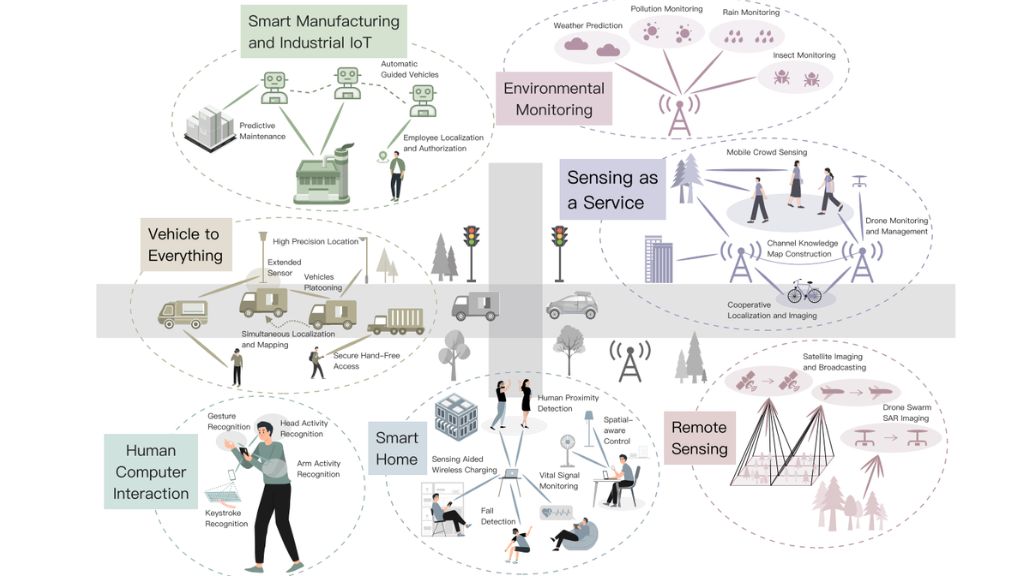
By enabling infrastructure to both sense and transmit simultaneously, ISAC turns roads, water systems, healthcare nodes, and disaster networks into intelligent, responsive assets that actively support public services.
The implementation of ISAC in public sector ecosystems depends on three key components: a dedicated spectrum aligned with IMT-2030 standards, mission-specific sensor modules embedded in critical infrastructure, and integrated transceivers capable of processing and acting on real-time environmental data.
Early stage uses cases already show strong potential for deployment:
- Urban mobility and environment: ISAC enables real-time monitoring of crowd density and microclimate conditions, allowing Singapore’s Land Transport Authority (LTA) to dynamically adjust public transport schedules, optimise MRT and bus operations, and manage predictive maintenance of infrastructure.
- Flood and climate resilience: Smart drainage systems embedded with ISAC flood sensors can detect surges and trigger proactive flood control responses by agencies like Public Utility Board (PUB) to reduce disaster impact in urban zones.
- Healthcare and emergency response: ISAC-equipped telemedicine units can fuse biometric and ambient environmental data to inform medical decision-making, particularly for emergency teams and eldercare initiatives under Ministry of Health (MOH).
- Disaster risk reduction: In geologically active regions like Indonesia, ISAC-linked sensors can detect early indicators of tsunami, bushfires, or volcanic activity. Real-time alerts triggered through disaster monitoring and counter measurement agencies (BMKG and BNPB) allow for faster evacuation and emergency response.
Singapore and Indonesia: the potential dual anchor of ASEAN ISAC
For Singapore and Indonesia, the question is not whether to adopt ISAC, but how to shape its deployment through timely and forward-looking spectrum policy, and to influence global standards and regional interoperability.
Singapore’s digital infrastructure and policy agility make it a natural 6G leader. The Digital Connectivity Blueprint (2023), released by Singapore’s Infocomm Media Development Authority (IMDA), highlighted the need for Singapore to invest in new capabilities and communication technologies, including 6G.
IMDA’s Chief Executive Lew Chuen Hong noted, “The innovations of today are not possible without constant investment and keeping our eyes on the next bound”, referring to 6G as the next bound.
Lew was speaking as Singapore launched Southeast Asia’s first physical 6G R&D lab, named the Future Communications Connectivity Lab (FCC Lab), at the Singapore University of Technology and Design (SUTD) in partnership with IMDA.
It shows that ISAC could enhance Singapore’s Smart Nation goals and would make them even more actionable.
Meanwhile, Indonesia has the potential to serve as the perfect foil to Singapore’s robust capital with its vast geography and policy dynamism. The telecommunications omnibus law passed by the Indonesian government in 2020 allows spectrum sharing and infrastructure interoperability - essential for ISAC’s flexible use cases.
Indonesia opened the 7 GHz band, signalling a shift toward adaptive spectrum management. More importantly, ISAC aligns with Indonesia’s public interest needs, supporting early warning systems, smart agriculture, and resilient logistics.
Policy and technical challenges
To implement ISAC, there are challenges that must be overcome. Firstly, spectrum interference and allocation. The convergence of communication and sensing services increases spectrum contention. To maintain performance and avoid interference, a shift toward shared spectrum models is necessary.
Secondly, privacy and security risks. ISAC systems collect real-time sensing and behavioural data, raising concerns over user privacy and infrastructure security. Strong data governance frameworks, including privacy policy architecture and adaptive cybersecurity protocols, are essential to ensure compliance with both local and international regulations.
The next is technology readiness and ecosystem gaps. Current ISAC components - such as chipsets, radios, and edge devices - are not fully optimised for tropical environments or mass market affordability. There’s a need for localisation strategies, ecosystem development, and R&D incentives to drive scalable production.
Strategic roadmap to 2030: ASEAN’s regulatory
Over the next five years, ASEAN can effectively push for 6G commercialisation by adopting a coordinated roadmap:
1. Spectrum strategy synchronisation (2025-2026)
Define ASEAN-wide candidate bands and sharing mechanism for ISAC (e.g., 7 GHz, 26 GHz, mmWave) through engaging with intergovernmental organisation like the Asia-Pacific Telecommunity and ITU to ensure regional positions influence international standards.
2. Regulatory sandbox and testbed activation (2026–2027)
Initiate ISAC sandboxes in smart cities, ports, and industrial zones (e.g., smart transportation and health facility in Singapore, disaster detection in Indonesia). In accommodating the cross-border data flow, it also needs coordinate bilateral test corridors (e.g., Batam–Singapore).
3. Commercial enablement and incentivisation (2027–2028)
Support ISAC-ready service providers through fiscal incentives, spectrum leasing models, and infrastructure credits. Prioritise applications in logistics, energy, maritime security, and emergency response.
4. Governance and compliance framework (2028–2030)
Draft regionally harmonised frameworks for data ethics, sensing transparency, and spectrum rights management in dual-use environments.
ISAC is not simply a communications enhancement. It redefines how networks interact with the physical world. It is an opportunity for ASEAN to move from digital consumer to digital innovator.
For Singapore, ISAC is the next logical progression of its Smart Nation 2.0 vision. For Indonesia, it is a leap toward inclusive infrastructure. For ASEAN, it is the moment to transition from spectrum consumer to spectrum shaper - a move that will define its place in the global 6G architecture.
Editor's note: A previous version of this article mistakenly stated that IMDA's Digital Connectivity Blueprint (DCB) 2023 identified ISAC as a transformative tech, as well as that IMDA's CE Lew Chuen Hong mentioned that ISAC is the next bound.
The mention of ISAC has been corrected to 6G.
-1745225641852.jpg)
Muhammad Purwa Manggala is a digital telecommunications policy strategist and satellite technology researcher based in Indonesia. He has contributed to Indonesia’s national digital telecommunication infrastructure roadmap, digital infrastructure policy, and published research on various low-power sensing and spectrum innovation on nanosatellite. His vision is to position ASEAN as a regional leader in future digital governance and infrastructure.