
Beyond legacy: How Singapore's public sector is building a future-ready government
By Cognizant
What it really takes to modernise government from eliminating mundane tasks to building citizen trust in an AI-driven world.
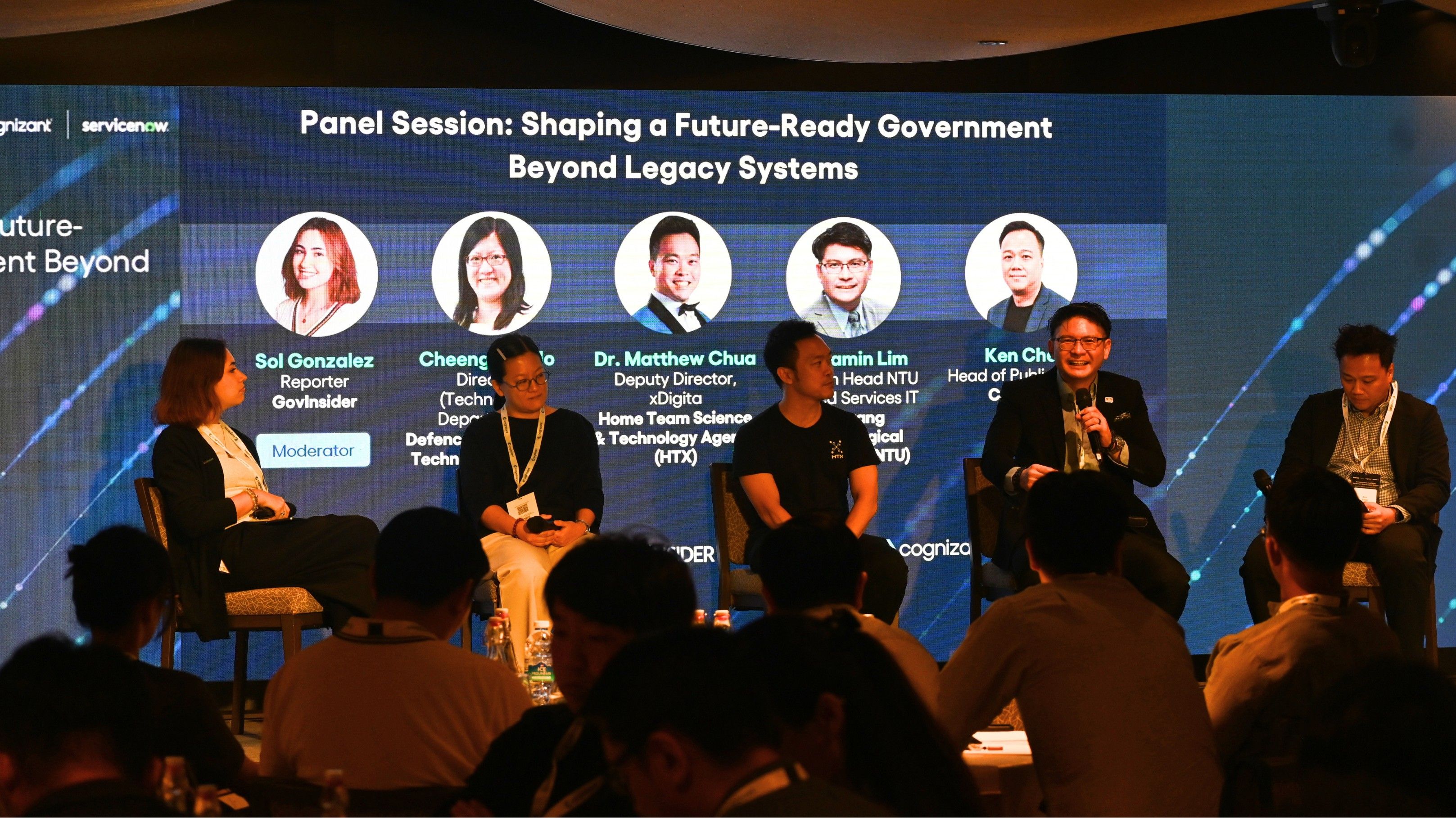
This discussion highlighted challenges, lessons learned, and strategies for a future-ready government. Image: GovInsider.
Singapore's public sector faces a paradox - citizens now expect the seamless, hyper-personalised experiences they get from private sector apps, yet government agencies must navigate rigid security mandates, legacy infrastructure, and the very human fear of being replaced by AI.
The question is no longer whether to modernise, but how to do it without breaking what already works.
At a recent forum hosted by ServiceNow and Cognizant, a panel comprising digital transformation leaders discussed the roadmap for a future-ready government in Singapore.
One of the core themes that emerged across the discussion was the need to balance the pressure of artificial intelligent (AI) integration into public services with the rigid demands of mission-critical security and user trust.
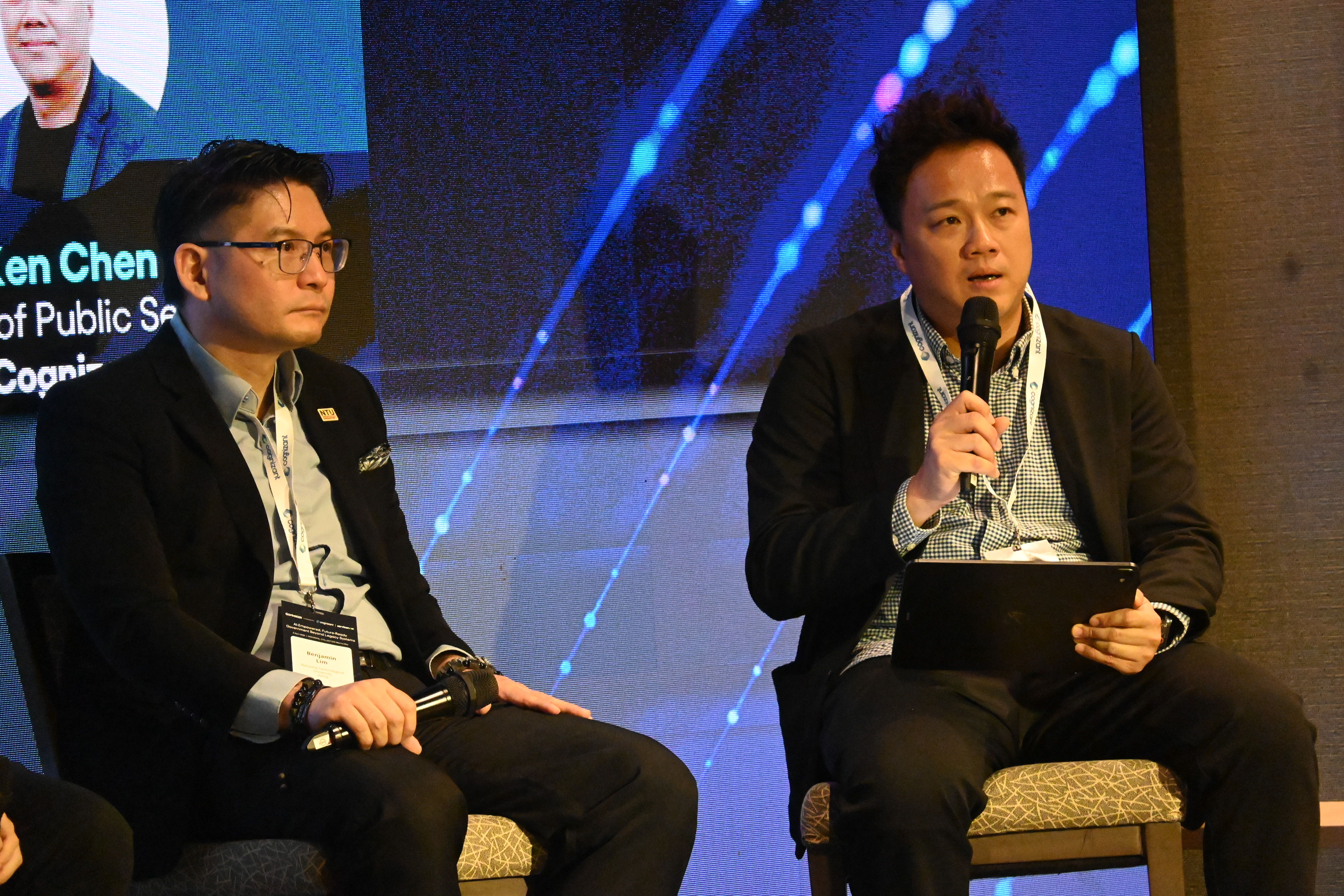
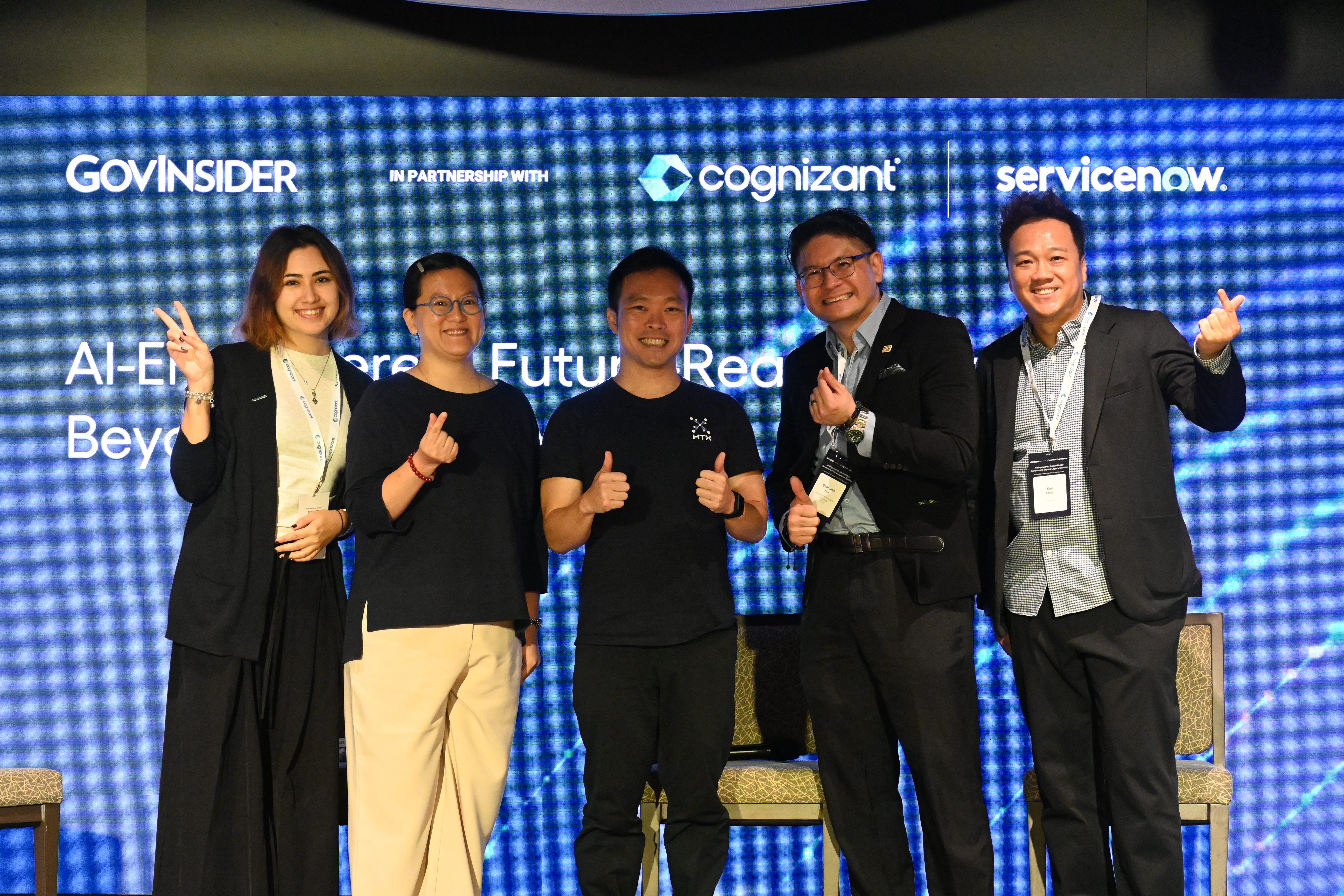
Moderated by GovInsider Reporter Sol Gonzalez, the session brought together Singapore's Home Team Science & Technology Agency (HTX) Deputy Director, XDigital, Matthew Chua; Nanyang Technological University (NTU)'s Division Head NTU Shared Services IT, Benjamin Lim; Defence Science and Technology Agency (DSTA)'s Director (Technology Department), Cheeng Tse Ho; and Cognizant's Head of Singapore Public Sector, Ken Chen.
What emerged was a candid, ground-level view of what modernisation looks like and what it takes to get it right.
Solving for the mundane
The panellists agreed that while high-level AI use cases dominate headlines, the most immediate impact of modernising legacy systems could be found in eliminating mundane tasks.
HTX’s Chua noted that AI most immediate value lay not in headline-grabbing use cases, but in eliminating the low-value tasks that drain officer time and energy - drafting lengthy approval documents, processing routine requests, generating reports that no one reads twice.
"We need to have empathy when approaching stakeholders, to assure them that AI makes your life easier to focus your energy on more value-adding and meaningful work," Chua said.
Cognizant's Chen echoed this, urging officers not to fear AI but to see it as a force multiplier. Drawing from Cognizant's experience working with public sector agencies across the region, Chen pointed out that the friction was rarely in the technology itself.
The harder challenge was identifying the right use case - one where agencies could start small, test within defined boundaries, and build confidence before scaling.
This distinction matters. Modernisation that starts with the wrong problem, or moves too fast without grounding, tends to unravel.
The panel was clear: start where it hurts most, and let trust follow.
Process, product, people
Perhaps the sharpest and most actionable insight of the forum came in the form of a deceptively simple framework. The panellists were unanimous: the most common mistake in modernising legacy systems is throwing technology at a problem before understanding it.
Instead, they advocated a disciplined "3P" approach: process, product, and people.
Process comes first. Before any digitalisation effort, agencies must ask whether the process should exist at all.
Chen drew a critical distinction here: digitalisation, he reasoned, merely digitises the process without transforming it, while true transformation modernises how policy intent is actually delivered. It is a subtle but consequential difference that separates agencies that evolve from those that simply replicate old problems on new platforms.
Product is the enabler, but only if it is built around the user.
At NTU, this meant retiring a dated early-2000s interface in favour of something more intuitive and relatable for students and faculty.
It also meant replacing traditional working-hour hotlines with AI voice agents capable of handling English and Mandarin inquiries around the clock - a practical, citizen-centric shift that improved access without compromising service quality.
People remain the most critical and most overlooked variable. As Lim emphasised, transformation consistently fails when frontline staff are not brought along with back-end developers.
High touch, he noted, builds high trust. Without it, even the most sophisticated systems stall at the point of human adoption.
Security in a zero-trust world
For agencies handling national security and critical infrastructure, modernisation carries a different kind of weight. A failed system update can lead to real-world consequences.
DSTA's Ho was clear: modernisation must be progressive, not a "big bang" replacement that risks destabilising mission-critical operations.
To illustrate the pace of change they were contending with, she pointed to the Russia-Ukraine conflict, where innovation cadence was now being measured in weeks. Keeping up without breaking vital operations required a different playbook.
DSTA's answer was shadow operations by running new and existing systems in parallel until trust in the new capability was sufficiently established for a full transition. Think of it less like a switch being flipped and more like a bridge being built alongside the road still in use.
Equally significant was the evolution of the security perimeter itself. As systems migrated to the cloud, the traditional notion of a fixed, defensible boundary dissolved. In its place, zero-trust principles took hold; assuming breaches, verifying continuously, and designing for resilience from the outset.
"Now we do have to lean heavily into zero trust principles where you are assuming breaches, verifying all the time, and designing for resilience right from the get-go," Ho said.
This shift has also brought cybersecurity into the domain of AI. Agencies are now inundated with logs and signals at a scale no human team can process alone, making AI Ops not a luxury but a necessity.
For HTX's Chua, this reliability was the foundation of public trust and the bar was unambiguous: public safety demanded near-perfect performance, not good enough.
The future: From static services to agentic AI
The definition of a future-ready government will shift from "static digital services" to "AI-enabled, context-aware digital operations," the panellists noted.
Ho likened this to the shift from paper to digital maps where the tool adapts to the user’s orientation and location in real-time, rather than the user adapting to the tool.
Citizen interactions with government are becoming more numerous, more contextual, and more demanding. Meeting these expectations consistently requires a level of coordination, responsiveness, and continuity that traditional service models and human‑led workflows struggle to support on their own.
This is the gap agentic AI systems can fill where they are capable of acting autonomously on behalf of users. It represents the next frontier precisely because it offers something governments never could before: infinite, personalised attention for every citizen need.
"The discussion concluded with Chen emphasising that the true measure of this transformation would not lie in technical specifications, but in levels of trust."
"Ultimately, it comes down to whether the right governance and safeguards are in place for people to trust AI in the same way they trust human judgement,” he said.
The panel made one thing clear: the future-ready government will not be defined by the sophistication of its technology, but by the depth of trust citizens place in it.
And that trust, as every panellist agreed, has to be earned: one interaction, one decision, and one carefully designed experience at a time.
For Singapore, where public confidence in government institutions runs high, the stakes of getting this wrong are real. But so is the opportunity.
The foundations, the thinking, the frameworks, the honest conversations are already being laid.