
Bhutan’s PMO-led innovation lab wants to redefine the civil service mindset
Prime Minister Dasho Tshering Tobgay highlighted the importance of political ownership for civil servants to experiment within a supportive mandate and reshape how they deliver public services.
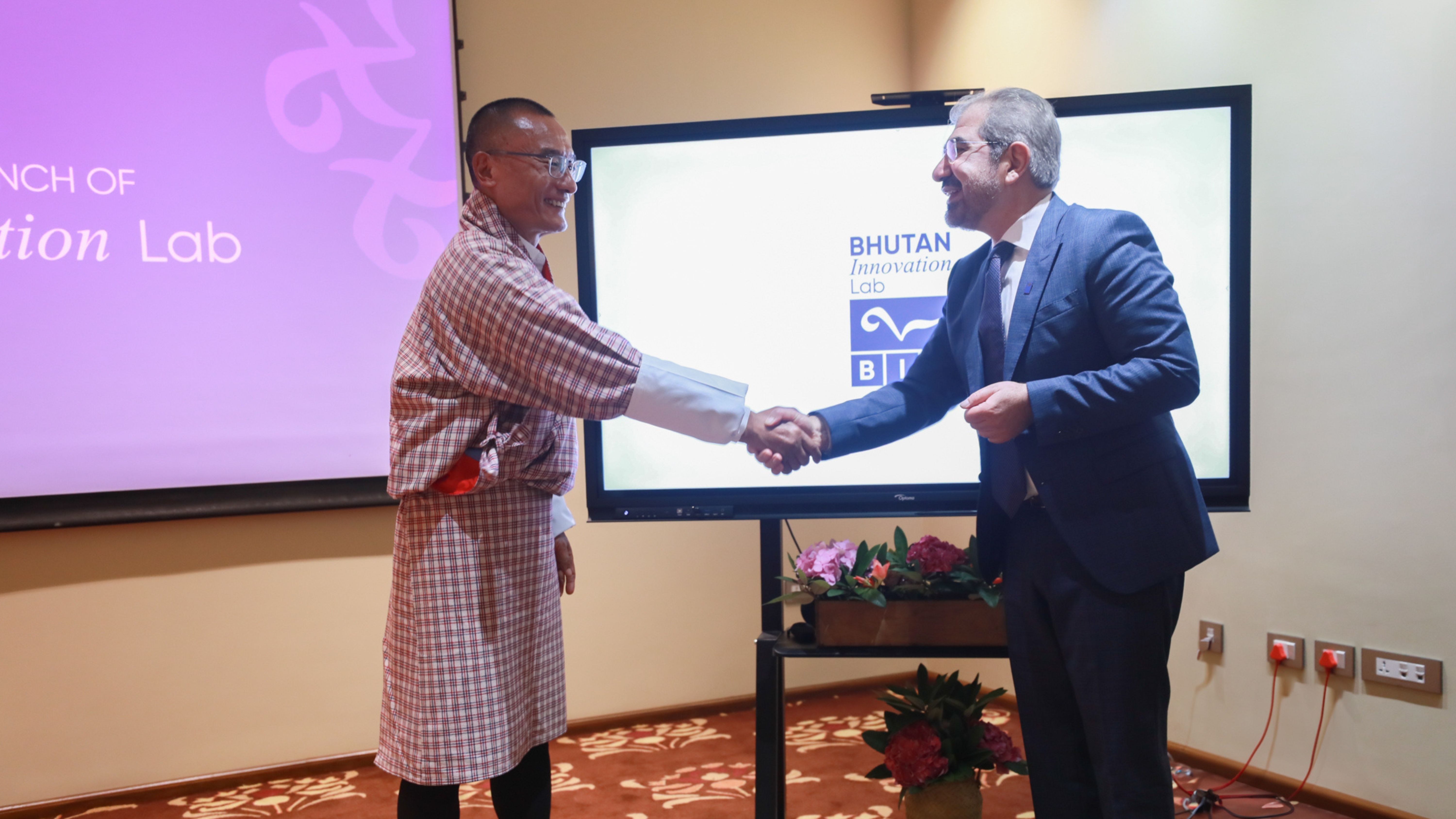
Bhutan's Prime Minister Dasho Tshering Tobgay and UNDP Bhutan's Resident Representative Mohammad Younus at the launch event of Bhutan Innovation Lab last month. Image: UNDP Bhutan
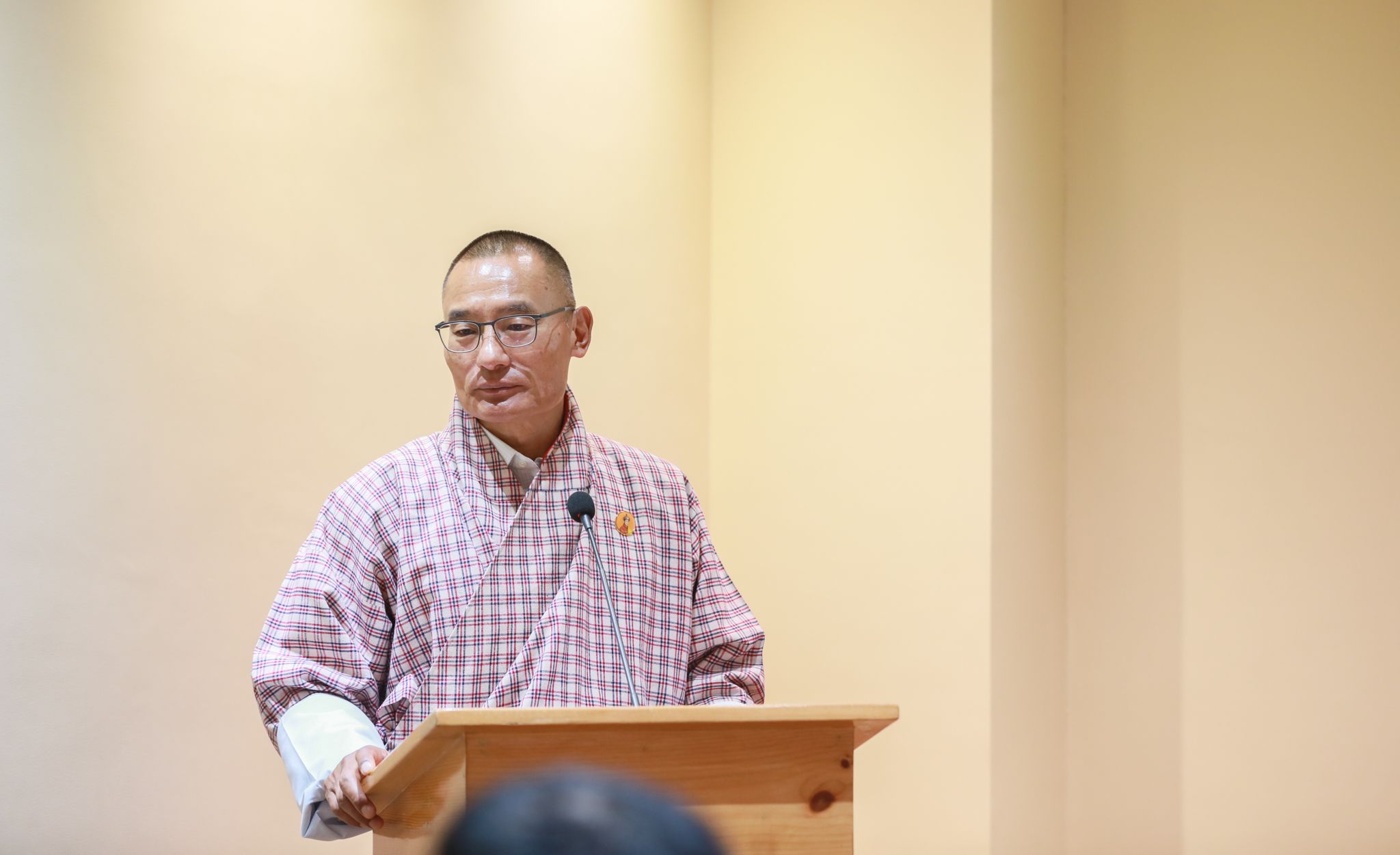
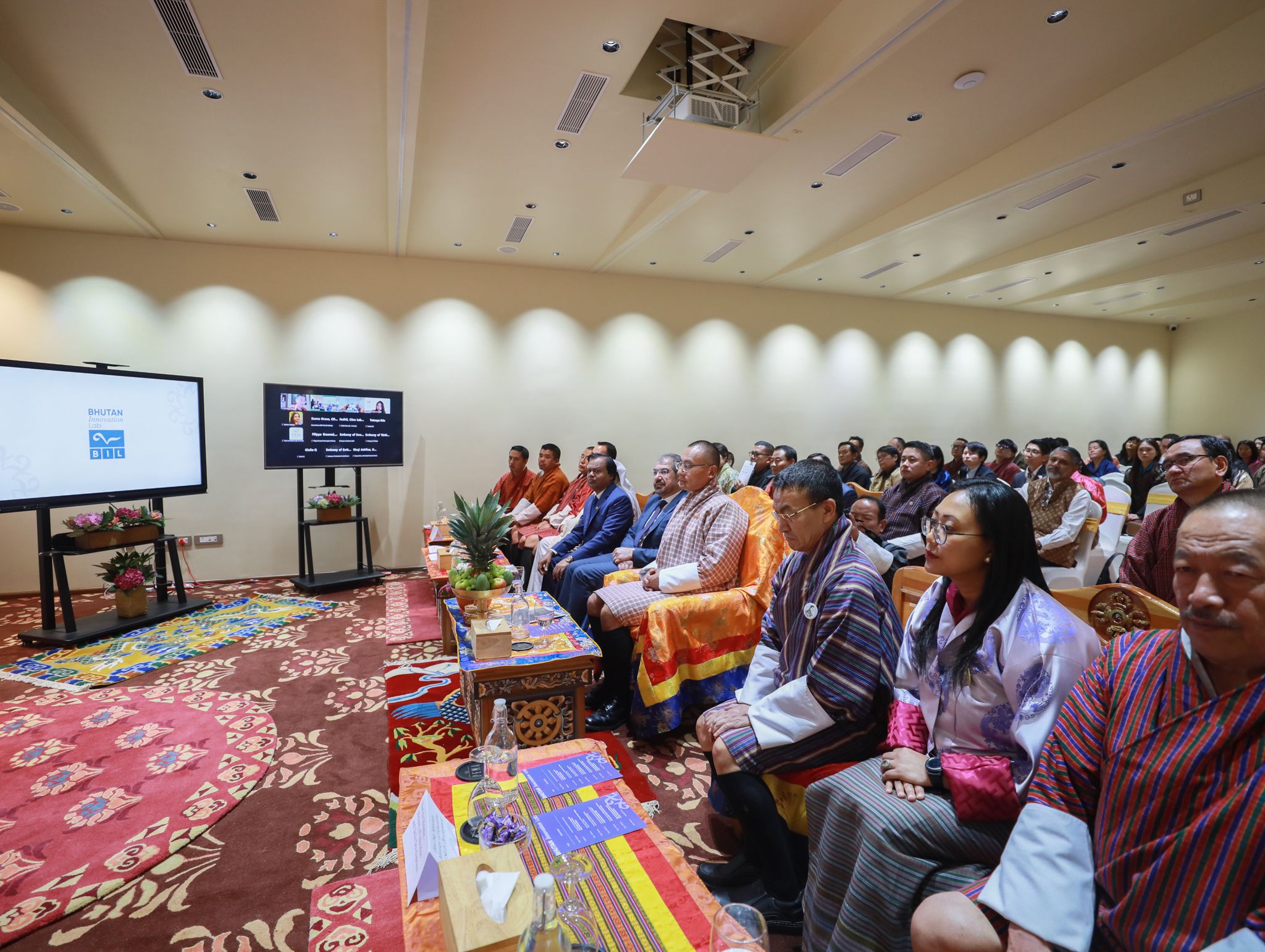
In an address to Bhutanese civil servants in the presence of government officials from other countries last month, Bhutan’s Prime Minister Dasho Tshering Tobgay sent a powerful message by saying, “I will take the risk. I will endorse your innovation”.
PM Tobgay’s personal assurance to the civil servants came during the official launch event of the Bhutan Innovation Lab where he acknowledged the public service’s hesitation to innovate due to fear of repercussions.
His message of high-level political backing has been seen as a move to overcome a risk-averse culture and encourage a more experimental approach to public service in the Himalayan kingdom.
The lab operates out of Prime Minister’s Office (PMO) and is a small team of six with a big mission.
The lab has been set up as a PMO-UNDP initiative and aims to equip the Royal Government of Bhutan’s civil servants with next-generation capabilities to solve the country's most complex development challenges.
In many countries, public service reforms are traditionally centred on organisational structures and administrative processes, says the lab's Director Sonam Tobgye to GovInsider.
The lab represents a new kind of public service reform for Bhutan, he emphasises, adding that it focuses on innovative methods like systems, design thinking and foresight, along with the use of digital and data science tools.
Tobgye and UNDP Bhutan’s Resident Representative Mohammad Younus share more about what sets this lab apart from the public sector innovation labs around the world.
Implementation-minded and results-driven
Tasked with a mandate to implement rather than just ideate and pilot, the lab wants to demonstrate its credibility and produce tangible results by first targeting challenges in critical sectors like healthcare and tourism.
At the country’s largest hospital Jigme Dorji Wangchuck National Referral Hospital (JDWNRH), the lab is piloting a trial using design thinking and behavioural insights to improve patient flow and tackle the age-old problem of long waiting times in the hospital, according to Tobgye.
The trial is using real-time patient data to dynamically adjust appointment availability in the three busiest departments, replacing a rigid, fixed-cap system that could not adapt to patient demand.
The intervention at the hospital is a concerted effort involving policymakers, healthcare professionals and citizens at the Ministry of Health and the public and the National Medical Service (NMS).
NMS was formed as a part of civil service reform to provide health services to the public.
To subscribe to the GovInsider bulletin, click here.
Driving cross-sectoral efforts
Sitting in the PMO, the lab is strategically positioned to lead a cross-sectoral effort to drive a systemic impact, Tobgye explains.
In the tourism sector, the lab is partnering with the Department of Tourism to design and deploy the country’s first real-time Airline Exit Survey to capture feedback from departing tourists.
He says that the previous survey process yielded limited insights (averaging four to five responses per month with 1,000 responses collected over four years) since the approach was passive.
The new survey has generated 1,000 responses in one week.
“By rethinking both the method of engagement, focussing on behavioural nudges and the approach to data collection, the lab significantly improves data quality and volume, effectively closing the loop between visitor feedback and tourism policy,” he explains.
With successful outcomes from both healthcare and tourism sectors, the lab's innovative approach is increasingly seeing interest within the public sector, says UNDP's Younus.
Tobgye notes that adopting a test-and-learn approach provides reassurance for policymakers to leverage the potential of every innovative idea, overcoming the risk-averse culture in public services.
Proactive policymaking requires agility
The lab aims to shift away from slow, linear policy cycles and adopt agile methods of innovation proactively shape the country’s future, shares Tobgye.
“The lab is a direct response to Bhutan’s pressing national challenges,” he stresses, with PM Tobgay highlighting youth unemployment, technology, climate change in his previous address.
The move from reacting to anticipating future challenges and opportunities involves using strong analysis and stress-testing different scenarios to ensure that policies are resilient, he notes.
The lab will prioritise more agile methods including rapid prototyping, embedding feedback loops and leveraging digital transformation and data-driven adaptation to better respond to real-time challenges.
The lab’s work will also directly tie into Bhutan’s ambitious goal of achieving 10X economic growth, as outlined in its 21st Century Economic Roadmap, he adds.
UNDP’s Younus highlights that the lab is one of the latest generation labs within UNDP’s global innovation ecosystem, that is built on the learnings from the past and ongoing public sector innovation initiatives.
He believes that with the lab directly embedded within the PMO, it can move beyond simply giving advice to taking concrete action.
This approach will allow the lab to contribute meaningfully to global conversations about transforming bureaucracies, he adds.
“Bhutan proves that systemic innovation is achievable without large budgets through political will, agility, and purpose-driven leadership,” he notes.
Soft skills development
Innovating in the public sector needs more than just technical expertise, but a fundamental shift in mindset, Younus adds.
Traditional capacity building approaches tend to overlook supporting civil servants to develop critical soft skills such as creativity, empathy, collaboration, agility, and adaptability, he explains, highlighting capacity building as one area that UNDP is supporting the lab with.
Instead of one-off training modules, Bhutanese civil servants develop their soft skills by engaging in hands-on learning through real-time policy experimentation in projects.
For example, through co-creation labs, prototyping sessions, and systems mapping workshops, civil servants practice iterative thinking and stakeholder engagement. These skills are crucial for navigating the complexity and uncertainty of governance.
“This ensures that capacity building is practical, enduring, and empowering, nurturing a new generation of public servants ready to lead change, not just implement policy,” he notes.
The lab also gains access to UNDP’s network of partners and global innovation labs.
This equips the lab with practical tools for empathy-driven and user-centred policymaking and allows them to learn from international best practices, which they can then adapt to Bhutan's local context, he adds.
Sustaining the momentum
UNDP’s Younus acknowledges that one of the biggest challenges moving forward is to ensure that the lab does not operate in isolation but integrated across the broader ecosystem of the government.
“This requires deliberate outreach, visible demonstration of results and strategic dissemination of the lab’s achievements, so that other agencies and institutions can observe, learn, and adapt similar approaches,” he explains.
Achieving a systemic impact is also key, he says, adding that the lab will focus on partnering with various stakeholders, including academia and philanthropies to deliver promising prototypes, as well as development banks and private sector to help scale projects that support human development.
Notably in PM Tobgay’s speech at the lab’s launch, he highlighted Bhutan’s history of choosing a unique, innovative path than the rest of the world. He pointed to past successes like the country’s gross national happiness (GNH) development philosophy and its status as the world’s first carbon-negative country.
As innovation is not a new skill for the country, the current call for innovation in the public sector is simply a continuation of this national legacy.