
Bridge Data Centres to strengthen Singapore as Asia Pacific’s leading AI hub
The hyperscale data centre provider’s strategic investment with global partners represents its commitment to reinforce Singapore’s position as a regional connectivity and green digital infrastructure hub.
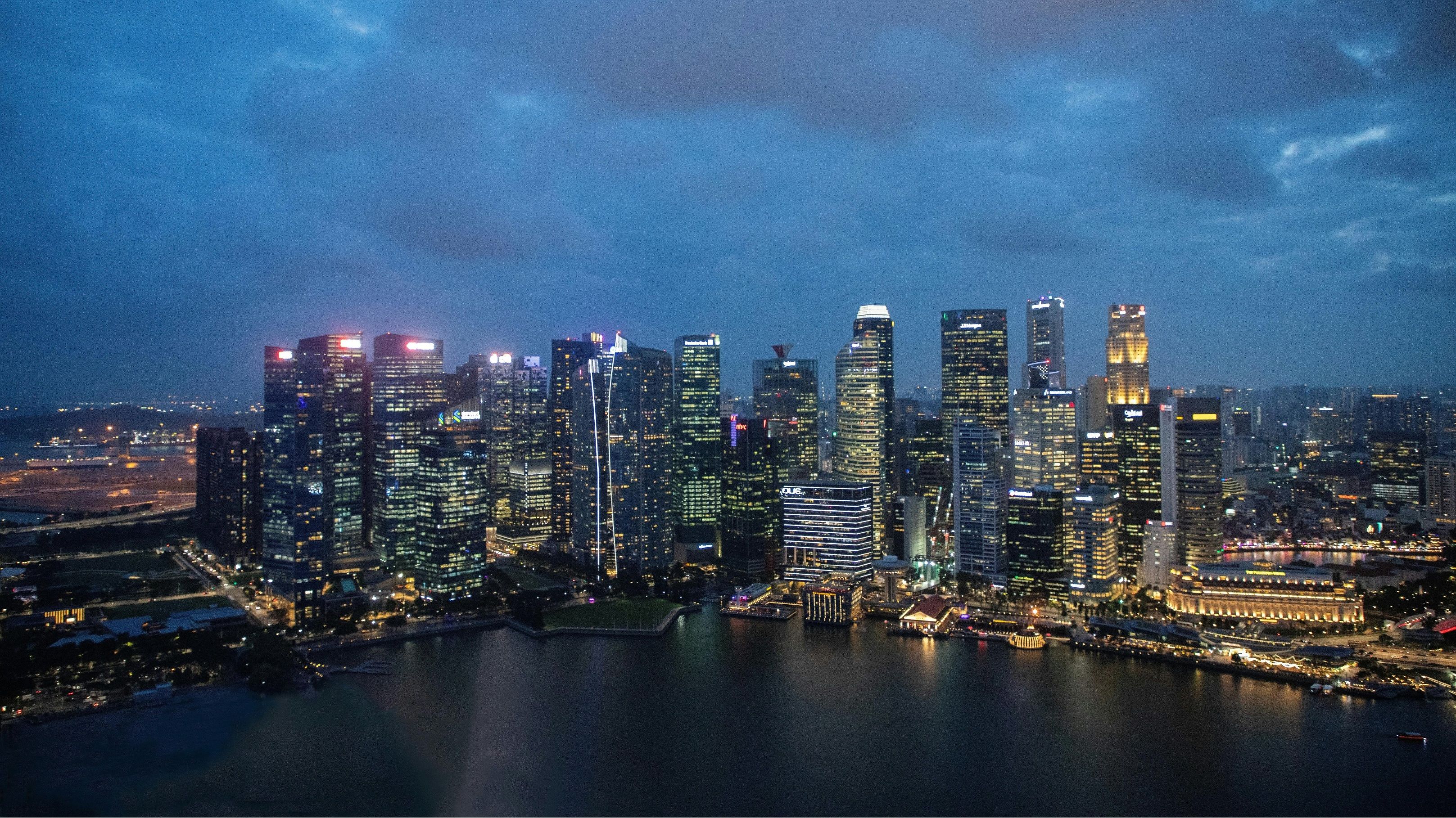
Bridge Data Centre's strategic investment forms the company's goal to provide over 2GW of AI-ready capacity globally, driving technological innovation with international ecosystem partners. Image: Canva
At the recent Budget, Singapore’s Prime Minister Lawrence Wong detailed the steps ahead to achieve the country’s ambition to become an artificial intelligence (AI) nation.
The steps included creating a National AI council, workforce development, and strategic deployment across key sectors.
Behind the scenes, data centres have been powering the underlying infrastructure to train, deploy and deliver AI services.
To handle the rising AI workloads, data centres face an urgent task to meet requirements in both power capacity and sustainability goals.
To strengthen the country’s position as a leading AI and cloud hub in Asia Pacific, Bridge Data Centres (BDC) plans to invest three to five billion Singapore dollars to advance next-generation digital infrastructure.
As one of Asia Pacific’s top three hyperscale data centres developers by live capacity, BDC’s CEO Eric Fan said in a press release that the changes reflect both the needs of customers and suppliers.
“Our new identity reflects who BDC is today; a platform built on disciplined execution, certainty of delivery, and the ability to scale with our customers,” he said.
New identities and innovations
Fan added that customers in the region prioritise suppliers that could deliver proven results with agility and at scale as AI workloads accelerate.
BDC was among the first data centre developers to foray into Malaysia, where the company has several large-scale data centre campuses, both operational and under development.
Last September, BDC partnered with Johor Special Water (JSW) to embark on Malaysia’s first Water Treatment Plant (WTP) integrated within a data centre facility.
The WTP applies advanced Membrane Bioreactor (MBR) and Reverse Osmosis (RO) technologies to treat effluent and convert it into high grade effluent water to cool its upcoming MY07 campus.
Since then, the WTP has been reducing reliance on potable water, thereby supporting Johor’s broader environmental agenda.
BDC was also the first in Southeast Asia to incorporate Prefabricated, Prefinished Volumetric Construction (PPVC) construction at its MY06 campus during construction in 2022.
The PPVC method involved assembling large building sections off site, enabling BDC to complete the project about within eight months, which is 40 per cent faster than traditional methods.
MY06 also featured advanced liquid cooling technologies at scale, including cold plate liquid cooling, to support the AI workloads.
The suite of sustainability initiatives at MY06 enabled the facility to achieve an annualised Power Usage Effectiveness (PUE) of below 1.2.
New ecosystems and collaborations
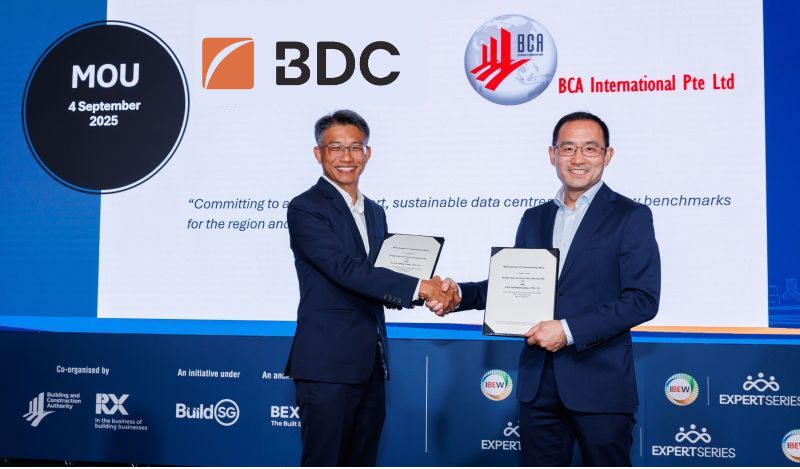
These projects are attracting interest from regional public agencies, as BDC believes that its proven track record can be replicated elsewhere.
Building 1 of BDC's MY-06 Park has been awarded the highest level of BCA Green Mark - Platinum Certification (BCA Green Mark Platinum Award) under the Singapore BCA-IMDA 2024 International Data Center Green Mark Certification Framework.
BDC became the first data centre operator to achieve this recognition for a facility based outside Singapore.
Beyond project certification, BDC has also signed a memorandum of understanding (MoU) with BCA International (BCAI) to support the international adoption of Singapore’s Green Mark standards in global data centre developments.
This allows BDC to promote Singapore’s sustainable building standards globally, while reinforcing the country’s position as a leading green tech infrastructure hub in the region.
Additionally, BDC will be partnering with stakeholders across academia and private sector to explore low-carbon energy pathways for the data centre sector.
To tap into clean energy like hydrogen power for AI-ready data centres, BDC and Concord New Energy (CNE) signed a memorandum of understanding (MoU) to jointly develop Singapore’s first floating hydrogen power generation solution.
BDC and CNE will collaborate with Nanyang Technological University (NTU) to accelerate research, engineering and the deployment of hydrogen energy technologies for digital infrastructure applications.
BDC is also working with Singapore’s Agency for Science, Technology and Research Institute of High-Performance Computing (A*STAR IHPC) and HY to evaluate the potential of nuclear energy as a long-term clean power source.
Leading from the ground up
Next-generation AI infrastructure refers to integrated digital infrastructure designed to support increasingly compute-intensive AI workloads, where rack densities, cooling requirements and power demands are significantly higher than in traditional data centre environments.
To address these evolving requirements, BDC is working with global technology partners to develop key enabling capabilities.
This includes jointly exploring an 800V High Voltage Direct Current (HVDC) architecture with Vertiv, which is widely regarded as an important energy solution for next-generation AI platforms such as the NVIDIA Rubin platform, enabling more efficient and resilient power delivery for ultra-high-density computing environments.
“This is what we do – build hyperscale campuses leveraging full stack capabilities; bridging the future and connecting the world with infrastructure built for the long term,” Fan added.
In parallel, BDC is advancing next-generation liquid cooling technologies and energy-efficient cooling approaches designed for tropical operating environments, alongside AI-enabled infrastructure operations and intelligent monitoring systems to enhance efficiency and reliability.
Through these initiatives and collaborations with leading global technology partners, BDC aims to position Singapore as a platform for the development, testing and deployment of AI-ready digital infrastructure solutions.
Over time, these initiatives are expected to contribute to the growth of a broader local ecosystem spanning engineering, research, operations and internship programmes, supporting around 3,000 students and professionals.
Collectively, BDC’s investment reflects the company’s long-term commitment to building an integrated ecosystem in Singapore that combines innovation, engineering capabilities and advanced digital infrastructure, positioning the city as a key hub for next-generation AI infrastructure development.
You can read more about BDC here.