
Building resilient governance through futures thinking
By Clare Lin
At the United Nations Public Service Forum 2025, speakers emphasised the importance of moving from vision to action and gave participants the opportunity to engage with practical frameworks for future governance.
-1752037001150.jpg)
School of International Futures's Operations Director, Caroline Star (left), Creative Bureaucracy Festival’s Adviser, Robyn Bennett, and Agency for Strategic Reforms’ Head of Delivery Unit, Aziza Umarova (right) speaking on the importance of forward thinking. Image: GovInsider
At the UN Public Service Forum (UNPSF) 2025 held between June 23-25 in Samarkand, Uzbekistan, a key message emerged: effective governance of tomorrow hinges on imagination and tangible action today.
In the closing workshop, Foresight and Creativity in Public Service (Uzbekistan), public service leaders explored how governments can move beyond reactive policies to plan more effectively for the future and achieve Sustainable Development Goals (SDGs) by 2030.
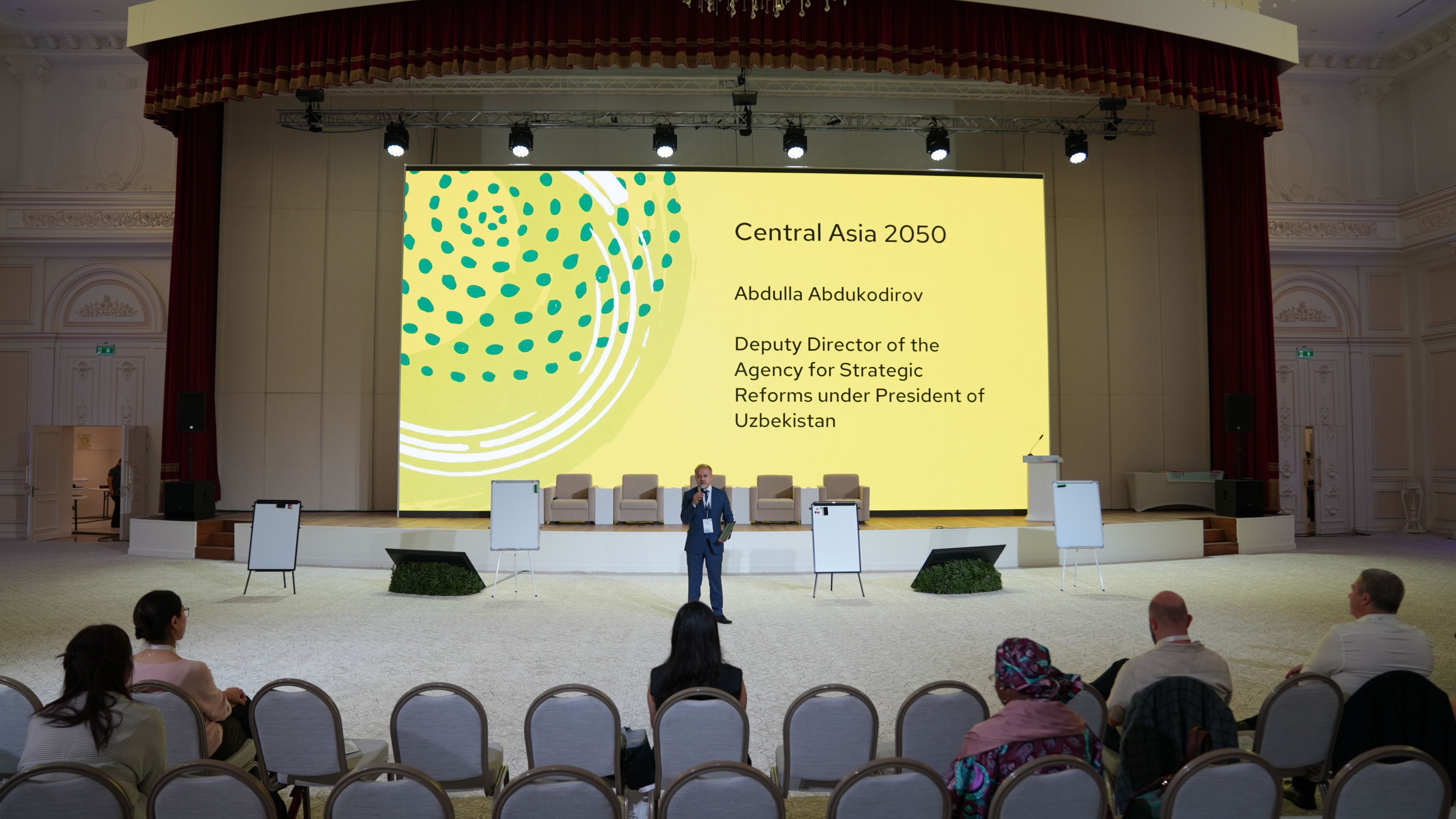
“We cannot build something if you cannot imagine…we want to talk about changing mindset again, imagination is going to be our first thing and first action we're going to [take] today,” said the Agency for Strategic Reforms (under the President of the Republic of Uzbekistan)’s Deputy Director, Abdulla Abdukodirov.
Abdukodirov was speaking at the opening address for the closing workshop, where he highlighted the importance of foresight and creativity in the public service.
GovInsider was invited by the Uzbekistan government as a media partner to the conference.
Visualising multiple futures
The Agency for Strategic Reforms’ Head of Delivery Unit, Aziza Umarova shared that Uzbekistan had been inspired by Singapore’s future-ready planning strategy.
She pointed to how Singapore had planned 50 years ahead for general policy, and 100 years ahead when it comes to drinking water.
For context, Singapore faces a drinking water self-sufficiency challenge due to its limited natural water resources and land area for water storage.
“There are a lot of wonderful cases when countries are able to build a future, because they think that the future is not singular, it’s plural.
“There are many multiple futures, and this really depends on how you visualise your best future,” Umarova continued.
Concluding the first session of the workshop, Creative Bureaucracy Festival’s Adviser, Robyn Bennett, shared how public servants could imagine the future and the progress with regards to SDGs.
In her sharing, she gave participants an interactive experience to share their insights with one another of a future where the SDGs have been achieved.
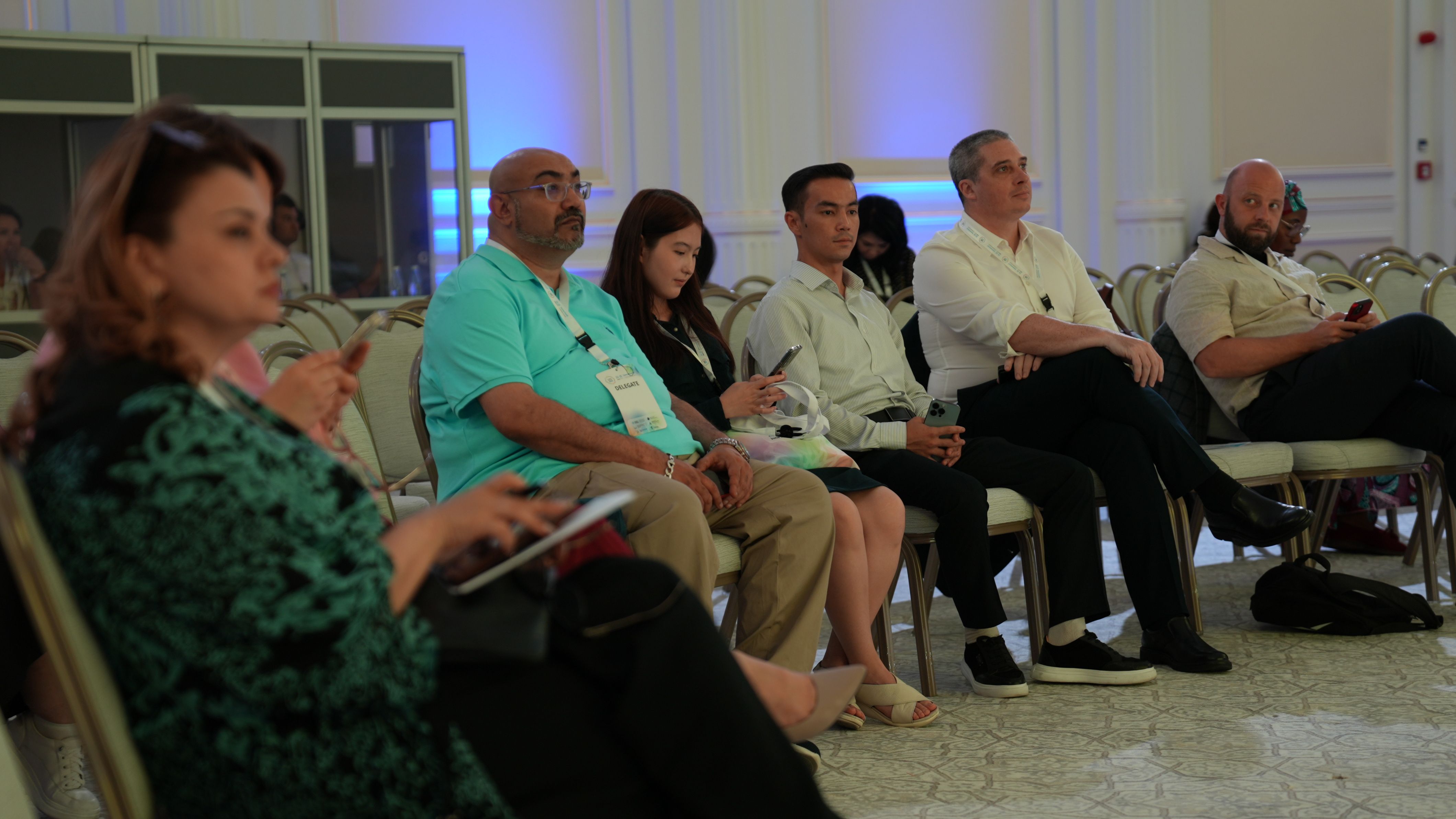
In her words: “People live in harmony. They have access to clean water, to the resources. They're living in beautiful spaces”.
Bennett proceeded to prompt participants to think back to the present on how they had contributed to that future, and if they had taken any specific actions or decisions.
Regardless of what participants envisioned, the School of International Futures (SOIF)’s Operations Director, Caroline Star said that it was precisely though expanding such ideas that progress can be made towards reaching the SDGs.
To subscribe to the GovInsider bulletin, click here.
Opening up that imagination
Bennett also shared more creative examples of futures thinking in the form of the creation of artefacts, or physical manifestations of the future that people are trying to invite others into.
According to her, some of the more exciting ones related the idea of giving Mother Nature rights or linking Nature (preservation) to the shaping of governance structures.
“Decision making bodies made of trees: these kinds of tangible examples of nature in the room, I think, encourage people to really embody that future,” Bennett continued.
SOIF’s Star added that public servants could be equipped with enhanced critical thinking tools to prepare them for future-fit governance through the Foresight Transformation Prism, a framework developed by the SOIF.
The framework was organised in three steps, mainly Leadership Capacity, Citizen Participation, and Organisational Readiness.
Star shared that the key to shaping a desired future was involving citizens, ensuring organisations and sectors are adequately prepared and equipped, and upholding leaders to their plans.
“You don't get transformational change leaders… unless you have all of these things happening together, and stakeholders working across a whole ecosystem in the whole society,” Star continued.
To effectively plan for the future, Star emphasised that the whole of society must work together cohesively, while having an actionable vision for the future.
Making the future tangible
Given that there was just five more years left to achieve the SDGs, Star shared that if one stays in the present, it can limit what they feel is possible to do, and what one actually does.
“What thinking about the future could do is really free yourself from the present and open up that imagination,” said Star.
Star added that future thinking was as much about the present as it was about looking forward.
“There's no point about doing future thinking unless you actually take action today,” emphasised Star.