
Can data help higher education adapt faster? India’s Telangana state shows how
As governments around the world digitise admissions, examinations and scholarships, the Indian state is focusing on something more ambitious: connecting data across institutions to improve policy, student outcomes and workforce readiness.
-1784077797857.jpg)
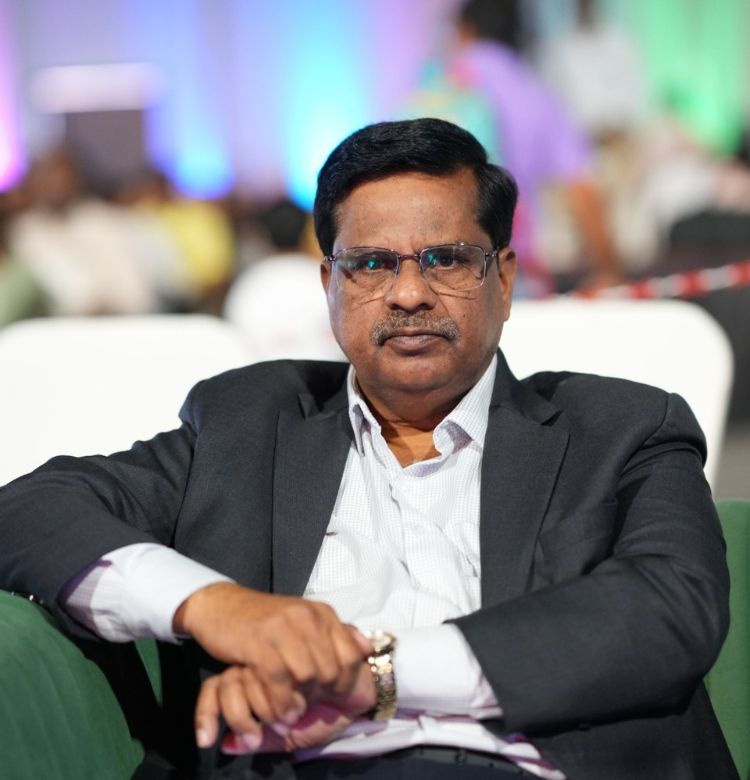
Professor V. Balakista Reddy is the chairman of the Telangana Council of Higher Education (TGCHE), the state-level statutory body responsible for overseeing and regulating higher education in the Indian state. Image: Professor Reddy
Governments around the world are investing heavily in digitising higher education services.
Admissions have been moved online; examinations are managed digitally, and scholarship applications are increasingly paperless.
Yet, many of these initiatives continue to operate in silos, limiting governments' ability to gain a comprehensive view of their higher education systems.
In the Indian state of Telangana, the body that looks after higher education is starting its digitalisation journey and wants to embark on several ambitious plans.
The Telangana Council of Higher Education (TGCHE) oversees 43 institutions, including public and private universities, one specialised state-level institution, and two national institutes.
The council is working towards an integrated digital ecosystem that connects universities, colleges, students, and government agencies through a common data framework.
Rather than treating admissions, examinations and academic administration as separate processes, the council wants to create a system where information flows seamlessly across institutions, enabling faster decision-making and more responsive governance.
TGCHE’s chairman, Professor V. Balakista Reddy tells GovInsider: "The main purpose is to create a well-networked, data-driven governance mechanism that ensures an unhindered flow of information between state agencies, universities, colleges and students.”
He emphasises that while significant progress has been made, achieving a fully integrated ecosystem remains "an ongoing journey requiring continuous improvements."
From digital services to digital governance
For many governments, digital transformation begins by putting existing services online.
After achieving that, Telangana's next ambition is to ensure that these services also generate insights that improve policymaking.
A unified platform allows policymakers to monitor admissions, enrolment, faculty strength, examination outcomes, scholarships and institutional performance in real-time, rather than relying on periodic reports from individual institutions.
This enables the council to identify trends much earlier. For example, admissions data can reveal programmes experiencing unusually low enrolment or unexpectedly high demand.
Rather than waiting until the academic year concludes, TGCHE can intervene by extending admission timelines, reviewing seat allocation, or strengthening student counselling.
Similarly, examination data can help identify institutions or subjects with consistently poor performance, informing decisions on faculty development, curriculum revisions, and targeted academic support.
Integrated data also supports broader planning around faculty vacancies, infrastructure utilisation, accreditation and resource allocation.
Instead of fragmented reporting, the council hopes to build a governance model where decisions are increasingly guided by evidence.
Institutions need to change as well
Building a common digital ecosystem across universities is as much an organisational challenge as a technical one.
Institutions differ in digital maturity, IT infrastructure, and data standards. Ensuring cybersecurity, protecting privacy, addressing skill gaps, and managing resistance to change are equally critical components of the transformation.
Professor Reddy says TGCHE has adopted a phased and collaborative approach.
Existing initiatives such as the Degree Online Services Telangana (DOST) portal already provide a centralised governance framework for admissions, while the council continues working with universities and colleges to standardise institutional, faculty and student data.
Cloud technologies are helping improve cost efficiency, while cybersecurity frameworks and data governance policies are being strengthened alongside faculty capacity-building programmes and stakeholder consultations.
Importantly, the council is seeking to improve internet connectivity and digital access for students in rural areas to ensure that digital transformation does not create new inequalities.
Putting students at the centre
Although digital transformation often focuses on administrative efficiency, Professor Reddy argues that the greatest value lies in improving the student experience.
Integrated records allow institutions to provide more timely academic counselling, easier access to scholarships, transcripts, and student services through a unified platform.
Over time, the ecosystem could also support personalised learning pathways and help institutions identify students who may require additional academic support before they fall behind.
At the institutional level, consolidated data enables universities to monitor enrolment trends, evaluate curriculum effectiveness, and better align faculty deployment with student demand.
The ecosystem also supports closer collaboration with industry.
By analysing emerging skill gaps and incorporating employer feedback, TGCHE hopes to strengthen curriculum development while expanding internships and apprenticeship opportunities that improve graduate employability.
Treating data as strategic public asset
As more institutional and student information becomes connected, maintaining trust becomes increasingly important.
Professor Reddy describes data as "a common strategic asset" that must be governed through clear ownership, defined access controls and strong privacy protections.
TGCHE advocates a privacy-first approach that limits access to authorised users, protects personally identifiable information through encryption and multi-factor authentication, and ensures data is collected only for legitimate purposes.
The council also stresses that governance extends beyond technology. Regular policy reviews, stakeholder training and responsible data management practices are essential to maintaining confidence in the system.
AI as catalyst for next phase
Looking ahead, Professor Reddy believes artificial intelligence (AI) and predictive analytics will further strengthen governance by enabling more proactive policymaking.
AI could help institutions identify at-risk students earlier, support personalised learning, streamline scholarship disbursal, and monitor institutional performance more effectively.
Predictive analytics may also improve resource planning, curriculum development, and accreditation processes while helping universities respond more quickly to changing workforce demands.
As Telangana introduces new academic programmes, AI is expected to play an increasingly important role in monitoring institutional quality, validating learning outcomes, and supporting continuous improvement.
Lessons for other governments
Reflecting on Telangana's experience, Professor Reddy identifies three lessons for governments pursuing similar reforms.
First, digital transformation should always begin with educational objectives rather than technology itself.
Second, governments must recognise data as a strategic public asset that requires high standards of quality, security, and governance.
Finally, technology should remain an enabler rather than the ultimate goal.
"The priority," he says, "must always remain better learning outcomes, stronger institutions and measurable policy outcomes."
As higher education systems worldwide prepare students for increasingly complex economies, Telangana's experience suggests that the next stage of digital transformation will depend less on digitising individual services and more on connecting information to support better decisions.