
Can everyday stewards drive environmental sustainability in healthcare?
By James Yau
A new course on environmental stewardship by the Centre for Healthcare Innovation and Healthcare Services Employees Union is targeting healthcare workers to be the core driver of sustainable practices in their institutions.
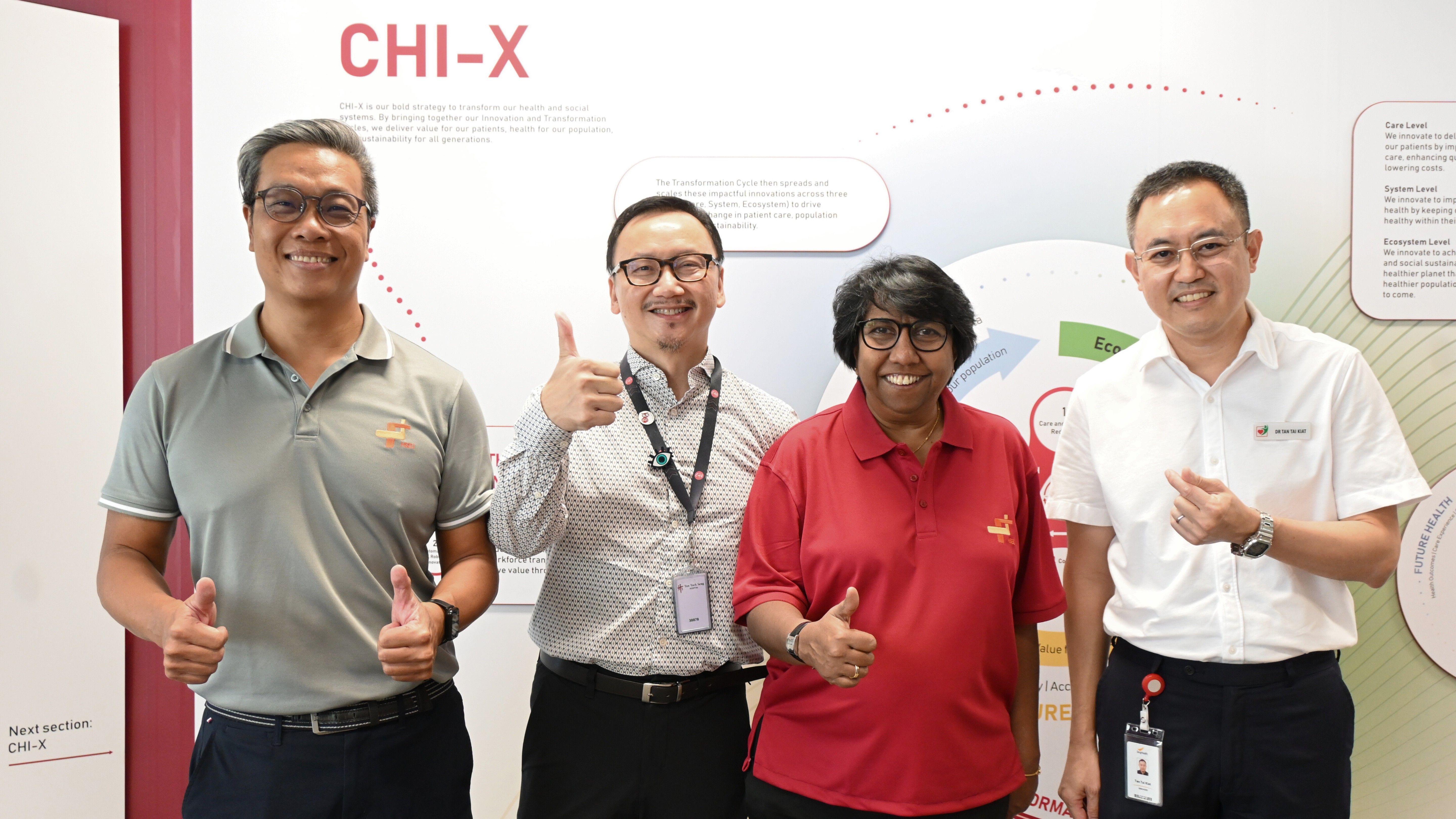
From left: HSEU Executive Secretary Steven Goh; CHI Clinical Director, Assoc Prof Wong Hon Tym; HSEU President K Thanaletchimi; SingHealth Chief Operating Officer, Environmental Sustainability, Dr Tan Tai Kiat. Image: GovInsider
The healthcare sector contributes to over four per cent of global CO2 emissions, exceeding that of both aviation and shipping combined.
This is driven by the sector’s energy-intensive demands, complex supply chains, and medical waste.
A new course, developed in collaboration between NTUC LearningHub, Healthcare Services Employees Union (HSEU) and the Centre for Healthcare Innovation (CHI), has been launched to empower healthcare workers with the knowledge and tools to drive sustainability in their institutions.
Speaking at the launch event on Tuesday, HSEU President K Thanaletchimi emphasised the individual responsibility and capacity of health workers to enact change.
“As healthcare professionals we cannot be bystanders but have to do something.
“Our dream is to ensure that every healthcare worker takes on the full responsibility of sustainability that can be cascaded not only in the hospital, but also at home,” she said.
The environmental gap in healthcare
Singapore’s healthcare system was estimated to contribute seven per cent of national carbon emissions, according to the first comprehensive national emissions report published last year.
CHI’s Clinical Director, Assoc Prof Wong Hon Tym, explained that sustainability efforts needed to be intentional for it to be effective, referencing a survey conducted by CHI on healthcare workers in Tan Tock Seng Hospital.
The survey found that while 98 per cent of respondents were “aware and anxious” about the environment, over 50 per cent said that they lacked the tools and knowledge to practice sustainability at work.
Wong, who is also the co-lead of CHI Sustainability Academy (SA), highlighted how this gap led to the CHI academy being built.
“A lot of healthcare frontliners were in the dark, including me. We also knew that this is one area that healthcare has little knowledge that we had to call partners in,” he shared.
After collaborating with practitioners from SingHealth, the National University Health System (NUHS), NTUC Learning Lab, and other academic partners, CHI SA was launched in July 2024 as a capability builder to help stakeholders deliver healthcare in an eco-friendly way.
Under the course agenda, students would learn real-world case studies from Singapore's healthcare clusters.
This included new social innovations like the ‘Eco-Checker' operations initiative from SingHealth and further collaboration with HSEU, NTUC.
The Eco-Checker is part of green culture building on energy, water and waste management focusing on good behaviour, habits, and practices amongst staff, according to SingHealth’s Chief Operating Officer, Environmental Sustainability, Dr Tan Tai Kiat.
Going green(er) and force multipliers
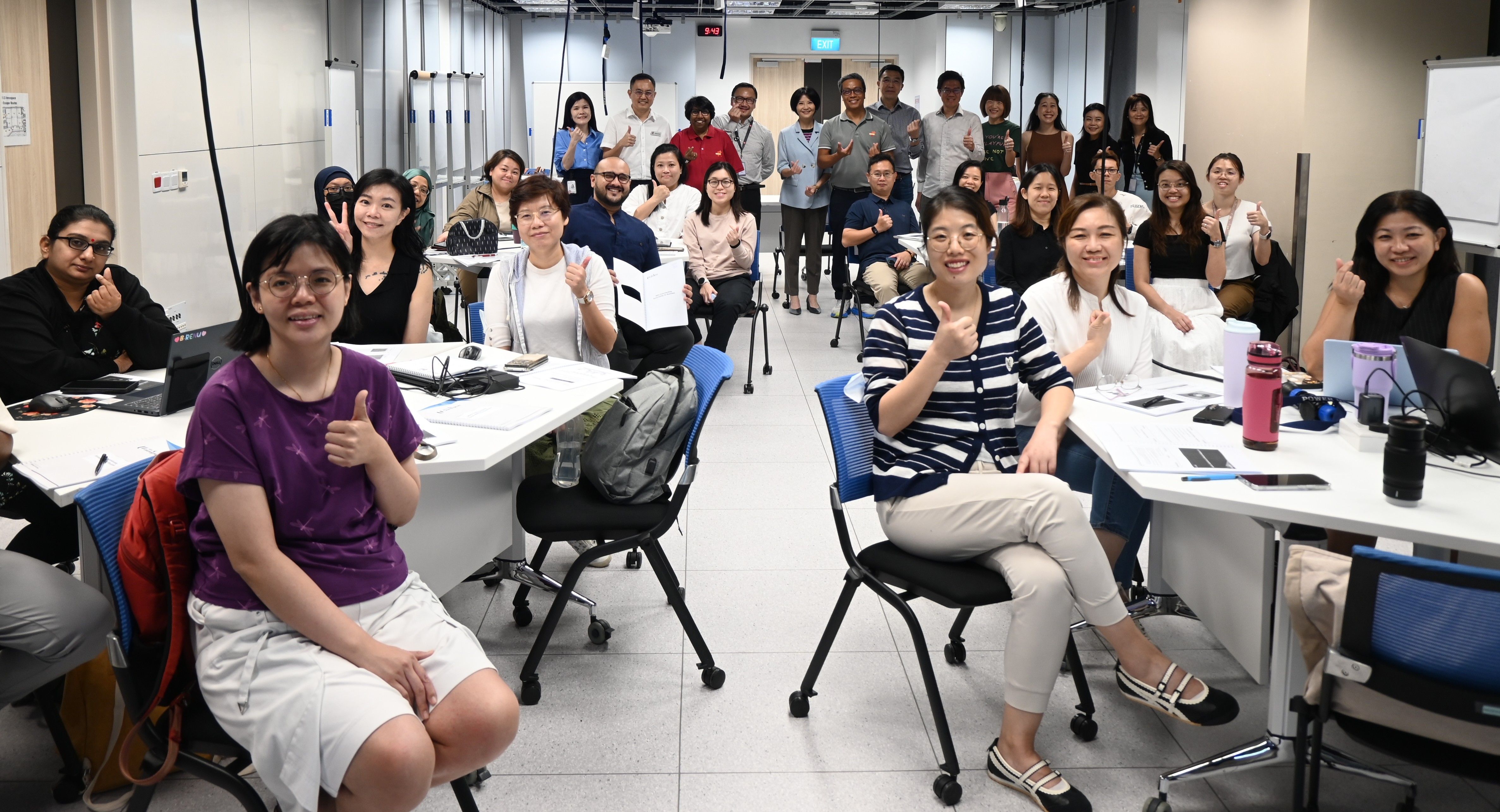
Discussing how new habits and behaviours required time and space to develop, Dr Tan spoke to the importance of industry-wide partnerships to build lasting cultures.
“We want to see how we can build a green culture with all workers, and with the people's leadership led by the union leaders. We want to sustain this culture,” said Dr Tan.
Speaking to GovInsider, HSEU’s Executive Secretary Steven Goh highlighted the synergies between HSEU and clinical expertise such as CHI in driving capacity building at scale.
“Naturally, the union leader comes in as a very good change agent, because they are really resilient and already handle responsibilities related to industrial relations,” he said.
Formed in 1989, HSEU represents a 50,000-strong membership base comprising employees in the public and private healthcare sectors.
Moreover, Goh added that job redesign was another core component, ensuring that sustainability was embedded into professional roles so that capacity building efforts were sustained and operationalised within routine work processes.
Assoc Prof Wong also acknowledged that sustainability measures had lagged in top-down implementation.
Regardless, he remained optimistic as new roles and models for sustainability develop, even alluding to the potential for a Chief Financial and Sustainability Officer as one of these new roles.
He noted: “My wish is that in 10 years' time everything becomes invisible so that there is no more need for the [Sustainability] Academy and these courses because sustainability is hardwired into everything we do.
“We're not there yet, but we are now teaching the tools. We're trying to see whether this can go into our foundational teaching so that a new employee will have the awareness and the tools to practice it at work, and at some point, if we are able to say that everyone already has got some tools, maybe we can shut down the Academy.”