
Citizen developer movement breaking IT bottlenecks, solving problems
By Appian
The democratisation of technical skills, thanks to tools like AI and low- and no- code platforms, are increasingly empowering non-tech users to innovate processes and drive productivity for their organisations.
-1753686786132.jpg)
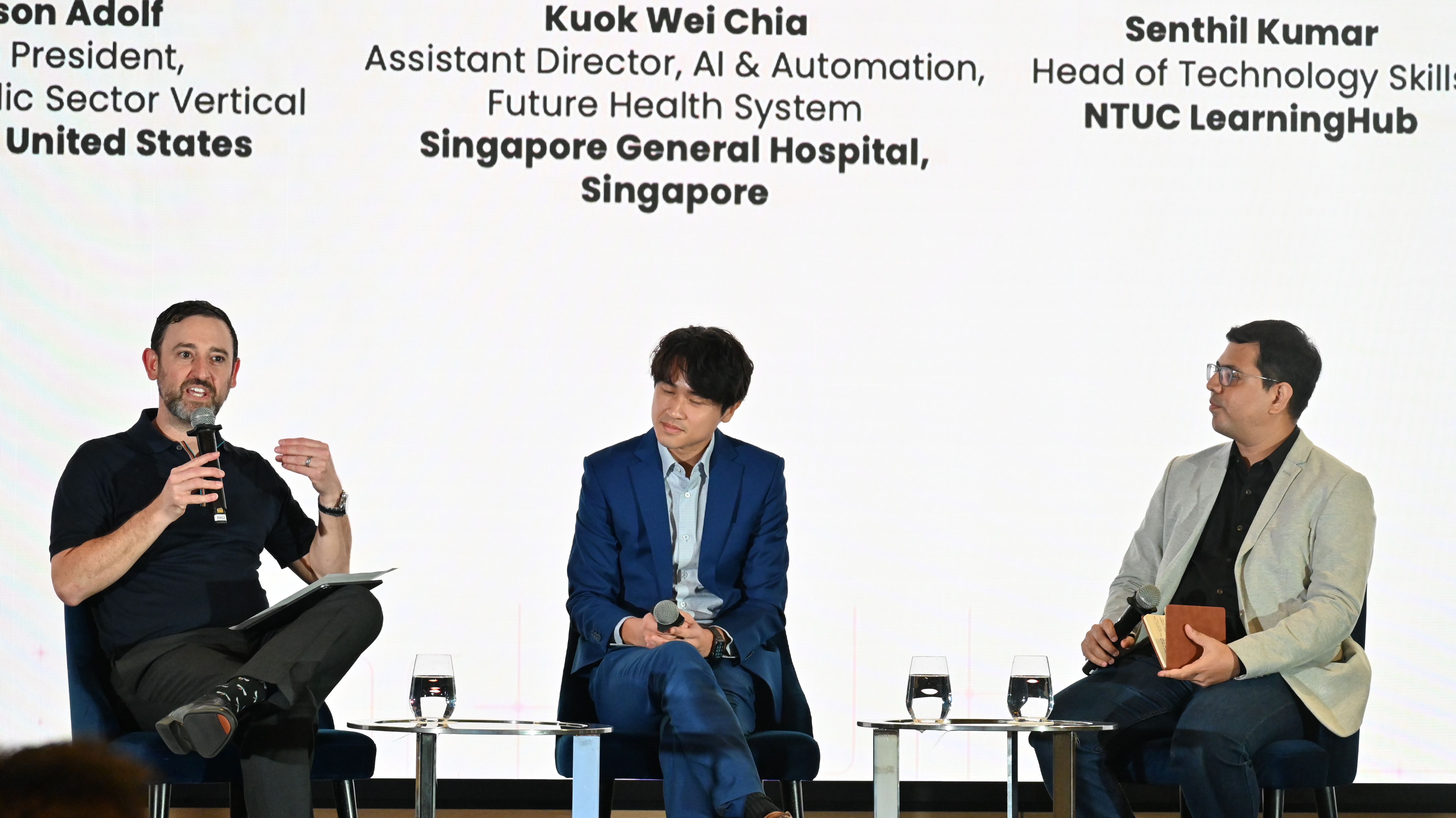
Appian's Jason Adolf moderated a panel at the event, titled Idea to Impact: Accelerating Digital Government with Citizen Developers, which featured Singapore General Hospital (SGH)’s Kuok Wei Chia and NTUC LearningHub’s Senthil Kumar. Image: GovInsider
Imagine a process that you could improve using simple technology but have to wait weeks or even months to get fixed because the already-swamped IT department takes that much time to respond to your request on top of its other requests.
This is the kind of bottleneck that gave rise to the citizen developer movement which started out as the need to create solutions without having to rely on a centralised IT department to do it, shared Appian’s Global Public Sector Vice President, Jason Adolf.
Adolf was delivering the keynote address titled Empowering the Future: Citizen Development in the Age of AI, a part of GovInsider’s inaugural Citizen Developer Day 2025 event on July 2.
Traditionally, app building and automation used to be purely technical, he noted.
Today, everyone in an organisation can build them and transform processes using natural language communicating with artificial intelligence (AI) or open-source products running on low code platforms.
Governance on top
Adding a caveat, Adolf noted that it was key for agencies operating with more sensitive processes, such as in the healthcare, security and defence sectors, to set up a structured intake process to the development environment.
“Create an intake process into your system so that people declare their intent to the governing board. Say, ‘I would like to become a citizen developer in your environment, here are the types of things I would like to build’.
“That allows the IT governance to say, ‘All right, we know what your intent is, this is the place where we should put you to work’.”
According to him, the layers of complexity in citizen development called for this process.
There are some projects simple enough for non-technical officers to work on, others that are not suitable at all, and the rest requiring support from a centralised expert team.
A structured intake process would allow for more consistency in the way projects are handled and would facilitate clearer use cases, said Adolf, calling this process an “IT-led citizen development”.
“I don’t mean that it’s done by an IT person. Rather, that it is sanctioned by an IT person… so IT provides the tooling, governance, and the right security environment…to give the power back to the folks in this room,” Adolf added.
Adolf also moderated a panel at the event, titled Idea to Impact: Accelerating Digital Government with Citizen Developers, which featured Singapore General Hospital (SGH)’s Future Health System, AI & Automation, Assistant Director, Kuok Wei Chia, and NTUC LearningHub’s Head of Technology Skills, Senthil Kumar.
The panel emphasised that public sector agencies can empower their citizen developers to accelerate digital transformation in their departments regardless of their technical skills or roles in the organisation.
The speakers also highlighted the importance of building a supportive culture for innovation and shared insights on the value of citizen development for the public sector.
To subscribe to the GovInsider bulletin, click here.
The impact of citizen development
The goal of every citizen development project was to improve a particular process or system. But what are the effects of having citizen developers within an organisation?
The speakers shared that the most salient impact was increased productivity, not just because of the solutions created, but as a result of proactive departments finding solutions on their own.
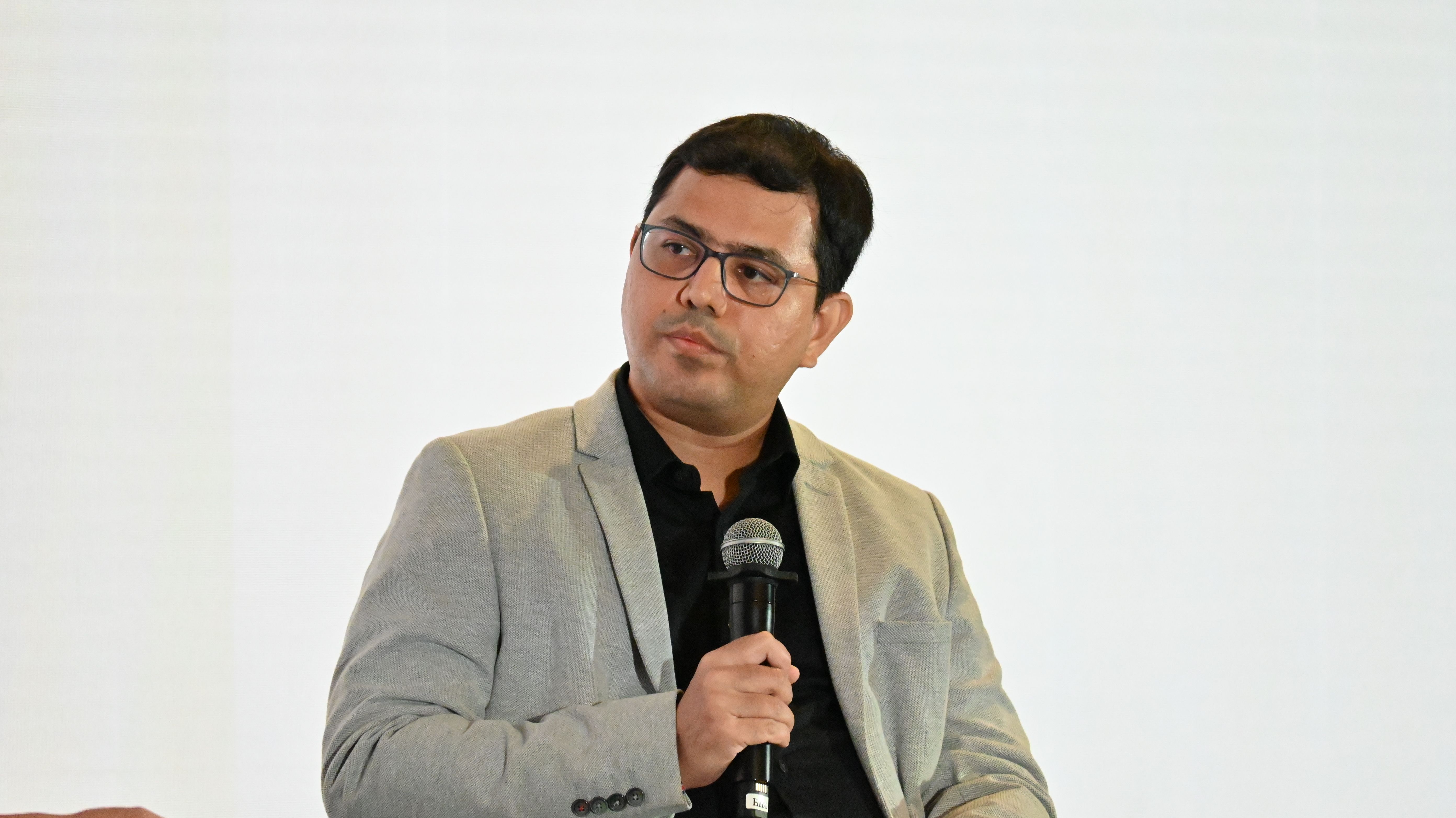
“We all know that in many organisations the IT departments are understaffed or have a lot of projects on hand. So, when citizen developers are empowered, IT can focus on strategic and higher value tasks that benefit the organisation as a whole,” said NTUC LearningHub’s Kumar.
He added that citizen developers often create solutions to issues that they deal with, meaning that they are best equipped to identify pain points or challenges. This saves time in having to analyse processes or send in requests to get things done.
“The focus is shifting from tech expertise to more practical problem-solving,” said Kumar.
SGH embarked on citizen development and now has over 100 citizen developers with more than 100 use cases being implemented on the ground, shared SGH’s Kuok.
This led to 48,000 man-hour savings a year, translating to more than $2 million productivity gains per year, Kuok said.
The success of the citizen development programme has contributed to a strong innovative and problem-solving culture in SGH that empowered staff to continue innovating, he added.
Starting small, scaling up
Building apps was not the challenge for citizen development, the panellists said. The challenge stood at turning proof-of-concepts (POC) to proof of value for the highest level of an organisation.
Citizen developer-led innovation often started at a department level, not involving most senior levels, which made its value difficult to sell and seek approval to do it more broadly.
Evidence of success, however, can positively impact adoption and motivate the higher levels of an organisation to see the value it brings to employees, said NTUC LearningHub’s Kumar.

Just how SGH’s Chia started as a skeptic when it came to citizen development, it was the success of several projects that helped him see the value of empowering employees to innovate.
SGH continued to get more demand for automation which drove them to develop an in-house citizen development programme, shared Chia.
Since most citizen development happens with low- and no-code, the experimentation and testing are easier compared to bigger application rollouts, speakers added, contributing to faster innovation.
“It’s a marathon, not a sprint,” said Kumar, and he encouraged citizen developers to start small, so that people in the organisation could see successful use cases and feel motivated to scale up.