Civic digital twin? This Italian city shows why data without democracy is just a map
By Zenith Wong
Bologna's upcoming civic digital twin will combine data with citizens' lived experiences to help the city make more inclusive urban planning decisions.
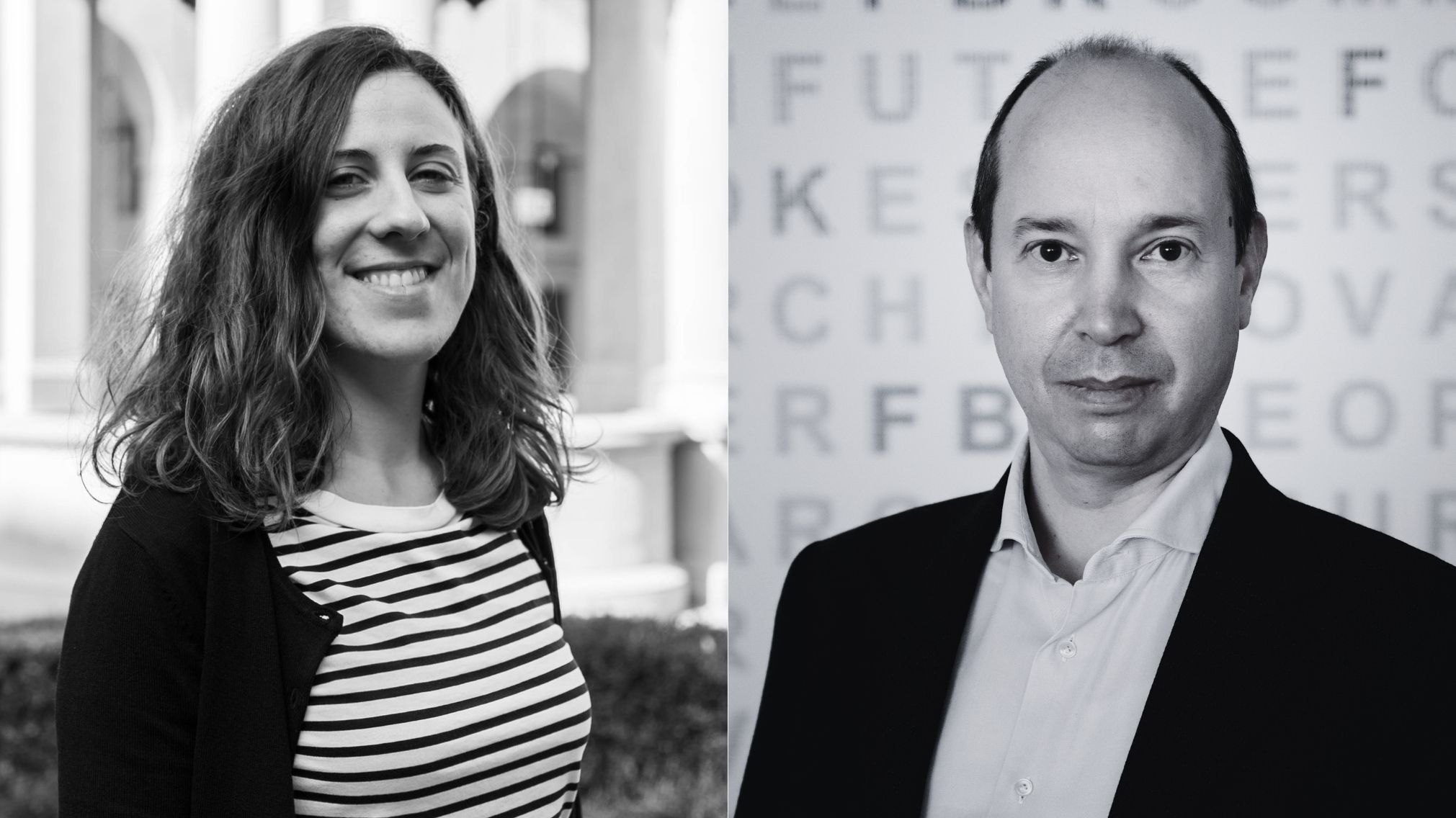
Stefania Paolazzi (left), Innovation Manager at the Municipality of Bologna, and Marco Pistore (right), Director of the Digital Society Center at Fondazione Bruno Kessler, are helping shape Bologna’s civic digital twin. Images: European Alternatives and Fondazione Bruno Kessler.
There will never be one model citizen for city governments to base their urban planning decisions on.
Two people could be in the same city, but develop diverging impressions of it because of their different backgrounds and expectations.
"If I don't understand this, how can I make the city well-aligned with the expectations of all citizens?", says Marco Pistore, director of the Digital Society Center at Fondazione Bruno Kessler (FBK), an Italian applied research institute, to GovInsider.
This gap between individual experience and city planning is why the Municipality of Bologna in Italy is looking to develop a socially-focused digital twin, expected to launch in December 2026.
A digital twin is a real-time digital replica of the city that combines data on areas such as mobility, energy use, weather, and public services to support policymaking.
Since research and development began in September 2023, the project has focused on making those datasets more representative of the city's diverse communities, giving policymakers a stronger evidence base for decision-making.
Attention to diversity and inclusivity are not something extra, but principles the city wants to embed in mainstream decision-making, says the municipality's innovation manager, Stefania Paolazzi.
She adds: "We really think that if you lack the comprehension of the human dimension of a city, you would never be able to have a complete digital twin."
The foundation supported the municipality with its technical and operational expertise, in developing the data and AI platform as well as other tools to operate the digital twin.
How the technology works
Aside from utilising the data their city already owns, the digital twin will involve new sociodemographic datasets provided by national authorities, such as the Statistical Institute of Italy.
Surveys of citizens' living habits will also be used to acquire fresh sets of such "soft" social data.
These would "catch the human knowledge of the city and bring it into the technology," says Paolazzi.
The goal of the tool is not to merely digitise Bologna, she notes, but to help better inform public administrators.
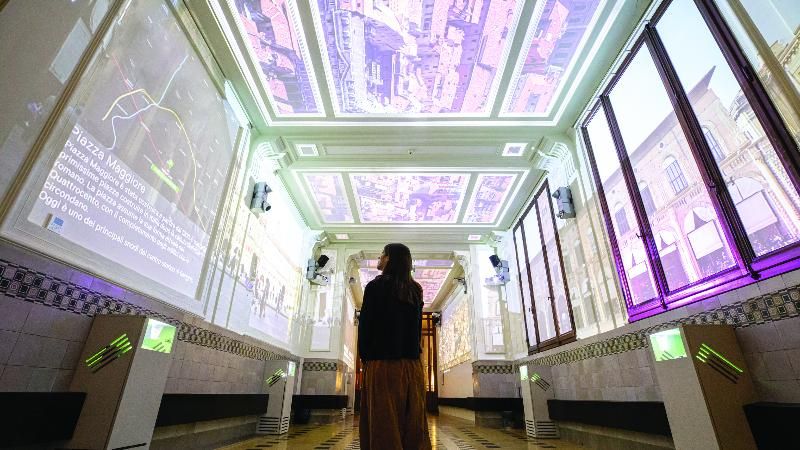
Neighbourhood labs – initiatives where residents can design community solutions collaboratively – will be used to test the digital twin's ability to successfully integrate citizens' needs into decision-making.
While Bologna has already long relied on neighbourhood labs to engage residents, the discussions often produced lengthy reports that were difficult for policymakers to use.
Rather than replacing participation altogether, the digital twin aims to turn those conversations into structured, reusable data that feeds directly into planning scenarios and policy decisions.
The hope from using technology is to help better surface where citizens agree or disagree on municipal discussions to policymakers.
The test runs will begin around September this year.
Ensuring longevity of the project
Development of the digital twin is administered by the technical wing of the Bologna government, which means elections do not alter the public officials who manage the project.
Organisational change should ideally happen along with technological development to ensure longevity of the system amidst political cycles.
As the project's technical research partner, the FBK provides expertise in AI and complex systems to help design the digital twin's architecture and modelling.
Working closely with the municipality, it is developing methods to capture how people interact with the city, ensuring the platform supports real-world policymaking, instead of simply mapping infrastructure.
The digital twin isn’t just a piece of technology, it is also pushing the administration towards a more organised data governance, says Paolazzi.
Traditionally, the municipality has had to manage different sets of information and perspectives across its various departments.
The digital twin aims to organise these internal insights, alongside input from external stakeholders, into a shared model of the city.
How to garner buy-in
Securing data from organisations begins with showing them the value their information can bring to better policymaking.
Rather than simply asking for data, the project team demonstrates to stakeholders how it can help the city make more informed decisions.
For residents, trust is built through collaboration.
The team engages citizens through questionnaires and participatory activities, turning data collection into a two-way conversation.
Strengthening public communication around the digital twin would also improve understanding of the project and build confidence in how citizens' data will be used.
However, gaining public trust may become easier once the technology is in place.
Instead of compelling people to share data, governments should earn their trust by demonstrating tangible benefits through a working digital infrastructure, Pistore says.
He also notes that adopting decentralised approaches to data collection also more likely to earn public trust.
Culture behind the technology
According to Pistore and Paolazzi, it did not take much convincing for Bologna's officials to embrace the idea, as the project builds on principles that have long guided the city’s approach to governance.
Steeped in a culture shaped by years of political movements, the administration of Bologna has been long primed for inclusivity, says Paolazzi.
"The city of Bologna has this long tradition of valuing and giving attention to human capital, social capital, and public engagement in both the decision-making of the city and making the city more livable."
As such, little to no convincing was needed to achieve managerial buy-in for the civic digital twins.
Bologna's experiment suggests that the future of digital twins may depend less on creating increasingly detailed models of cities, and more on ensuring those models remain connected to the people they represent.
Without that human dimension, a digital twin risks becoming just another map.