
Could fisheries become the first frontier of India–Cabo Verde cooperation?
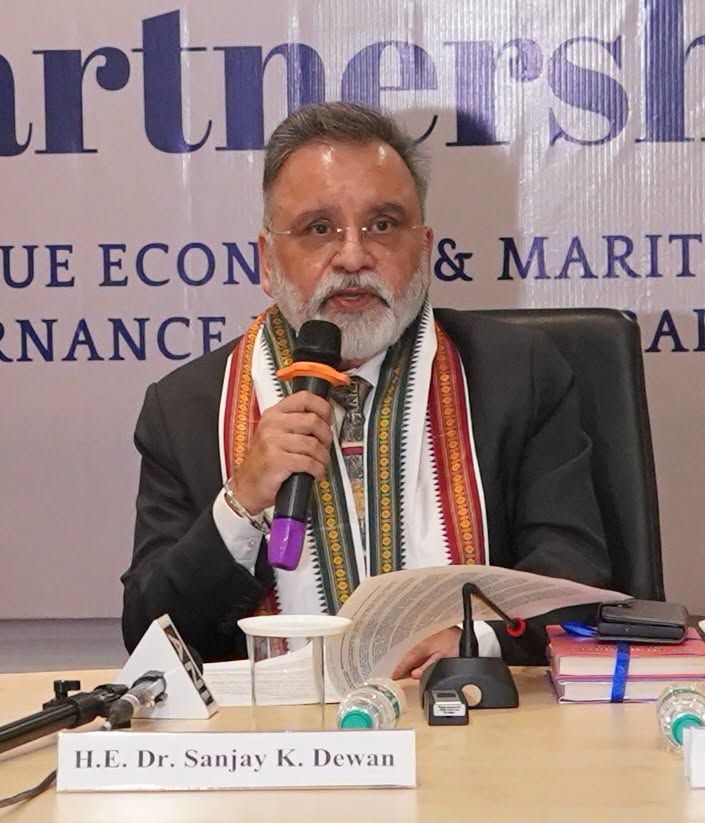
A potential opportunity is in digital technologies for sustainable ocean governance, including satellite monitoring, digital fisheries advisory systems, marine resource mapping, and more, said Honorary Consul General of Cabo Verde to India H.E. Dr Sanjay K. Dewan.
-1785404677144.jpg)
India–Cabo Verde Partnership: Blue Economy & Maritime Governance in the Global South event on July 24. Image: Dr. Syama Prasad Mookerjee Research Foundation
Cabo Verde is an African island nation in the Atlantic Ocean where the sea shapes almost every aspect of life.
Yet despite its vast maritime geography, tourism remains the country's primary economic driver, while other blue economy sectors such as fisheries continue to offer significant, untapped potential.
That paradox could point to one of the biggest opportunities in the evolving relationship between India and Cabo Verde.
Speaking at a discussion at the India–Cabo Verde Partnership: Blue Economy & Maritime Governance in the Global South event on July 24, H.E. Dr Sanjay K. Dewan, Honorary Consul General of Cabo Verde to India, identified the fishing industry as one area with considerable scope for future collaboration.
"Fish processing technology can have abundant opportunities in Cabo Verde," Dewan said in the discussion, responding to a question by GovInsider.
Cabo Verde's significant marine resources, alongside India's current application of digital technologies in its fishing industry, could complement each other.
Can technology strengthen future cooperation?
While both countries do not yet have a formal partnership focused on the blue economy, digital technologies are becoming increasingly important in sustainable ocean governance worldwide.
According to Dewan, satellite monitoring, digital fisheries advisory systems, marine resource mapping, coastal surveillance, and ocean data platforms are helping governments manage marine resources more efficiently, balancing economic development with environmental sustainability.
India has already begun applying digital technologies in its fishing industry.
According to the Ministry of Fisheries, Animal Husbandry and Dairying, initiatives under its fisheries modernisation programmes include Recirculatory Aquaculture Systems (RAS), Biofloc Technology, Seaweed Farming and digital vessel communication systems designed to improve productivity, sustainability and fisherman’s safety.
Rather than large strategic agreements, he indicated that cross-border collaboration could begin through practical initiatives, including knowledge sharing, technical training and technology partnerships focused on fisheries and marine value chains.
Distance remains a challenge
One of the practical barriers to closer India-Cabo Verde engagement is connectivity.
Dewan noted that the absence of direct flight connections has constrained tourism, business exchanges and people-to-people interactions between the two countries.
As a result, Cabo Verde remains relatively unfamiliar to Indian travellers and businesses, despite growing engagement between India and African nations under the broader Global South framework.
Improving connectivity may therefore become an important enabler of future economic cooperation, particularly if both countries seek to expand collaboration beyond diplomacy into trade, technology, and investment.
Fisheries: An opportunity waiting to be realised
With a coastline stretching approximately 965 kilometres, Cabo Verde possesses significant marine resources. However, fisheries remain a relatively small contributor to the country's economy.
According to the World Trade Organisation (WTO), Cabo Verde's economy is largely driven by the services sector, with tourism generating around US$468.7 million in 2023.
By comparison, fisheries account for around three to four per cent of the country’s GDP, although the fish processing industry represents a major share of the country's merchandise exports, particularly tuna and frozen, fresh and chilled fish exported to the European Union (EU).
For India, this presents an interesting area for future cooperation.
India has emerged as one of the world's leading fish producers, its outputs forming nine per cent of global fish production.They rank second globally in aquaculture after China.
Beyond production, the country has developed expertise across fisheries management, aquaculture, cold-chain infrastructure, seafood processing, and export value chains.
These capabilities could become increasingly relevant should Cabo Verde and India seek practical cooperation in the future.
A blue economy led by tourism
Although Cabo Verde's geography naturally lends itself to maritime industries, tourism continues to dominate its blue economy.
According to Dewan, the country's visitors come predominantly from Europe. Indian tourist arrivals remain limited, reflecting both geographical distance and relatively low awareness of Cabo Verde as a travel destination.
This highlights a broader reality facing many island nations: having abundant marine resources does not automatically translate into a diversified blue economy.
Developing sectors such as fisheries, marine processing and maritime services requires sustained investment, infrastructure and international partnerships.
Looking beyond the ocean
Dewan also pointed to an unexpected source of Cabo Verde's global visibility: football.
Participation in FIFA World Cup 2026, he noted, has helped introduce the island nation to audiences around the world, although it remains relatively unknown to many Indians.
His observation reflects a broader challenge. Countries often build international recognition through culture, sport and tourism before economic partnerships deepen.
For India and Cabo Verde, the next phase of engagement may similarly begin with practical collaboration in sectors where both countries have complementary strengths.
While no formal blue economy partnership exists today, fisheries, maritime technology and capacity building could provide realistic starting points for stronger cooperation between the two Global South partners.